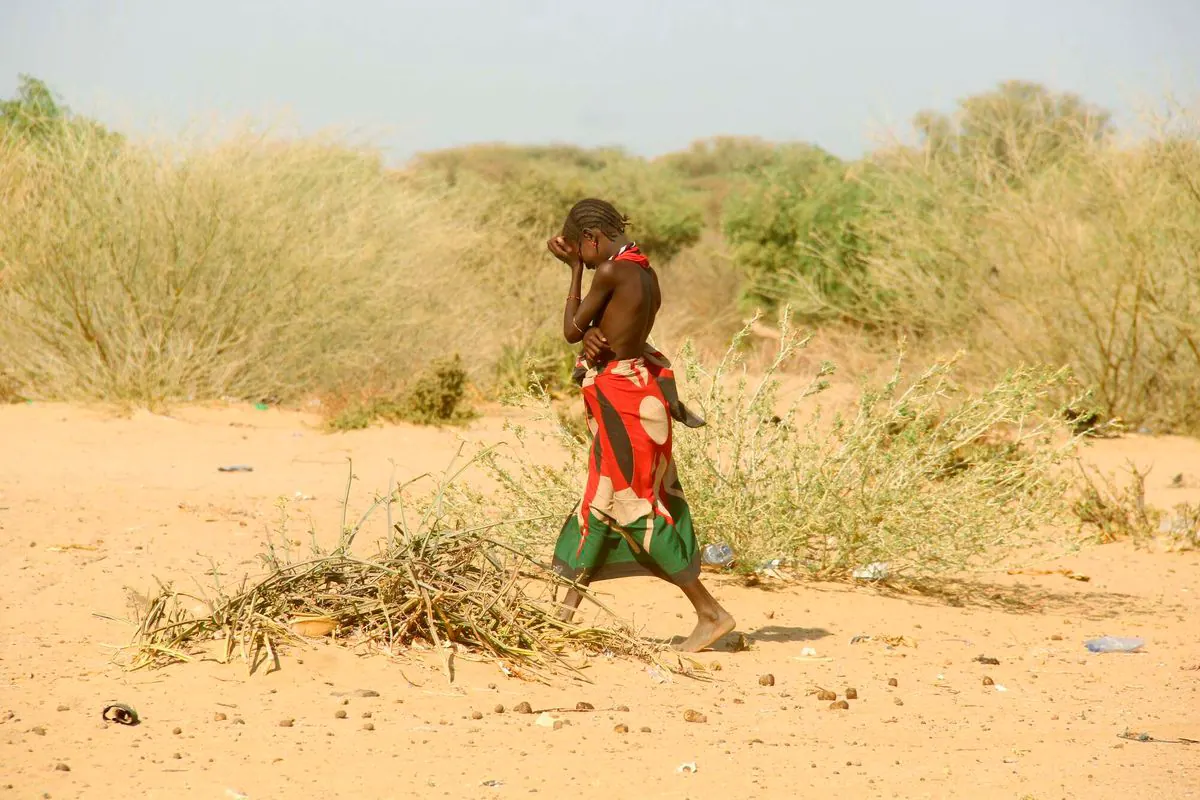
In Kenya's drylands, elders have long relied on traditional methods to forecast weather patterns, reading signs such as the movement of ants, the flowering of acacia trees, and the behavior of migratory birds. This knowledge, built over generations, is often more accurate and relevant to local communities than formal weather forecasts. By combining observations of the natural environment with experience and collective memory, these elders can predict droughts and changes in weather patterns with considerable accuracy.
Despite its value, indigenous ecological knowledge is often treated as auxiliary to formal scientific methods. Policymakers tend to view it as charming but secondary to data from national meteorological services. However, in the drylands, this traditional knowledge is often the most complete and reliable dataset available, collected continuously and locally by people whose livelihoods depend on accurate readings.
The gap between traditional knowledge and formal climate services can have significant consequences. When national drought early-warning systems are designed without incorporating local observations, they can produce forecasts that are technically sound but practically useless. These forecasts often miss the variation that determines whether a herd survives a season, leading to inadequate decision-making and response.
There is a growing recognition of the importance of integrating indigenous knowledge with formal scientific methods. Community-based observation networks, which blend local weather stations with satellite data and traditional observations, offer a promising approach. This integrated approach can produce sharper predictions than either traditional knowledge or formal science alone.
Digital tools can also play a role in enhancing climate services, but they must be adopted in a way that engages and serves local communities. Mobile platforms can share drought information, price data, and early warnings, extending the reach of good forecasting beyond the range of a single elder's memory. However, technology must be used in a way that complements and supports local knowledge, rather than replacing it.
The Kenyan government has an opportunity to recognize and support the use of indigenous ecological knowledge in climate services. By treating traditional knowledge as evidence, rather than anecdote, the government can create institutions that listen to and value local observers. This could involve employing local observers as paid contributors to early-warning systems and incorporating traditional knowledge into training programs for rangeland science.
Ultimately, integrating indigenous knowledge into climate services requires a fundamental shift in how we approach environmental decision-making. By valuing traditional knowledge and combining it with formal scientific methods, Kenya can build more effective and responsive climate services that support the livelihoods of communities in the drylands. This approach can also inform policy and decision-making at the national level, ensuring that climate services are relevant, accurate, and effective.
Key points
- Indigenous ecological knowledge can enhance the accuracy and relevance of climate services in Kenya's drylands.
- Integrating traditional knowledge with formal scientific methods can produce sharper predictions and more effective decision-making.
- Digital tools can support the use of indigenous knowledge in climate services, but must be adopted in a way that engages and serves local communities.