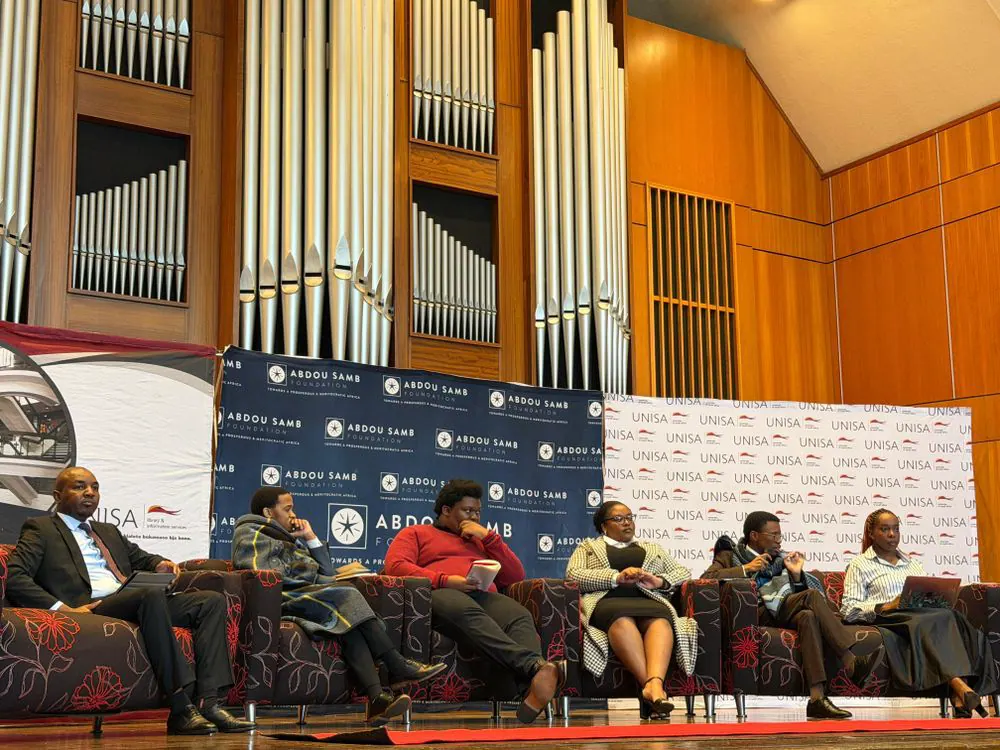
The African Union's upcoming recognition of African youth as its seventh region has sparked debate about the role of young people in shaping the continent's future. According to Abdou Samb, founder of the Abdou Samb Foundation, this recognition is not a gift, but an inheritance that must be built on rigorous rules to ensure its effectiveness. The proposal to recognise African youth as the seventh region was first introduced at the 39th Ordinary Session of the Assembly of the African Union in Addis Ababa in February 2026.
The idea gained momentum after over 1,000 young Africans endorsed it in Johannesburg on June 16. The Abdou Samb Foundation then presented the proposal in Bujumbura, where it received a favourable response. However, Samb warns that a favourable reception is not enough and that the idea must not be diluted or become a mere symbol. He cites the example of the African diaspora, recognised as the sixth region in 2003, which has not translated into equivalent influence.
The African diaspora's recognition as the sixth region has been criticised for lacking real power, with only consultative status and a marginal budget. Samb argues that the seventh region must avoid this fate and instead offer young people a voice, a budget, and real power. This would require an institutional revolution, with access to leadership positions based on merit rather than co-optation.
Currently, African youth hold fewer than 5% of leadership posts in continental institutions, despite making up over 60% of the continent's population. Samb believes that recognising young people as a region would be a step towards addressing this imbalance. However, he cautions that institutional revolutions can be flawed and that the seventh region must be an instrument, not an honour, with real capacity to initiate resources and act.
The median age in Africa is 19, while that of its heads of state is well above 60. Samb argues that narrowing this gap requires institutions that can open pathways for young people and provide opportunities for them to take on leadership roles. The seventh region must be underpinned by rules of access founded on merit rather than co-optation to ensure its effectiveness.
Samb, a Senegalese engineer, mathematician, and pan-Africanist thinker, has been promoting the idea of the "Regeneration of Africa" and is the President of A2S International and the Abdou Samb Foundation. He believes that African youth should be given a seat, but that seat must be a beginning, not an end, and a lever for real change.
As African heads of state prepare to address the United Nations General Assembly on the theme of leaving no one behind, Samb's proposal for the seventh region serves as a reminder that Africa must first address its own internal challenges. The recognition of African youth as the seventh region could be a significant step towards creating a more inclusive and representative African Union.
Key points
- African youth make up over 60% of the continent's population yet hold fewer than 5% of leadership posts in continental institutions.
- The African diaspora was recognised as the sixth region in 2003 but has not been given equivalent influence.
- The seventh region must be underpinned by rules of access founded on merit rather than co-optation to ensure its effectiveness.