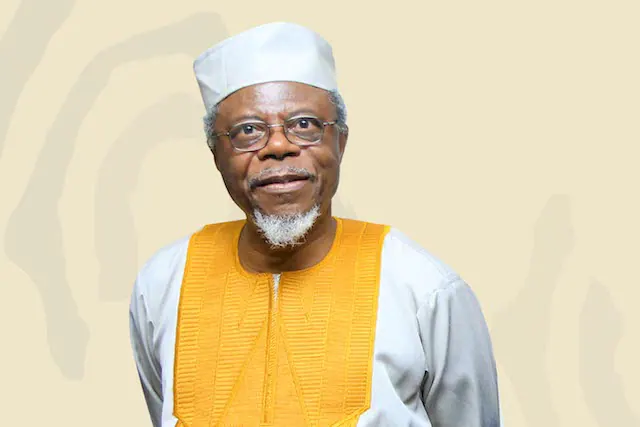
The concept of history is often viewed as a neutral repository of facts, but historian Toyin Falola argues that it is, in fact, a site of power and politics. Who has the power to record history, preserve it, and interpret it? These questions are crucial in understanding how societies perceive themselves and envision their future. Falola recently delivered a lecture on archives at the G.A.S. Foundation in Lagos, which was part of the MOWAA in Residence fellowship.
Falola emphasizes that an archive is not just a collection of facts, but a construction of history that reflects the context, institutions, and power structures of its time. Every piece of documentation has an author, purpose, and audience, and must be considered within its historical context. This is particularly important when dealing with colonial archives, which were often created to govern and control African populations. Colonial reports, missionary correspondence, and government memos can provide valuable insights into Africa's past, but they must be approached with a critical eye.
The colonial archive presents a significant challenge for African historians, as it was created within administrative structures designed to classify, measure, and control African societies. Terms like "native," "tribe," and "primitive" were not neutral, but rather part of the colonial language used to render African societies comprehensible and governable. Therefore, historians must consider the colonial archive within a wider evidentiary world, including oral history, indigenous systems of thought, and other forms of African historical memory.
Falola argues that historians should not approach the colonial archive as a repository of data, but rather as a product of a specific knowledge and power system. This requires reading against the grain, uncovering the voices, experiences, and political consciousness hidden behind the language of colonial documents. By doing so, historians can gain a more nuanced understanding of Africa's past and challenge dominant narratives.
The concept of an archive must also be rethought, as it is not limited to a room filled with files. Family albums, traditional rulers' palaces, photographs, songs, and monuments can all serve as archives, preserving histories that may not be represented in official documents. This approach to methodology is crucial in constructing a more comprehensive understanding of African history.
Previous works, such as Sources and Methods in African History: Spoken, Written, Unearthed, have highlighted the importance of combining various types of evidence in constructing African history. This approach recognizes that every archive has its silences, and that the absence of a certain community in an archive does not necessarily mean that they have not played a historic role.
Ultimately, Falola's work emphasizes the need for a more nuanced and multidisciplinary approach to understanding Africa's past. By considering the power dynamics of historical archives and the silences that they contain, historians can work towards a more comprehensive and inclusive understanding of African history. This requires a critical examination of the colonial archive, as well as a consideration of alternative perspectives and forms of historical memory.
Key points
- The concept of history is a site of power and politics, and who has the power to record, preserve, and interpret history is crucial in understanding how societies perceive themselves and envision their future.