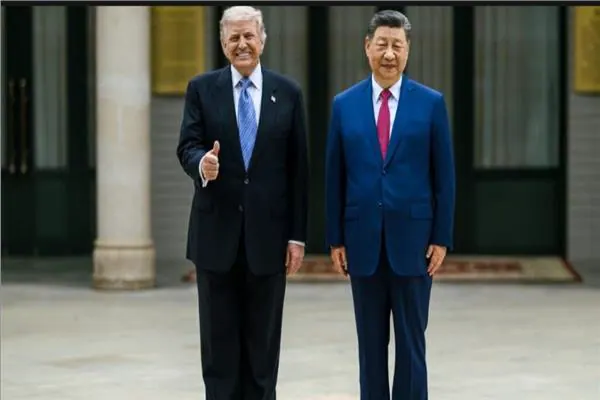
The relationship between the US and China is entering a new phase of negotiation on trade, supply chains, and strategic resources. This development has sparked debate within the US about the nature of its relationship with traditional allies and the ability of American trade policy to balance economic interests with strategic and security considerations. A recent article in The National Interest by former US diplomat Jonathan Fritz critiques the current trade policy, arguing that prioritizing adversaries over allies is a losing strategy.
The US-China agreement to improve customs treatment for around $30 billion worth of goods in each direction has reopened the file on tariffs. This development indicates that the relationship between the world's two largest economies is not heading towards complete trade rupture but is instead characterized by a mix of competition and negotiation. The US continues to focus on issues such as China's production capacity, government support for industry, technology, and strategic raw materials.
The reliance of modern industries on rare earth minerals and critical materials has become a significant background factor in the trade file. The ability of China to control a significant part of these supply chains has become a growing US concern. In September 2026, the White House noted continued work with Beijing to address US concerns about the lack of supplies of rare earth minerals and critical materials.
The US-China relationship has seen reciprocal actions related to rare earth minerals, making supply chains a part of economic and strategic negotiation between the two countries. This issue transcends traditional trade concepts, as possessing the ability to produce or provide essential materials for advanced industries gives a state a degree of influence in the global economy.
The article by Fritz compares the US approach to China with that of some traditional allies, particularly Canada, and questions how US trade policy can be used to pressure partners while maintaining strategic alliances. This point is significant because US relations with Canada go beyond trade to include a wide network of economic, security, and military cooperation.
The debate extends to Asian allies, primarily Japan and South Korea, which are essential elements in the US strategy in the Indo-Pacific region. These countries, along with the EU and other major economies, have signed a joint statement calling for a confrontation with what they describe as industrial overcapacity and non-market policies that lead to increased production and distorted global competition.
South Korea is of particular importance in this equation due to its economic ties with both the US and China. Recent developments show that economic relations between Washington and its Asian allies are increasingly linked to issues of investment, industrial relocation, energy, and economic security, rather than just traditional trade agreements.
Key points
- The US is navigating a complex relationship between China and its traditional allies.
- Trade policies are a key point of contention in the US-China relationship.
- The US is reassessing its priorities between China and its allies.