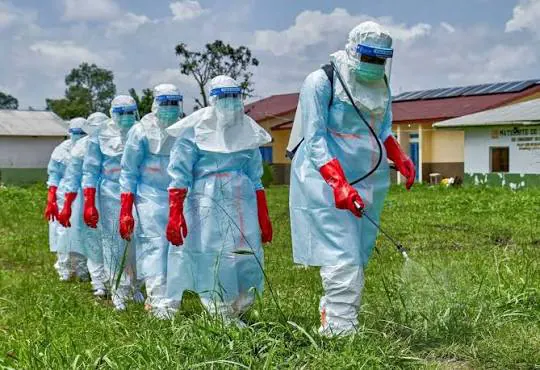
The World Health Organization (WHO) announced on Saturday that the Ebola outbreak in the Democratic Republic of Congo has spread to two new health zones. The areas affected are "Bolo" in the province of "Sud Ubangi" and "Dongo" in the province of "Haut Uele", which borders South Sudan. This brings the total number of cases to 63 in seven provinces.
According to WHO Director-General, Tedros Adhanom Ghebreyesus, the conflict and displacement of people are making it difficult for healthcare workers to reach affected communities and track individuals who may have been exposed to the virus. There are currently no approved vaccines or treatments for the "Bundibugyo" strain of Ebola, which is complicating the response efforts.
The WHO is working to accelerate clinical trials for vaccines and treatments for the "Bundibugyo" strain of Ebola. In August, the organization allocated 70,000 doses of the "Ervebo" vaccine for use in the Democratic Republic of Congo. Of these, 50,000 doses were for healthcare workers and frontline responders, while 20,000 doses were for a clinical trial to study the vaccine's efficacy.
The vaccine has already been used in the city of Kisangani in the province of Tshopo, as part of a campaign that was set to cover 14 health zones in the provinces of Tshopo, Bas-Uele, and Haut-Uele. According to the Congolese National Institute of Public Health, over 3,000 people in Tshopo and over 700 people in Bas-Uele have already received the vaccine.
The Ebola outbreak was first reported on May 15, and has primarily affected the eastern province of Ituri. The WHO has expressed concerns about the risk of a future global health emergency, and has emphasized the need for countries to strengthen their preparedness for epidemics. Tedros noted that while Ebola is not likely to become a pandemic, it is possible that another respiratory pathogen could emerge and spread globally.
The WHO is working to support the Congolese government in its response to the outbreak, and is urging countries to be prepared for potential future health emergencies. The organization has highlighted the need for increased investment in global health infrastructure and for countries to develop their own preparedness plans. The situation in the Democratic Republic of Congo remains a concern for global health authorities.
Key points
- The Ebola outbreak in the Democratic Republic of Congo has spread to two new health zones, bringing the total number of cases to 63 in seven provinces.
- There are currently no approved vaccines or treatments for the "Bundibugyo" strain of Ebola.
- The WHO is working to accelerate clinical trials for vaccines and treatments for the "Bundibugyo" strain of Ebola.