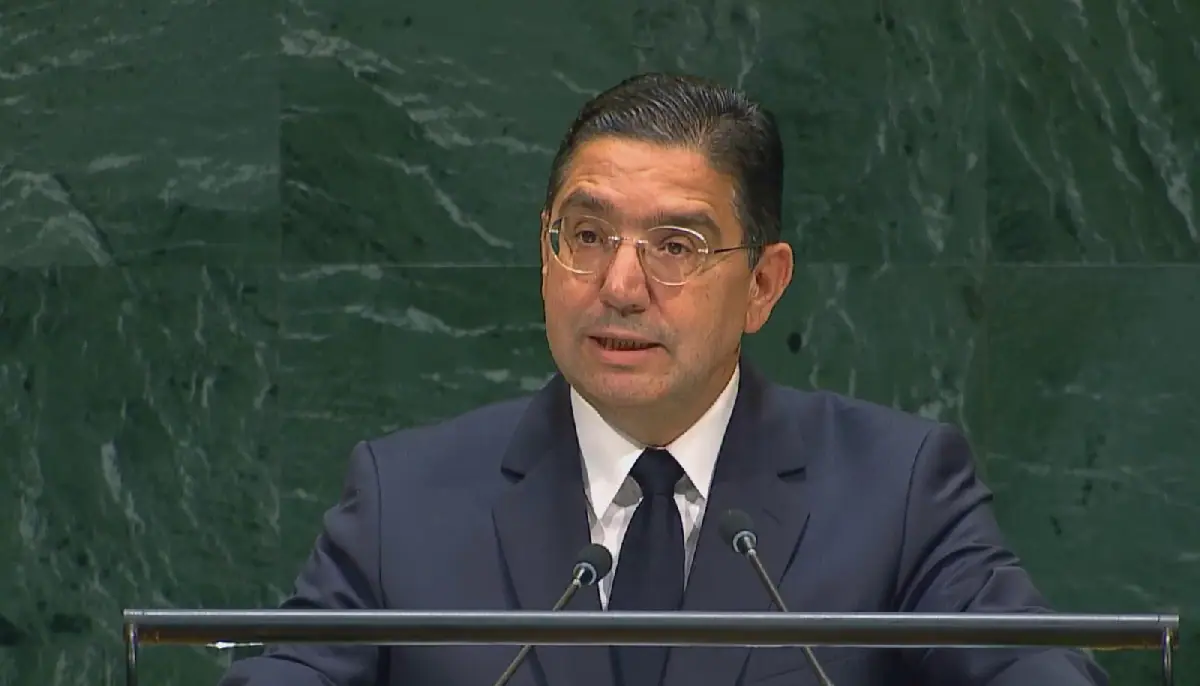
Moroccan Foreign Minister Nasser Bourita recently presented a set of six "no's" regarding Western Sahara at the United Nations General Assembly, sparking controversy over Morocco's approach to negotiations. Instead of presenting a vision for a solution and inviting discussion, Bourita effectively stated that Morocco's proposal is the only solution, and any deviation from it is unacceptable. This approach has raised questions about the nature of the negotiations and the role of the international community.
The issue of Western Sahara is not a matter of establishing a local governance system, but rather a question of decolonization and the right of the Sahrawi people to self-determination. The United Nations still lists Western Sahara as a non-self-governing territory, and the issue is closely tied to the process of decolonization. Morocco's proposal for autonomy has been met with skepticism by the Sahrawi people and their supporters, who argue that the issue is not about the form of governance but about the right to self-determination.
The Sahrawi people's position is centered on the idea that the future of Western Sahara cannot be determined by one party alone, and that self-determination is not a detail to be discussed and then set aside. This is not a matter of slogans or rhetorical flourishes, but a deeply held conviction that is grounded in the history and experience of the Sahrawi people. The international community has consistently recognized the importance of self-determination in resolving the conflict, and Morocco's approach has been criticized for attempting to sidestep this fundamental issue.
In 2026, the UN Special Committee on Decolonization continued to describe Western Sahara as a non-self-governing territory, and several member states emphasized the importance of self-determination through a referendum. The international community has called for a negotiated solution that is logical, lasting, and agreed upon by all parties, but Morocco's approach has been criticized for attempting to predetermine the outcome of the negotiations.
The UN Security Council's Resolution 2797, adopted in the previous year, called on the parties to negotiate a final and mutually agreed-upon solution that guarantees the self-determination of the Sahrawi people. Morocco's approach has been criticized for attempting to undermine this resolution and impose its own solution on the conflict. The question remains as to whether Morocco's proposal for autonomy is a genuine attempt at negotiation or a fait accompli.
The controversy surrounding Morocco's approach has raised questions about the role of the international community in resolving the conflict. The international community has a responsibility to ensure that the rights of the Sahrawi people are respected and that a negotiated solution is reached that takes into account the interests of all parties. Morocco's approach has been criticized for attempting to marginalize the Sahrawi people and impose its own solution on the conflict.
Ultimately, the question remains as to who gave Morocco the right to negotiate with itself on the future of Western Sahara. The international community has consistently recognized the importance of self-determination and the need for a negotiated solution that takes into account the interests of all parties. Morocco's approach has been criticized for attempting to undermine this principle and impose its own solution on the conflict.
Key points
- Morocco's approach to negotiations on Western Sahara has been criticized for attempting to predetermine the outcome and undermine the principle of self-determination.
Reporting sources
- من أعطى المغرب حق التفاوض مع نفسه على مستقبل الصحراء الغربية؟ · echoroukonline.com