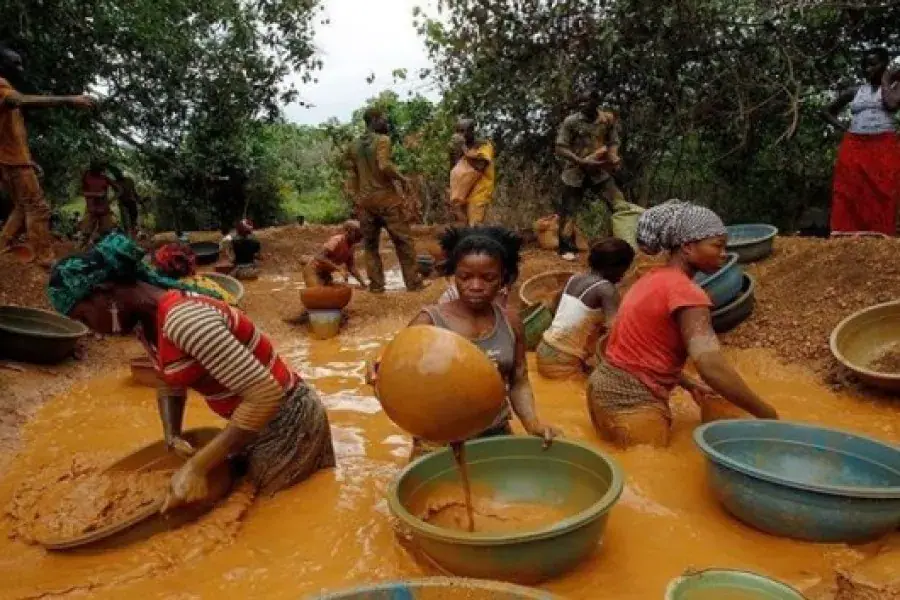
The National Institute of Public Health (INSP) in Mali recently hosted a conference to address the growing concern of chemical poisoning in artisanal gold mining, also known as orpaillage. The conference, led by INSP Director General Professor Ibrahima Guindo, brought together experts to discuss ways to mitigate the risks associated with chemical use in the industry. The conference aimed to raise awareness about the dangers of chemical products and to develop strategies for protecting the health of miners and surrounding communities.
According to Tidiane Diallo, a pharmacist toxicologist and professor at the University of Bamako's Faculty of Pharmacy, chemical poisoning is a significant public health problem in Mali. He cited statistics showing that between 2010 and 2024, 4,364 cases of poisoning were recorded in the country's healthcare structures. The majority of these cases, 1,839, were from Bamako, followed by 1,012 cases from Kayes and 420 cases from Kéniéba. These numbers highlight the need for urgent action to address the issue.
The INSP's Service de pharmacologie et de toxicologie plays a crucial role in protecting public health by analyzing toxic substances and providing diagnostic support for poisoning cases. The service is also involved in research and the development of strategies to reduce the risks associated with chemical use. Additionally, the service provides training for healthcare professionals on the management of poisoning cases.
Kho Coulibaly Sanou, a medical toxicologist and professor at the University of Bamako's Faculty of Medicine, presented the country's strategic plan for environmental health, which focuses on protecting children from chemical poisoning. The plan, which runs from 2026 to 2030, aims to create a safer environment for Malians by strengthening healthcare structures, raising awareness about chemical risks, and improving the management of poisoning cases.
The strategic plan prioritizes several key actions, including strengthening the capacities of healthcare structures, raising awareness among communities, and improving the management of poisoning cases. The plan also emphasizes the need for better collaboration between different sectors and the mobilization of resources to support the implementation of the plan.
One of the major challenges facing the implementation of the plan is the need for stronger legislative and regulatory frameworks. The creation of a national poison control center is also seen as a priority, as is the need for better coordination between different sectors and stakeholders.
The conference highlighted the need for a comprehensive approach to addressing the risks associated with chemical use in artisanal gold mining. Experts emphasized that the dangers of chemical poisoning are not limited to miners but can also affect their families and communities. Raising awareness, promoting prevention, and strengthening healthcare structures are seen as essential steps in mitigating the risks associated with chemical use.
Key points
- The National Institute of Public Health in Mali has held a conference to address the risks associated with chemical use in artisanal gold mining.
- Chemical poisoning is a significant public health problem in Mali, with 4,364 cases recorded between 2010 and 2024.
- The country's strategic plan for environmental health prioritizes the protection of children from chemical poisoning and aims to create a safer environment for Malians by 2030.
Reporting sources
- Orpaillage au Mali : L'INSP alerte sur... · Maliweb.net