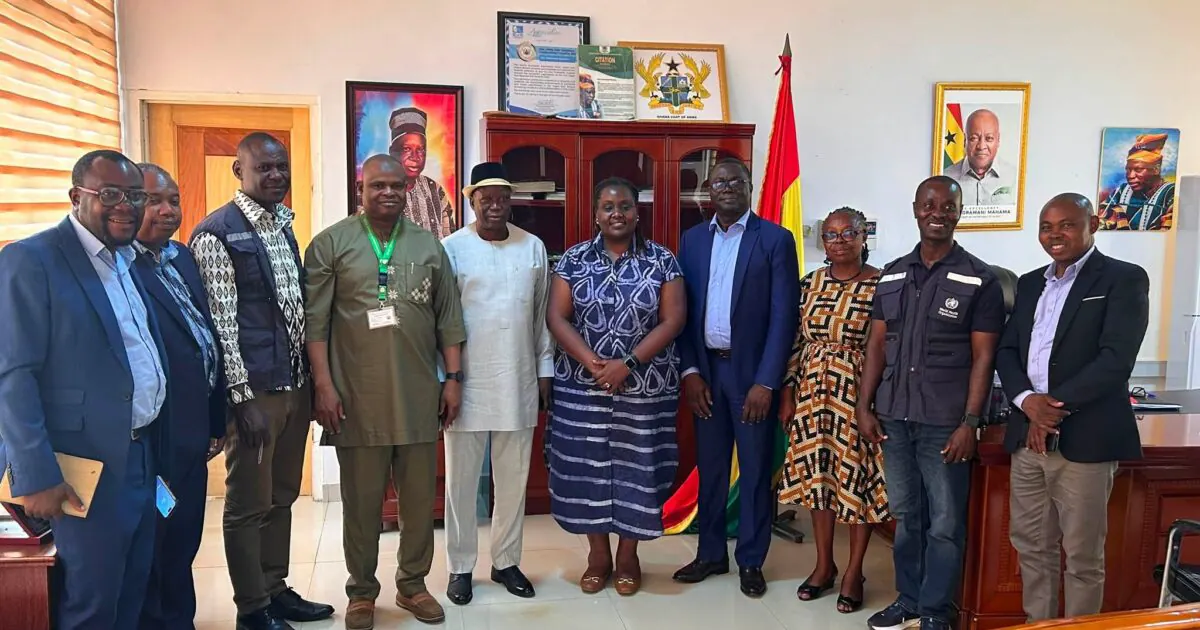
The World Health Organisation (WHO) has pledged to strengthen its support for healthcare delivery in the Upper East Region of Ghana, focusing on vulnerable populations and health challenges associated with the region's borders with Burkina Faso and Togo. WHO Representative to Ghana, Dr Fiona Braka, made the assurance during a courtesy call on the Upper East Regional Minister, Akamugri Donatus Atanga. The visit aimed to provide WHO with a better understanding of the region's healthcare system, priorities, and challenges.
Dr Braka noted that the region's location along international borders presents specific challenges, particularly in disease surveillance, cross-border health collaboration, and access to healthcare. She emphasized WHO's commitment to supporting Ghana's health priorities, including the Free Primary Health Care initiative, universal health coverage, and efforts to reduce financial barriers to healthcare. Dr Braka also highlighted the organization's focus on vulnerable groups, including women and children, as well as people facing difficulties accessing healthcare services.
The Upper East Regional Minister, Akamugri Donatus Atanga, welcomed the WHO delegation and called for special consideration for the region in the organization's healthcare interventions, citing its vulnerability and border location. He mentioned that limited employment opportunities have contributed to the vulnerability of residents, while the region's proximity to Burkina Faso and Togo places additional demands on its health facilities. Mr Atanga urged WHO to consider these realities when planning and implementing interventions in the region.
Mr Atanga also highlighted shortages of health personnel and called for more tertiary institutions to be established in the region to support the training and retention of healthcare professionals. He believes that improving access to training opportunities and strengthening the availability of health workers would help address some of the challenges facing healthcare delivery. The Regional Minister assured the delegation that the Regional Coordinating Council would continue to collaborate with health authorities and development partners to improve healthcare services.
The WHO delegation included the Upper East Regional Director of Health Services, Dr Braimah Baba Abubakari; Deputy Director in charge of Clinical Care, Dr Samuel Aborah; Deputy Director of Public Health, Dr Zakariah Adams; and Deputy Director of Finance, Mr Yakubu Issahaku. The visit formed part of efforts to strengthen engagement between WHO and regional authorities in addressing healthcare needs and supporting national health priorities.
Dr Braka called on the Regional Coordinating Council and other local authorities to support efforts to improve healthcare delivery through advocacy, investment in human resources and infrastructure, and community mobilisation. She emphasized that WHO's role is to support member states in implementing their national priorities. The organization remains committed to supporting Ghana's health priorities, including the Free Primary Health Care initiative and universal health coverage.
The collaboration between WHO and the Upper East Region aims to address the unique healthcare challenges posed by the region's border location and vulnerability. The visit has paved the way for targeted support to improve healthcare delivery and ensure that vulnerable populations have access to essential care. Key stakeholders will continue to work together to strengthen the healthcare system and address the region's health priorities.
Key points
- WHO supports Ghana's health priorities, including Free Primary Health Care and universal health coverage.
- The Upper East Region faces unique healthcare challenges due to its border location and vulnerability.
- WHO and the Upper East Region will collaborate to improve healthcare delivery and support national health priorities.