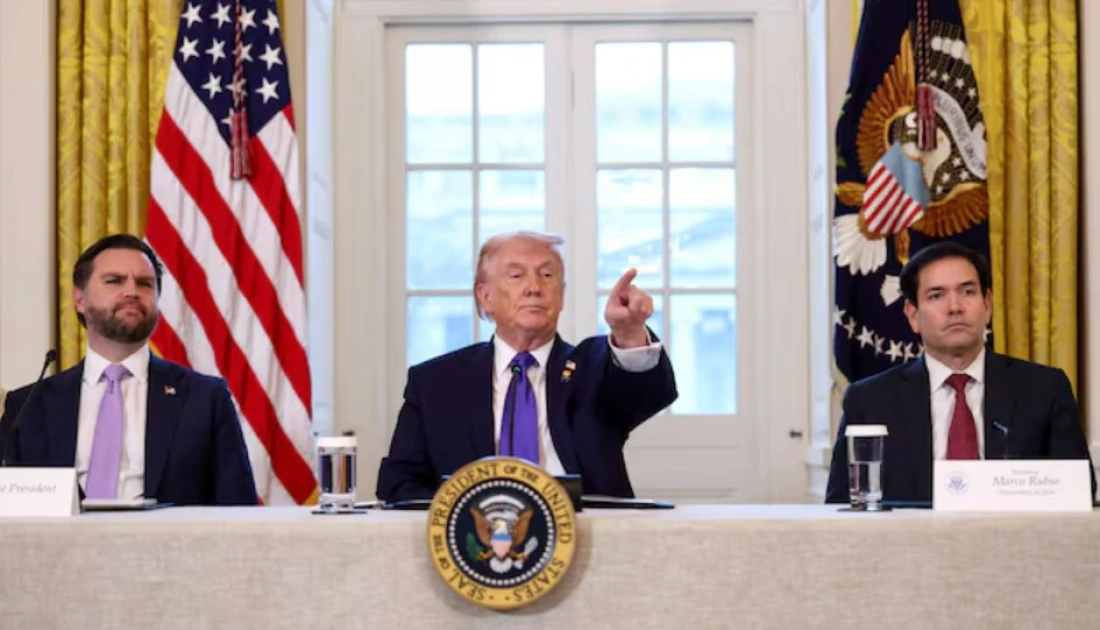
The controversy began after footage emerged of President Donald Trump's comments at a midterm elections rally in Nebraska on Monday. Trump discussed high oil prices resulting from the Iran war, justifying them as necessary to prevent Tehran from acquiring nuclear weapons. He stated that the prices were "a little bit high" but considered it "a small price to pay for keeping the world safe, keeping our country safe."
In his remarks, Trump seemingly suggested that Iran could target major US cities, saying, "They can take out a city. Let them take, let them take out Los Angeles, let them take out San Diego. This is a very small price to pay, and it's going to be over with very soon." His comments sparked immediate backlash from Democrats, who accused him of encouraging Iran to attack the two urban centers in California, a state they control.
Democratic leaders swiftly responded to Trump's remarks, expressing outrage and concern. California Governor Gavin Newsom described Trump as "deranged and dangerous," while Hakeem Jeffries, the Democratic minority leader in the US House of Representatives, emphasized that the nuclear annihilation of an American city was a serious matter, not to be taken lightly.
The White House moved to clarify Trump's comments, insisting that he was referring to the threat posed by Iran and not advocating for attacks on US cities. White House Communications Director Steven Cheung stated that Trump was highlighting the danger of a nuclear-armed Iran, which would threaten US cities like Los Angeles and San Diego.
The White House's Rapid Response account on X disputed a Los Angeles Times headline that claimed Trump suggested letting Iran "take out" Los Angeles and San Diego. The account argued that Trump was actually saying the US is fighting to prevent Iran from gaining the capability to attack these cities with nuclear weapons.
This controversy arises as Trump campaigns in the final month leading up to the midterms, with Republican leaders worried that voter dissatisfaction over the Iran war and high prices could cost them control of Congress. Trump's comments and the subsequent backlash may influence voter sentiment in the upcoming elections.
The White House's response to the controversy reflects a broader effort to manage the narrative around Trump's statements and policies. By clarifying Trump's remarks, the White House aims to mitigate potential damage to the Republican Party's prospects in the midterms.
Key points
- The White House has denied that President Donald Trump suggested Iran should "take out" major US cities.
- Trump's comments at a midterm elections rally in Nebraska sparked controversy and backlash from Democrats.
- The White House insists Trump was referring to the threat posed by a nuclear-armed Iran, not advocating for attacks on US cities.