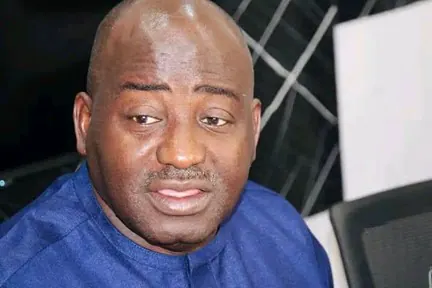
Musa Hassan Bility, the leader of the Citizens Movement for Change (CMC), has announced that his party will not participate in the opposition coalition talks led by the Congress for Democratic Change (CDC). This decision, according to Bility, is driven by a desire to create a distinct political path, rather than personal animosity towards former President George Manneh Weah. Bility emphasized that his party's goal is to provide Liberians with an alternative to the traditional political giants, the Unity Party and the CDC.
Bility clarified that his decision to pull back from the opposition coalition talks is rooted in a fundamental disagreement with the current political culture. He stressed that personal friendships do not dictate his political path, citing his past support for Weah in previous elections. Bility acknowledged a long-standing personal relationship with Weah, but emphasized that this does not influence his decision to pursue a separate political path. He stated that his party, the CMC, will not merge into the shadows of Liberia's traditional political giants.
The CMC leader outlined his vision for governance, which includes practical economic management, empowering local businesses and agriculture, and returning government authority directly to the people. He proposed significant fiscal adjustments to fund social services, such as free education up to the college level and free primary healthcare. Bility also called for a cut in legislative waste by reducing the Legislature's budget by US$40 million. He aims to capture hundreds of millions of dollars currently lost in port revenue and tax leakages.
Bility's "Third Lane" coalition will compete directly against both the UP-led and CDC-led blocs, giving Liberians three clear choices at the ballot box. He is consulting with prominent Liberian stakeholders, pressure groups, and like-minded political parties to construct this alliance. Bility's plan rests on large promises, including free college education and free primary healthcare. However, he did not provide detailed costing for these initiatives.
Bility highlighted his personal background as a self-made entrepreneur who worked his way up from the bottom without relying on government handouts. He pointed to his journey as a motor car boy, tailor, and farmhand, which gave him the practical credentials needed to manage the economy. Bility asserted that he possesses the right credentials, experience, and practical knowledge required to transform Liberia.
Bility criticized the current government's announcements regarding a US$1.2 billion budget framework, describing the claims as propaganda if they do not impact the daily lives of ordinary citizens. He praised the Liberia Revenue Authority (LRA) for its strong performance in revenue collection, but criticized how the government spends those funds. Bility argued that the government should invest funds in agriculture and poor farmers to create local employment.
Bility's decision to pursue a separate political path has left the opposition fragmented, with one more lane to manage. His exit also raises questions about the viability of the CDC-led opposition talks. As the 2029 elections approach, Bility's "Third Lane" coalition will likely play a significant role in shaping Liberia's political landscape.
Key points
- Musa Hassan Bility's decision to pull back from CDC-led opposition talks is driven by a desire to create a distinct political path.
- Bility's "Third Lane" coalition will compete directly against both the UP-led and CDC-led blocs in the 2029 elections.
- Bility's plan includes significant fiscal adjustments to fund social services, such as free education and free primary healthcare.