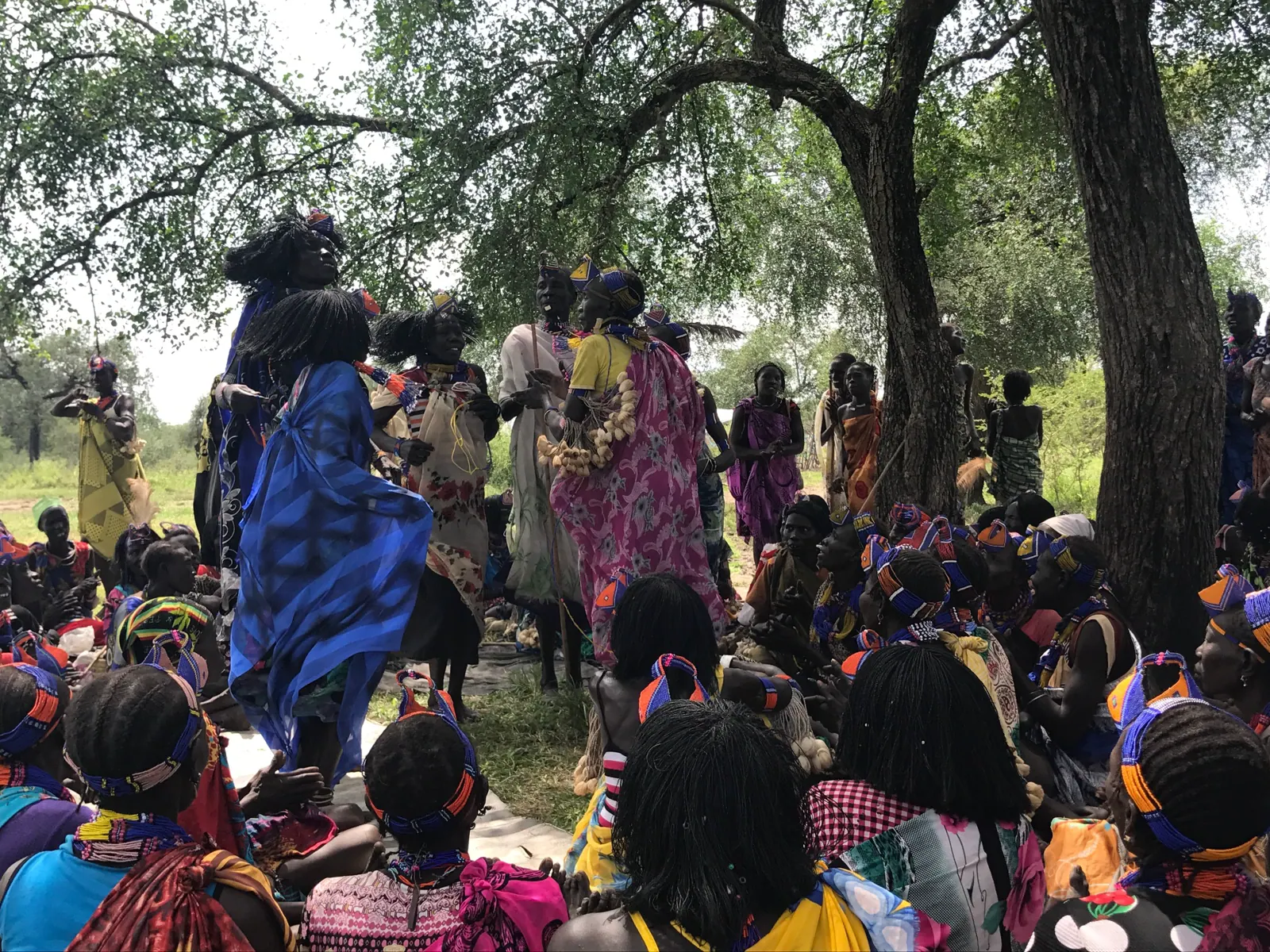
As South Sudan approaches a critical moment in its political transition, with elections scheduled for December 2026, the country is grappling with questions around constitutional reform, political inclusion, and the implementation of the 2018 peace agreement. In this context, the experience of a group of mothers and grandmothers in the eastern borderlands offers a unique perspective on political authority. The women, known as the Kabarze, have been working to bring peace and stability to their communities through song, dance, and public shaming.
The Kabarze movement emerged in 2017 in response to escalating cycles of violence between competing youth age-sets in Greater Pibor. The women, mostly mothers and grandmothers, used their voices and bodies to confront the young men involved in the fighting, deploying traditional songs and dances to shame them into laying down their arms. According to one woman, "We formed the Kabarze so our children would survive all this fighting. Boys weren't listening to the old men... so we formed our group."
The Kabarze drew their authority from motherhood, kinship, collective responsibility, and cultural forms of intervention that young men and the wider community already recognised. Their performances interrupted attacks, demanded cattle compensation, and compelled young men to surrender weapons. The women's actions were rooted in a deep understanding of the social and cultural context in which they lived, and their use of song and dance allowed them to communicate effectively with the young men.
The Kabarze movement spread rapidly across Greater Pibor, with women in other villages establishing their own groups. The women's collective action was driven by a desire to protect their children and communities from the devastating effects of violence. As one elder woman explained, "We women don't have rii [communal spaces where men gather to discuss public affairs] and so to express what we have in mind, we sing."
The experience of the Kabarze encourages a richer understanding of governance, one that goes beyond formal institutions to include cultural practices, moral authority, and embodied forms of communication. Governance grows wherever people possess the authority to influence behaviour, mobilise collective action, and restore accountability. The Kabarze's use of song, dance, and public shaming demonstrates the power of non-traditional forms of authority in shaping social life.
The Kabarze's story offers an important lesson about the nature of political authority and its relationship to community and culture. Their actions demonstrate that authority can be exercised through a range of means, including cultural practices and embodied forms of communication. As one Kabarze woman explained, "If they don't stop fighting, we'll take all our clothes off so they fear us and run away... Our breasts are the ones to stop these things, and removing our clothes makes them listen to us."
The Kabarze movement highlights the critical role that women can play in promoting peace and stability in their communities. Their experience offers a powerful example of how women's collective action can shape social life and promote accountability. As South Sudan continues to navigate its complex political landscape, the story of the Kabarze provides a valuable insight into the diverse forms of authority that exist beyond the state.
Key points
- The Kabarze movement demonstrates the power of non-traditional forms of authority in shaping social life and promoting peace and stability.
- Women's collective action can be a powerful force for promoting accountability and social change.
- Governance can be understood as growing wherever people possess the authority to influence behaviour, mobilise collective action, and restore accountability.