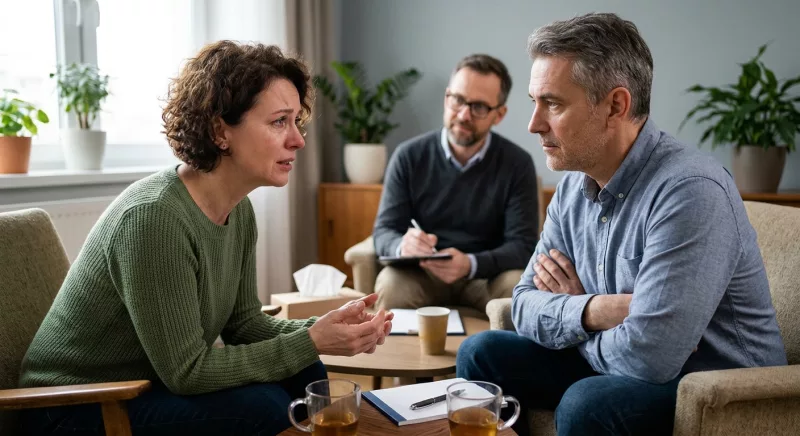
Being in an unhappy relationship can have severe consequences on one's physical and mental health. Research suggests that poor-quality close relationships are a health risk factor equal to or greater than smoking or lack of exercise. A happy relationship, on the other hand, can boost one's health and even lifespan. According to Carrie Cole, a psychologist and director of research at The Gottman Institute, couples can work on turning their relationship around with the right approach.
Couples often argue about the same issues throughout their relationship, known as perpetual or gridlocked issues. These issues can range from finances and parenting to seemingly minor issues like neatness. Research has shown that 69% of the time, couples are still arguing over the same type of issues they had debated four years earlier. Disagreements over money and unequal division of housework are common causes of tensions and can raise the likelihood of divorce.
The way couples argue can be a determining factor in the success of their relationship. According to Cole, four specific behaviors can signal that a relationship may be headed for a break-up: criticism, contempt, defensiveness, and stonewalling. However, these behaviors are fixable if the couple wants to work on them. Constructive arguments, on the other hand, can strengthen a relationship by focusing on mutually resolving issues with respect, curiosity, and kindness.
Responsiveness is a key factor in a successful relationship. Experiencing one's partner as responsive can boost marital satisfaction, physical health, and longevity. Kindness and cooperation can also build long-term goodwill. Research has shown that shared decision-making and equally shared housework are associated with greater marital happiness and lower conflict. Couples therapy can also be effective in improving relationship issues and preventing relationship distress.
Rebuilding empathy is a crucial aspect of couples therapy. According to Jay Lebow, a couples therapist and clinical professor of psychology, empathy is often eaten away in couples who get to the point of therapy. One challenge in therapy is rebuilding empathy and learning to listen to each other. Signs that therapy is working include improved communication and the ability to take a step back and assess the situation.
Cole cites two specific signs that give her hope in her sessions with couples. One is when a partner says, "I can see why you would feel that way," indicating that they are accepting influence from the other. The other sign is when there is curiosity about one another, such as asking, "Tell me more about that." These signs indicate that the couple is willing to work on their issues and improve their relationship.
Understanding each other's dreams and goals can also help resolve gridlocked conflicts. Cole gives the example of a couple who came to therapy due to recurring arguments over money. By understanding each other's perspectives and goals, they were able to work through their issues. With the right approach and a willingness to work on their problems, couples can achieve positive outcomes and improve their relationship.
Key points
- Couples therapy can be effective in improving relationship issues and preventing relationship distress.
- Responsiveness and kindness can boost marital satisfaction and physical health.
- Understanding each other's dreams and goals can help resolve gridlocked conflicts.