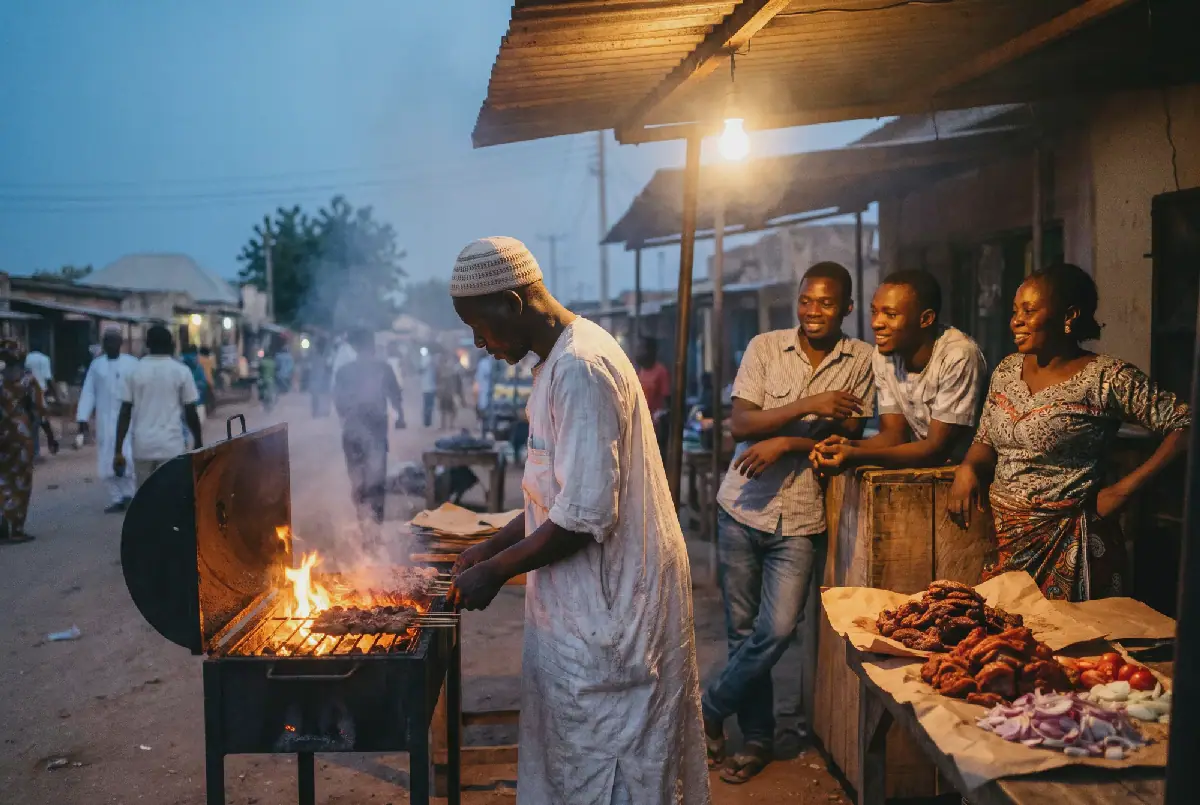
Nigerians have a diverse diet that includes a wide range of animals. The most commonly consumed animals are cattle, goats, sheep, and chickens. Additionally, fish from creeks and lagoons, snails, rams during Sallah, and turkey during Christmas are also popular. In some regions, Nigerians eat grasscutter, antelope, bush pig, and fruit bat. In a few states, dog is also consumed. This diverse diet is a reflection of the country's cultural and geographical diversity.
The consumption of meat in Nigeria has changed over time due to factors such as price, safety, and conservation. The price of meat has increased significantly, with a kilogram of beef costing what a week of meat cost a decade ago. Lassa fever, a disease that can be transmitted through contact with infected animals, is also a growing concern. Furthermore, several species that are commonly consumed are vanishing from the forest due to overhunting and habitat destruction.
According to trade analysts, beef, chicken, and goat are the most consumed meats in Nigeria, in that order. Beef is a staple in many Nigerian households, often used in stews, suya, and kilishi. Chicken has become increasingly popular over the past twenty years, particularly in commercial poultry farms in Ogun, Oyo, and Kaduna. Goat, on the other hand, is a favorite among Nigerians, but it is more expensive than beef and chicken.
The National Bureau of Statistics conducted an agricultural census in 2024, which revealed that about 40.2 million farming households in Nigeria raise some kind of livestock. Jigawa has the highest share of livestock households at 84.2%, followed by Bauchi at 79.7%. The census also found that chickens are kept in about 42.5% of farming households, while goats are kept in about 41.3% of households.
Cattle are concentrated in relatively few, mostly northern, hands. The Fulani pastoral system has played a significant role in moving beef south along the old trade routes. Gbenga Akinfenwa's investigation found that more than 1.3 million cows are slaughtered every year to meet Nigerian demand, with cattle supplying roughly 30% of all the meat consumed in the country.
The government has acknowledged the need to improve the hygiene of slaughter facilities and has promised to modernize abattoirs, provide cold storage, and train butchers. The Minister of Livestock Development, Idi Mukhtar Maiha, has also promised to address the issue of refrigerated vans to transport meat safely. However, the butchers' union has requested refrigerated vans to transport meat safely, and it remains to be seen if this will be implemented.
Nigerian beef consumption is estimated to be around 1.7 kilograms per person per year, which is significantly lower than the global average of 9.1 kilograms. Goat and ram are popular during the Sallah season, with prices ranging from ₦200,000 to ₦400,000. Fish is also a staple in many southern households, with catfish pepper soup and bonga in stew being popular dishes.
Key points
- Nigerians consume a diverse range of animals, including cattle, goats, sheep, chickens, fish, and wild game.
- The consumption of meat in Nigeria has changed over time due to factors such as price, safety, and conservation.
- Beef, chicken, and goat are the most consumed meats in Nigeria, with beef being a staple in many households.