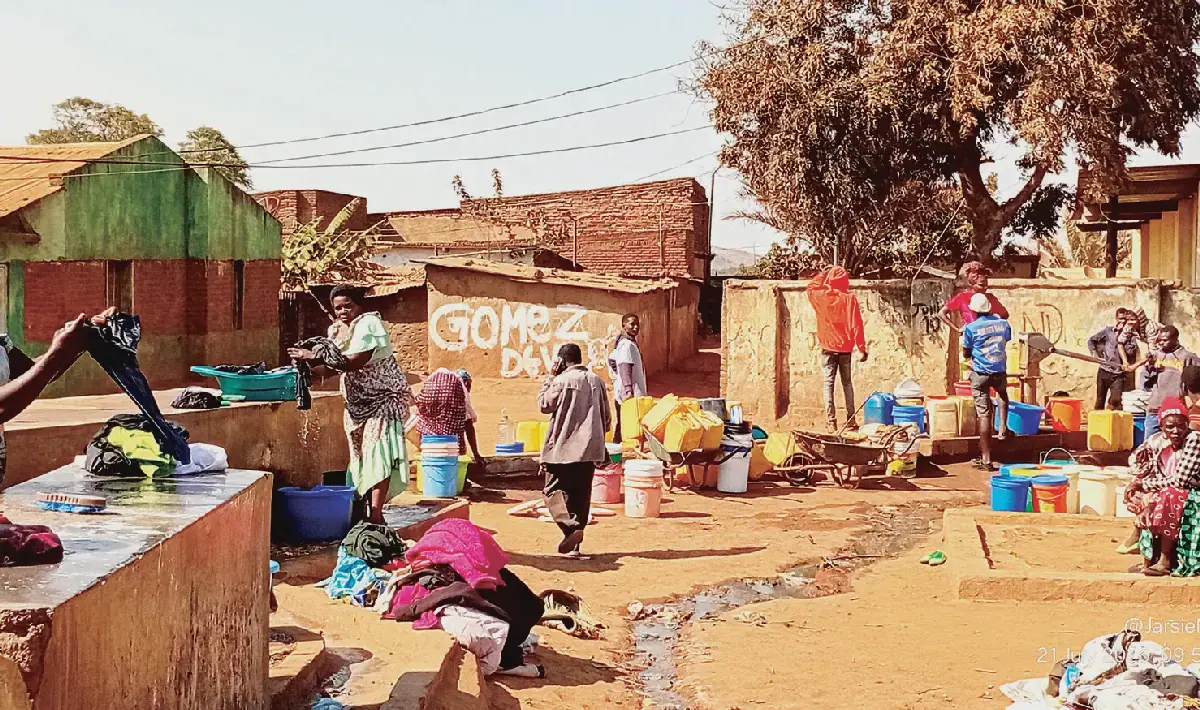
The World Food Programme (WFP) has reduced its planned humanitarian assistance under the lean-season response plan by 33.3 percent, from 600,000 to 400,000 people, due to funding constraints. This reduction means that 200,000 people targeted under the organisation's planned response for the 2026-27 lean season risk facing hunger from October this year to March next year.
The WFP faces a funding shortfall of $142.3 million (about K249.17 billion) for its operations during the period in focus. As a result, the organisation has narrowed the geographical coverage of the response from four districts to three, targeting Chikwawa, Nsanje, and Phalombe only. The shortfall threatens the continuity of several programmes, including emergency food assistance, nutrition support, school feeding, and refugee assistance.
The reduction in humanitarian assistance could worsen household food insecurity, increase reliance on negative coping strategies, weaken household resilience to climate-related shocks, and deepen poverty. Centre for Agricultural Research and Development Director Innocent Pangapanga Phiri emphasised that this reduction risks further entrenching the country's vicious cycle of food insecurity and poverty.
The Malawi Vulnerability Assessment Committee (MVAC) projected that 2.6 million people would face acute food insecurity during the 2026-27 lean season. MVAC estimated that cushioning the affected population for three to four months would require 97,887 metric tonnes of maize, valued at K124.3 billion. The WFP's reduced assistance may exacerbate this situation.
Centre for Humanitarian Assistance and Social Protection Executive Director Kenneth Sakala said the reduction would deepen food consumption gaps, leaving people to enter the peak hunger period of January to March without safety nets. Sakala recommended that the government re-target and reallocate resources for affected households and roll out a shock-responsive expansion of the Social Cash Transfer Programme (SCTP) to mitigate worsening food insecurity.
Sakala further recommended that the government link SCTP, anticipatory action, and investment in irrigation and resilience in the Shire Valley. He also suggested that the government pre-position maize and cash before January price peaks and fund last-mile transport that WFP currently provides as Logistics Cluster co-lead.
The WFP's Country Brief for October 2026 stated that the funding shortfall would have severe consequences, including increased likelihood of families reducing the number of meals they eat each day and adopting other negative coping strategies. The organisation urged the government and stakeholders to strengthen food price monitoring and market stabilisation to mitigate the effects of the reduced assistance.
Key points
- The WFP has scaled down its planned humanitarian assistance in Malawi by 33.3 percent due to funding constraints.
- The reduction in assistance may exacerbate food insecurity, affecting 200,000 people targeted under the organisation's planned response for the 2026-27 lean season.
- The Malawi government and stakeholders are urged to strengthen food price monitoring and market stabilisation to mitigate the effects of the reduced assistance.