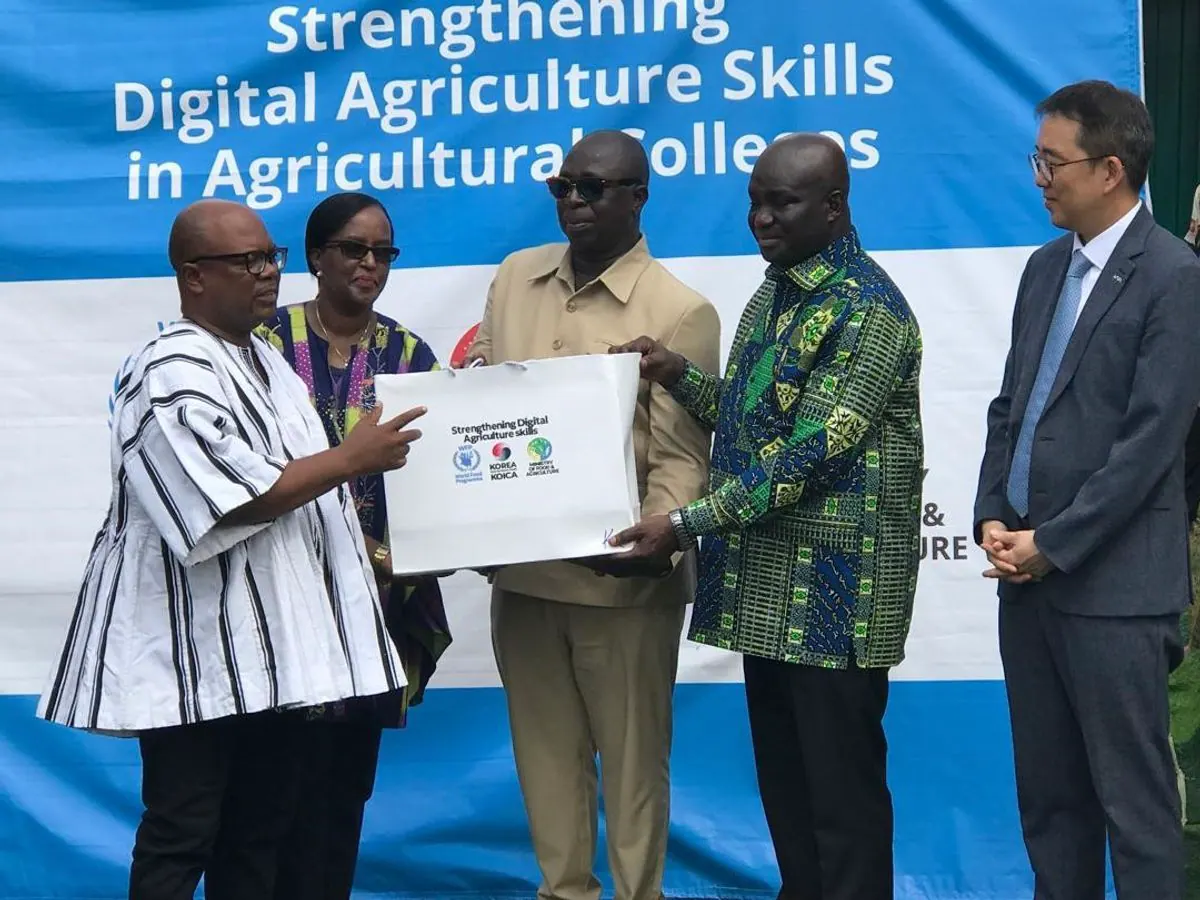
The United Nations World Food Programme (WFP) and the Korea International Cooperation Agency (KOICA) have made a significant investment in Ghana's agricultural sector. The two organizations have jointly invested $500,000 to equip five agricultural colleges with digital farming technologies. This initiative aims to enhance the skills of agricultural students and improve the country's agricultural productivity. The investment will enable the colleges to adopt modern farming techniques and technologies, making Ghana's agricultural sector more competitive and sustainable.
The five agricultural colleges that will benefit from this investment are located across Ghana. The digital farming technologies will enable students to acquire practical skills in precision agriculture, data analysis, and farm management. This will help to increase crop yields, reduce waste, and improve the overall efficiency of farming practices. The initiative is expected to have a positive impact on Ghana's food security and economy.
The WFP and KOICA have a long history of collaboration in Ghana. The two organizations have worked together on various projects aimed at improving food security, nutrition, and sustainable agriculture in the country. This latest investment is part of their efforts to support Ghana's agricultural sector and promote sustainable development. The initiative is also expected to create job opportunities for young people in the agricultural sector.
The digital farming technologies that will be introduced to the five agricultural colleges include precision irrigation systems, drones, and satellite imaging. These technologies will enable students to monitor crop health, detect pests and diseases, and optimize crop yields. The initiative will also provide training on data analysis and interpretation, enabling students to make informed decisions about their farming practices.
The investment in digital farming technologies is expected to have a positive impact on Ghana's agricultural sector. The sector is a significant contributor to the country's economy, employing over 30% of the workforce. However, the sector faces several challenges, including low productivity, limited access to finance, and inadequate infrastructure. The introduction of digital farming technologies is expected to address some of these challenges and make the sector more competitive.
The WFP and KOICA have expressed their commitment to supporting Ghana's agricultural sector. The two organizations believe that the investment in digital farming technologies will have a lasting impact on the country's food security and economy. They have also expressed their hope that the initiative will serve as a model for other countries in the region.
The initiative is expected to be implemented in phases. The first phase will involve the introduction of digital farming technologies to the five agricultural colleges. The second phase will involve training for students and lecturers on the use of the technologies. The initiative is expected to be completed within the next 12 months.
Key points
- The WFP and KOICA have invested $500,000 to equip five agricultural colleges in Ghana with digital farming technologies.
- The initiative aims to enhance the skills of agricultural students and improve Ghana's agricultural productivity.
- The digital farming technologies will enable students to acquire practical skills in precision agriculture, data analysis, and farm management.