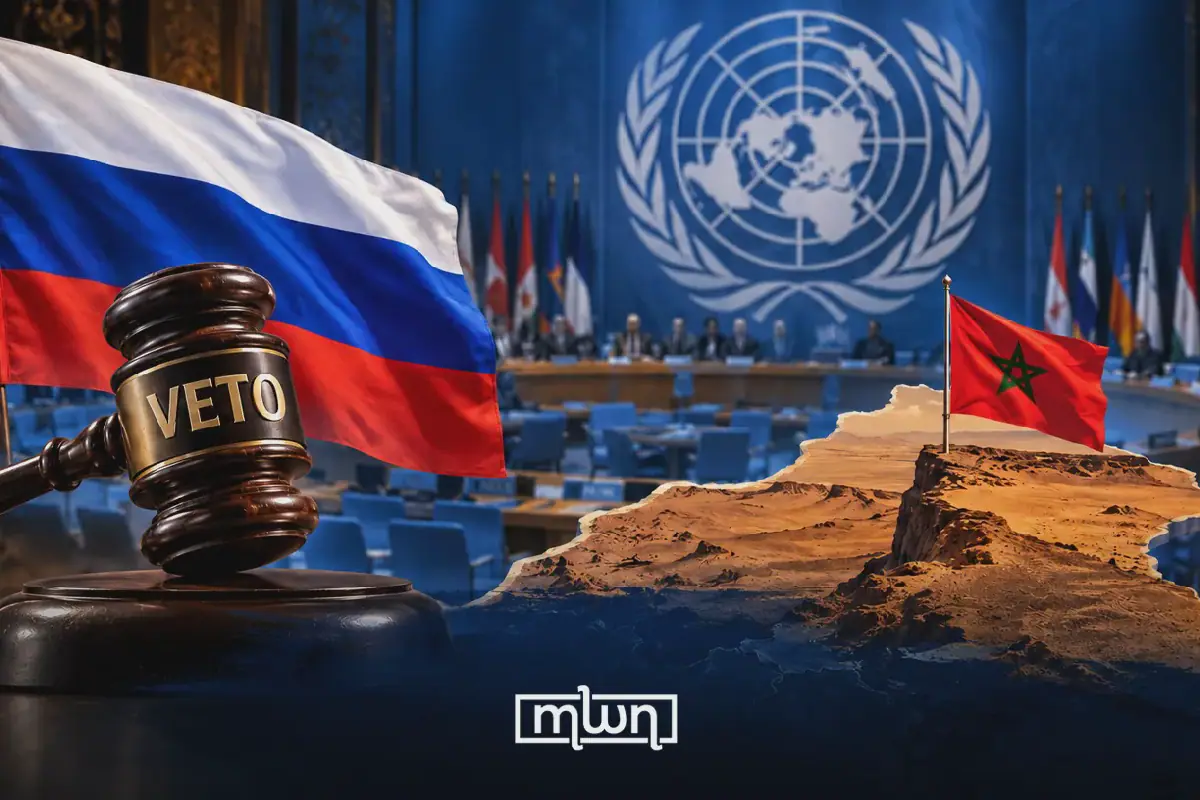
The Russian veto of the US-sponsored draft resolution on Western Sahara has been seen as a significant development in the decades-long dispute over the territory. According to Samir Bennis, a commentator, Morocco now has a historic opening to strike the Sahara dossier off the General Assembly's agenda this coming December. This comes as Morocco's Autonomy Plan for the Sahara enjoys overwhelming support among UN member states.
Morocco first brought the Sahara question before the General Assembly in 1957, before it became a separate agenda item examined by the Fourth Committee and the Special Committee on Decolonization in 1964. With 135 of the organization's 193 member states now supporting Morocco's position, Rabat can seek to remove the issue from the General Assembly's agenda. Under Rule 22 of the Rules of Procedure of the United Nations General Assembly, an item on the Assembly's agenda may be amended or deleted by a majority of the members present and voting.
To remove the Sahara item from the General Assembly's agenda, Morocco would need to secure the votes of a majority of the members present and voting. If all member states were present and participated in the vote, Morocco would need 97 votes. However, because Rule 22 does not require a two-thirds majority, Morocco could achieve its objective even if only 150 or 140 countries attended the meeting and cast their votes. In the instance of 150 member states attending and none abstaining, Morocco would need the support of just 76 countries.
There is a significant precedent from which Morocco could draw inspiration: China's approach to Hong Kong and Macao. In 1972, China requested the removal of Hong Kong and Macao from the list of Non-Self-Governing Territories examined by the United Nations Fourth Committee. The General Assembly subsequently removed Hong Kong and Macao from the list, approximately 25 years before China recovered effective sovereignty over the two territories.
Morocco could justify its position by recalling that it was the country that originally brought the Sahara question before the United Nations and that, had it not been for the pressure Rabat exerted on Spain, Madrid might have continued its occupation of the territory. The General Assembly's adoption of Resolution 2072 in December 1965 reflected the prevailing understanding at the time of a dispute between Spain on the one hand, and between Morocco and Mauritania on the other, concerning sovereignty over the territory.
At that stage, no one envisaged self-determination through a referendum as the means of bringing the dispute to an end. From the United Nations' perspective, self-determination became a formula for resolving the dispute only after Morocco called for the territory's inhabitants to be allowed to exercise their right to self-determination. The current geopolitical environment presents Morocco with a historic opportunity to rally the support necessary to achieve its objective.
Algeria is celebrating Russia's veto, but Morocco sees it as a blessing in disguise. With the overwhelming diplomatic support Morocco has mobilized for its territorial integrity over the past two decades, Rabat is well-positioned to secure the votes needed to remove the Sahara item from the General Assembly's agenda. Morocco could also have a friendly country take the initiative and formally submit the proposal, while Rabat would subsequently undertake the diplomatic efforts required to mobilize sufficient support for its adoption.
Key points
- Morocco has a historic opportunity to remove the Western Sahara issue from the UN General Assembly's agenda following Russia's veto of a US-drafted resolution.