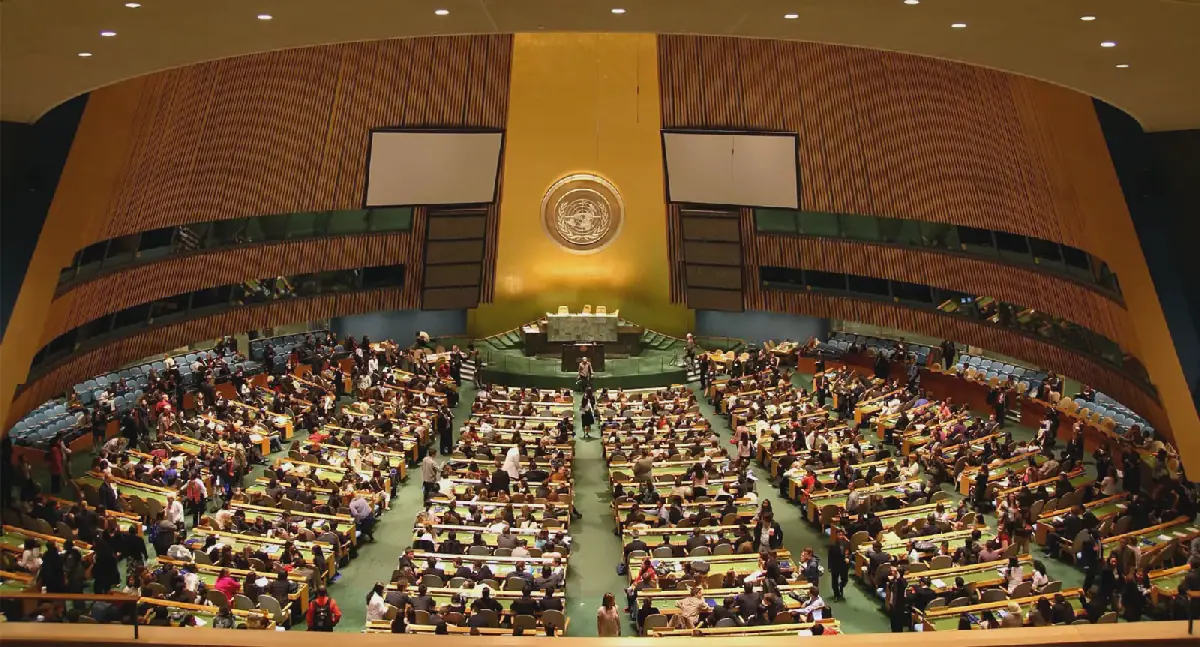
The 81st session of the UN General Assembly provided a platform for advocates of the Sahrawi cause to push for justice and recognition of the Sahrawi people's inalienable right to self-determination and independence. The discussions drew attention to the international community's legal and moral responsibility towards Western Sahara, undermining Morocco's claims of sovereignty over the territory.
Namibian President Netumbo Nandi Ndaitwah reaffirmed her country's support for the Sahrawi cause, emphasizing the need for a fair and lasting solution that guarantees the Sahrawi people's right to self-determination within the framework of the UN. She stressed that the UN has a responsibility to push for a fair and lasting solution to the Western Sahara issue, in line with the UN Charter and relevant resolutions on decolonization and self-determination.
The Sahrawi delegation, led by Foreign Minister Mohamed Yalem Biste, held several meetings with heads of state and officials, securing renewed support for the Sahrawi people's right to self-determination and independence. Angolan President Joao Lourenco reaffirmed his country's support for the Sahrawi cause, echoing the principles of the UN Charter and the African Union's constitutive act.
The Sahrawi Foreign Minister also met with Lesotho's Minister of Foreign Affairs and International Relations, Limpho Tuo, and Cuban Foreign Minister Bruno Rodriguez Parrilla, who reiterated their countries' principled and unwavering support for the Sahrawi cause. These meetings took place against the backdrop of Morocco's diplomatic maneuvering to garner international support for its claims over Western Sahara.
The UN Secretary-General's report on Western Sahara, submitted to the 81st General Assembly, reaffirmed that the territory remains a decolonization issue. The report emphasized that Morocco's actions and attempts to secure recognition of its sovereignty do not alter the territory's legal status as a region awaiting decolonization.
Despite Morocco's efforts to distort facts and present one-sided proposals as a fait accompli, the Sahrawi government criticized the Moroccan government's actions as attempts to divert attention from its deepening internal crisis. The Sahrawi government accused Morocco of violating the UN Charter and threatening regional and international security through its expansionist policies and support for terrorist groups.
The Sahrawi government also highlighted Morocco's alliances with "forces of evil" to threaten its neighbors' security and use its citizens to destabilize the region. The government argued that Morocco's actions disqualify it from holding a seat in a UN body primarily dedicated to maintaining international peace and security.
Key points
- The UN General Assembly session reaffirmed the international community's support for the Sahrawi people's right to self-determination and independence.
- Morocco's claims of sovereignty over Western Sahara were undermined by the UN Secretary-General's report, which reaffirmed the territory's status as a decolonization issue.
- The Sahrawi government accused Morocco of threatening regional and international security through its expansionist policies and support for terrorist groups.