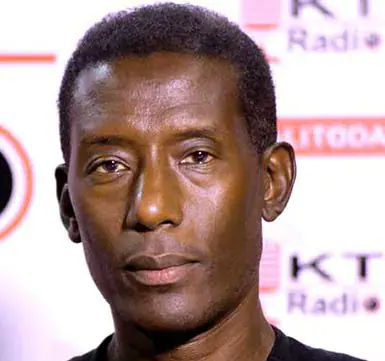
American academic and former Presidential advisor Michael Rubin has written an article for the Washington Examiner, shedding light on the Democratic Republic of Congo (DRC) crisis. Rubin explicitly stated that the only reason to support the DRC is corruption. This statement may not be new, but what is notable is that he addressed several truths that many Western commentators, journalists, and academics have ignored. Rubin's article highlights the Trump administration's attention to Central Africa, which he believes is driven by the DRC's vast natural resources.
The DRC is believed to hold $24 trillion in rare earths and strategic metals, making it a crucial player in the 21st-century economy. Rubin inferred that the US engagement in the DRC is primarily driven by resource extraction, rather than a genuine quest for peace. He also pointed out that President Felix Tshisekedi's record is dismal, and his election was secured through last-minute maneuvering and bribes. Rubin's comments have sparked a debate about the role of Western powers in the DRC and the responsibilities of the Congolese government.
Rubin also addressed the issue of Rwanda's involvement in the DRC crisis. He noted that Rwanda and the DRC cooperated on shared security until Tshisekedi turned to ethnic incitement. Rubin also pointed out that despite accusations against Rwanda, no one has produced a single Rwandan prisoner of war or body. Furthermore, he stated that the State Department's assumption that every Tutsi is Rwandan is incorrect, as over half a million Tutsi live in Congo. These comments have significant implications for the regional dynamics and the role of Rwanda in the DRC crisis.
Rubin's article also challenged the common narrative about the M23 rebel group, now renamed FRN. He stated that the group formed to force the DRC government to honor its previous commitments to reform. Rubin spent time with M23 in 2024 and was impressed by their organization, security, and public works. He noted that the DRC cannot defeat M23 because the rebel group has the support of the local population. These comments contradict the common narrative about M23 and highlight the complexity of the DRC crisis.
The reaction to Rubin's article has been significant, with many Western commentators and journalists being criticized for their previous silence on the DRC crisis. Rwanda has long called for an acknowledgment of the underlying causes of the crisis, but Western powers have often looked away or distorted the facts. The Congolese government has also been criticized for its role in the crisis, including its handling of the M23 rebel group. Rubin's article has sparked a necessary conversation about the DRC crisis and the role of external actors.
One of the key issues in the DRC crisis is the role of the Congolese army, FARDC, and its coalition with armed groups, including the FDLR. These groups have been accused of human rights abuses, including massacres and pillaging. In contrast, Rubin noted that M23 rebels observe the Geneva Convention and protect civilians. The complexity of the DRC crisis requires a nuanced understanding of the various actors involved and their motivations.
The DRC crisis has significant implications for regional stability and global security. The country's natural resources have made it a crucial player in the global economy, but the crisis has also led to human suffering and instability. Rubin's article has highlighted the need for a more nuanced understanding of the crisis and the role of external actors. As the situation in the DRC continues to evolve, it is essential to consider the perspectives of various stakeholders and to work towards a peaceful and sustainable solution.
Key points
- Michael Rubin's article highlights the role of corruption in the DRC crisis and the motivations of external actors.
- The DRC crisis is driven by a complex interplay of factors, including resource extraction, ethnic tensions, and governance issues.
- Rubin's comments have significant implications for regional dynamics and the role of Rwanda in the DRC crisis.