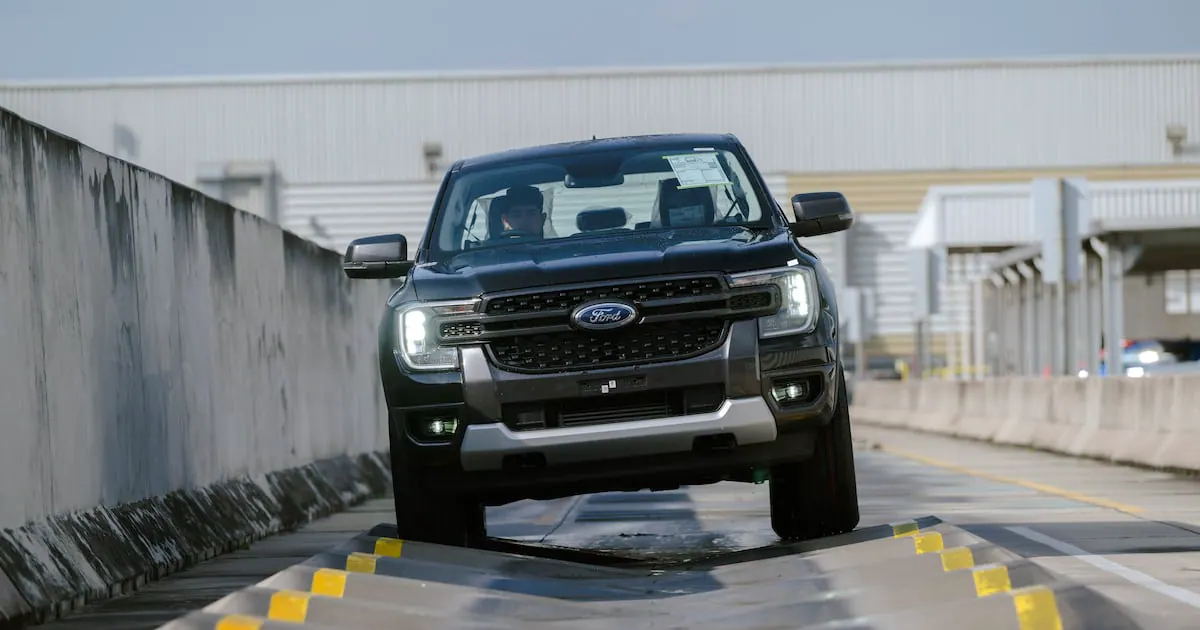
Western automakers are turning to defence spending as a way to sell more vehicles and utilize underemployed factories. Companies such as Ford, General Motors, and Jaguar Land Rover are bidding for military contracts using modified versions of pickup trucks and off-road vehicles they already produce. This move comes as the industry faces slowing car sales and growing competition from Chinese rivals.
The industry is tapping into rising Western defence spending, but executives and analysts say the opportunities to materially boost revenue remain limited. According to Jefferies auto analyst Vanessa Jeffriess, the financial impact of these opportunities will be minimal. Automakers face slowing demand and intensifying competition from Chinese rivals, putting them under pressure to show investors they are trying to diversify.
General Motors, the biggest US automaker, expects its defence division to generate revenue of $700m this year and grow by 30% annually for several years. However, this would put revenue at about $1.5bn in 2029, less than 1% of group revenue of $185bn in 2025. This highlights the limited impact of defence spending on the overall business.
Most major automakers ditched military contracts decades ago, but as governments from Europe to North America ramp up military spending, defence has emerged as one of the few growth sectors for the industry. Producing at scale, analysts see the most realistic opportunities in assets that automakers already have. Ford's European head Jim Baumbick said providing the military with vehicles fits with the company's existing strengths of providing "tough vehicles with high payloads".
Companies such as Ford, GM, and JLR are bidding for a £900m UK ministry of defence vehicle contract, initially for 3,000 vehicles, using modified versions of pickups and off-road vehicles they already make. Ford is bidding with its Ranger pickup, while two models in GM's bid are retrofitted Chevrolet Silverado pickups which will be modified for UK military use. JLR, a unit of India's Tata Motors, is bidding with its off-road Defender model.
Another attractive proposition for the auto industry is being able to offload surplus manufacturing capacity to companies looking to expand production in defence without the cost of building from scratch. Italy's Stellantis is planning to sell an idled Canadian factory to armoured-vehicle maker Roshel, and earlier this month Germany's Volkswagen agreed to sell its Osnabrueck plant to Israel's Aurelius Capital and the German state of Lower Saxony for a project with Rafael Advanced Defence Systems.
Suppliers could also emerge as bigger beneficiaries of rising defence spending. Unlike vehicle assembly plants, their smaller and more flexible production lines can often be adapted to military programmes with limited investment. French supplier Forvia is using its existing production capacity to explore military opportunities, and recently signed a deal to transfer a factory in Germany and 300 staff to defence firm General Dynamics.
Key points
- Western automakers are bidding for military contracts to offset slowing car sales and growing Chinese competition.
- Defence spending is not expected to have a significant impact on the overall revenue of automakers.
- Suppliers may benefit more from rising defence spending than automakers.