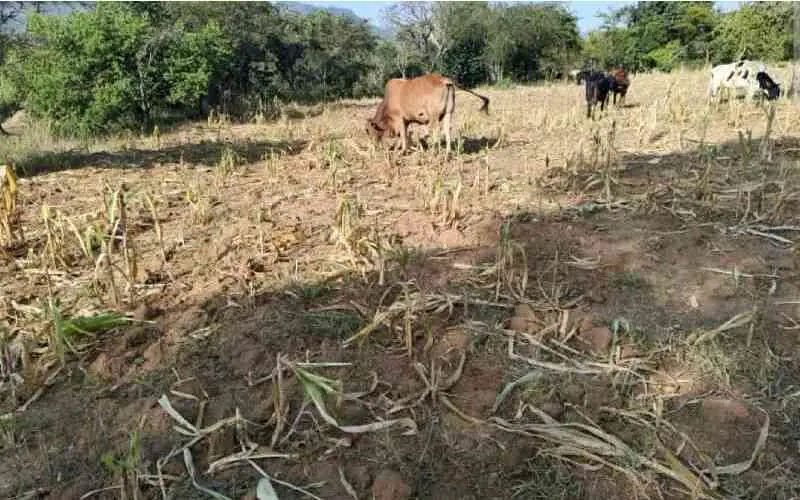
West Pokot County is experiencing severe food shortages and crop failures due to poor rainfall and changing weather patterns. Governor Simon Kachapin announced that the county is preparing farmers to take advantage of the expected El Niño rains by planting short-season crops that can mature within a shorter period. This move aims to mitigate the effects of the drought and improve food production in the region. The governor made these remarks at the 2026 West Pokot County Agricultural Show and Trade Fair.
The county government is working with Kenya Seed Company to identify and provide seed varieties suited to lowland areas and capable of maturing within a short period. This partnership will enable farmers to access suitable seeds for their region, increasing the chances of a successful harvest. Kachapin assured farmers that the county is committed to supporting them in their efforts to improve agricultural productivity. The governor also announced that the county will provide farmers with maize seeds and perennial tree seedlings.
The governor emphasized that the expected El Niño rains could help revive livestock production and address the milk shortage experienced after the recent drought. Increased rainfall could boost milk production, providing relief to farmers and consumers. Kachapin urged farmers to take advantage of the expected rains and plant short-season crops. He also highlighted the importance of adopting climate-smart agriculture practices to ensure sustainable food production.
The 2026 West Pokot County Agricultural Show and Trade Fair, themed "Promoting Climate Smart Agriculture and Trade Initiatives for Sustainable Economic Growth," brought together farmers, traders, agricultural institutions, innovators, and development partners. The event showcased agricultural technologies, indigenous seeds, livestock, value addition, and market opportunities. The fair provided a platform for stakeholders to share knowledge and best practices in climate-smart agriculture.
Climate change has significantly affected agriculture in West Pokot, requiring farmers and other stakeholders to adopt more sustainable and efficient production methods. Kachapin emphasized that the future of agriculture in West Pokot depends on efficient production, value addition, and market access. The county is focusing on increasing agricultural productivity, expanding market access, promoting value addition, and creating opportunities for innovation and investment.
A major highlight of the agricultural show was the first Indigenous Seed Fair, which showcased traditional and locally adapted seed varieties that farmers can use to improve resilience to changing climatic conditions. Farmers participating in the show shared their experiences with agroecological farming, highlighting its benefits in reducing production costs and improving soil health. Some farmers have adopted agroecology, using livestock manure to improve soil fertility and prevent diseases.
Farmers who have adopted agroecological farming practices reported positive outcomes, including reduced production costs and improved food safety. Julia Chenangat, an agroecological farmer from Chepareria, uses livestock manure to improve soil fertility, while Julia Kiran, another farmer, believes that crops grown without chemical inputs are healthier. These farmers' experiences demonstrate the potential of agroecology to improve agricultural productivity and sustainability in West Pokot.
Key points
- West Pokot County is promoting short-season crops to mitigate the effects of drought and improve food production.
- The county government is working with Kenya Seed Company to provide suitable seed varieties for lowland areas.
- Agroecological farming practices are being adopted by farmers in West Pokot to improve soil health and reduce production costs.