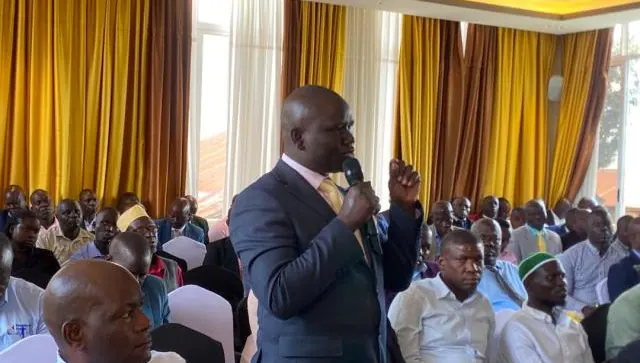
Local government leaders in West Nile, Uganda, have urged the government to increase and timely release financial allocations to districts. They say excessive spending on wages is limiting funds for development projects and essential services in education, health, and roads. The call was made during the Local Government Budget Consultative Workshop for West Nile, held in Arua, as consultations for the 2027/28 financial year budget continue.
The leaders cited that many districts are struggling to implement approved development plans due to limited funds for infrastructure and priority services. Yumbe District Chairperson Asiku Abdumutwalib Mahmoud stated that the situation affects the district's ability to deliver planned projects. He mentioned that Yumbe's budget for the 2026/27 financial year is 72.3 billion shillings, with 35 billion shillings allocated to wages, leaving only 8 billion shillings for development programs.
Weak local revenue mobilisation was also raised as a concern, with leaders saying districts need more support to increase locally generated revenue. They urged the Ministry of Finance, Planning and Economic Development to address funding gaps and incorporate their proposals into the 2027/28 national budget. Zombo District Principal Human Resource Officer Munguacel Peter mentioned that local governments sometimes return funds to the national treasury due to challenges beyond their control.
Delayed releases and incomplete government processes were cited as challenges affecting fund utilisation. Munguacel Peter mentioned that two seed schools in Zombo have not been coded, despite receiving wage allocations, resulting in funds being returned to the Treasury. The leaders also cited understaffing as another challenge affecting service delivery.
Obongi County Member of Parliament Fungaroo Kaps Hassan called for improved funding to local governments, saying inadequate resources make it difficult for districts to implement development plans. He stated that funding constraints prevent local governments from supplementing central government resources and achieving planned targets.
Principal Economist at the Ministry of Finance, Planning and Economic Development Moses Ssonko said the government is committed to addressing concerns raised by local governments through the budget process. He mentioned that the government is prioritising investment in major sectors, including agriculture, roads, and mineral development, to strengthen economic growth.
The Ministry of Finance, Planning and Economic Development has proposed strategies under the Ten-Fold Growth Strategy, including revenue-led fiscal consolidation and prudent management of oil revenues. West Nile leaders want the ongoing budget consultations to result in increased and more predictable funding to local governments, enabling districts to invest more in infrastructure and improve service delivery.
Key points
- West Nile local government leaders demand increased funding to address development needs
- Excessive spending on wages limits funds for development projects and essential services
- Government commits to addressing concerns raised by local governments through the budget process