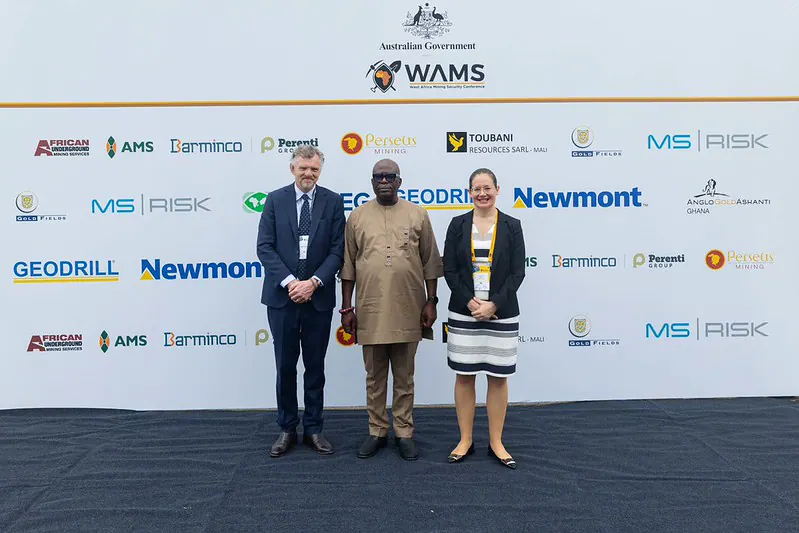
The sixth West Africa Mining Security Conference in Accra brought together government officials, diplomats, mining companies, and security professionals to discuss the region's response to a rapidly changing risk environment. Deputy Minister for the Interior, Ebenezer Okletey Terlabi, emphasized that successful security approaches should be adapted to local circumstances rather than transferred wholesale from one jurisdiction to another. This is particularly relevant to the mining sector, where security challenges vary substantially between countries and even between mining districts within the same country.
The conference highlighted the importance of considering local political, economic, and community realities when developing security strategies for the mining sector. Australian High Commissioner-designate Keara Shaw stressed the need for responsible environmental practices and constructive dialogue alongside security measures. She emphasized that security should protect people and legitimate economic activity while also addressing organized crime and environmental challenges. This approach recognizes that effective security cannot be separated from the context in which a mine operates.
The West Africa Mining Security Conference has developed as a regional platform to bring together practitioners with different perspectives on risk. The conference allows companies and governments to compare experiences and refine approaches to the particular conditions facing West African operations. Nigel Stanier, Assistant Secretary and head of the Africa Branch at Australia's Department of Foreign Affairs and Trade, participated in the conference, reinforcing Australia's diplomatic and policy interest in regional stability and sustainable investment.
Speakers at the conference warned that security strategies developed elsewhere may not address the specific vulnerabilities in West Africa's mining sector. A strategy designed around terrorism risk in the Sahel may not address the same vulnerabilities as one dealing with illegal gold trading, community grievances, border smuggling, or organized crime in a coastal state. Therefore, it is essential to develop security approaches that are tailored to the local context.
The conference emphasized the importance of collaboration and knowledge sharing between stakeholders. By bringing together practitioners with different perspectives, the conference aims to promote the development of effective security strategies that take into account local realities. This approach recognizes that security is not solely the responsibility of governments or companies but requires a collaborative effort from all stakeholders.
The West Africa Mining Security Conference provides a platform for stakeholders to discuss emerging trends and challenges in the region. The conference also offers an opportunity for companies and governments to share best practices and lessons learned in addressing security challenges. By working together, stakeholders can develop effective security strategies that promote regional stability and sustainable investment.
The message from the conference is clear: international experience remains valuable, but security strategies are most effective when they are built around the realities on the ground rather than imposed on them. Mining companies operating in West Africa must work with local stakeholders to develop security approaches that are tailored to the local context. By doing so, they can promote regional stability, sustainable investment, and responsible environmental practices.
Key points
- Security strategies developed elsewhere cannot be transplanted into West Africa's mining sector without accounting for local realities.
- Effective security approaches should be adapted to local circumstances rather than transferred wholesale from one jurisdiction to another.
- Collaboration and knowledge sharing between stakeholders are essential for developing effective security strategies that take into account local realities.