A concerning trend is emerging in west Africa, where students are increasingly opting out of science studies. In Ivory Coast, only 0.6 percent of students sat for the elite maths-and-physics track in their end-of-high school baccalaureate exam in 2022. This decline is not unique to Ivory Coast, as countries such as Mali, Burkina Faso, Guinea, Senegal, and Niger have also seen a dwindling interest in science.
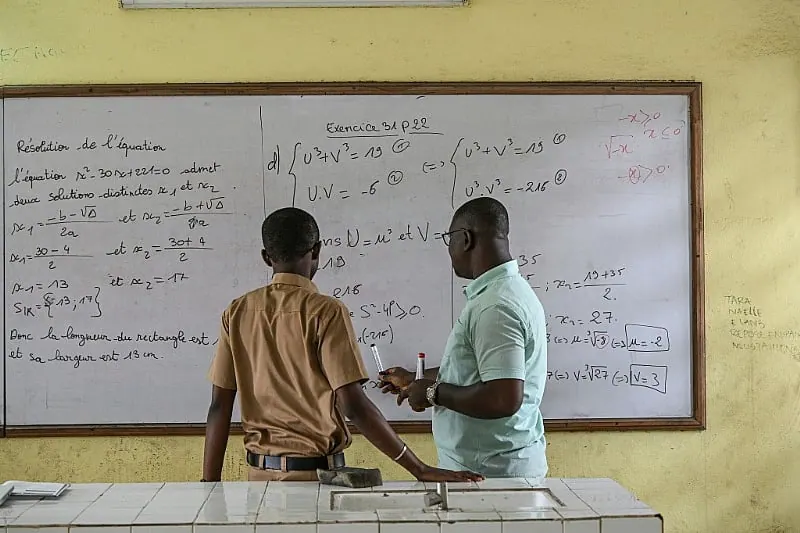
The situation is particularly dire in some schools, where science classes are dwindling due to low enrollment. In an 11th-grade science class at Abidjan's prestigious Lycee Moderne de Cocody, 37 students were in attendance, a relatively good turnout by local standards. However, this number is a far cry from literature classes, which often have over 80 pupils. According to Melagne Agnimel, Ivory Coast's inspector-general for secondary education, having 30 students in a maths-and-physics class is rare these days.
Education officials attribute the decline in science studies to years of underinvestment in science education, a shortage of teachers, and inadequate labs and equipment. Many students also find science intimidating and perceive it as too challenging. Some teachers, according to Fabrice Guei, a maths teacher, make matters worse by making maths and science seem daunting, thereby scaring students away.
The problem persists even after graduation, as university courses often struggle to keep pace with scientific advancements, and engineering schools are scarce. Career prospects may also seem limited, leading to a brain drain as scientists seek opportunities abroad. Youan Bi, a physics and chemistry teacher, noted that salaries for science graduates are often not enough to sustain them, leaving teaching as the primary option.
The decline in science studies has significant implications for the region, particularly as governments push to develop sectors such as medicine, manufacturing, and technology. Africa currently accounts for a tiny share of global scientific research, and experts warn that the continent risks falling further behind without a new generation of researchers and engineers.
Governments are now taking steps to reverse the trend, launching awareness campaigns, opening science-focused schools, and expanding specialist programs. In Ivory Coast, officials are creating science hubs nationwide and establishing new elite preparatory classes aimed at attracting top students in maths and physics.
Despite the challenges, some students remain committed to pursuing science studies. Abdoulaye Harouna, a 19-year-old final-year maths-and-physics student, admitted that he initially questioned his choice but was convinced by his older brother's success as a solar-energy engineer. Harouna believes that with hard work and dedication, his future is guaranteed in the field.
Key points
- West Africa is facing a significant decline in students choosing to study science, despite government efforts to produce more engineers and researchers.
- The decline is attributed to underinvestment in science education, a shortage of teachers, and limited career prospects.
- Governments are launching initiatives to reverse the trend, including awareness campaigns, science-focused schools, and specialist programs.