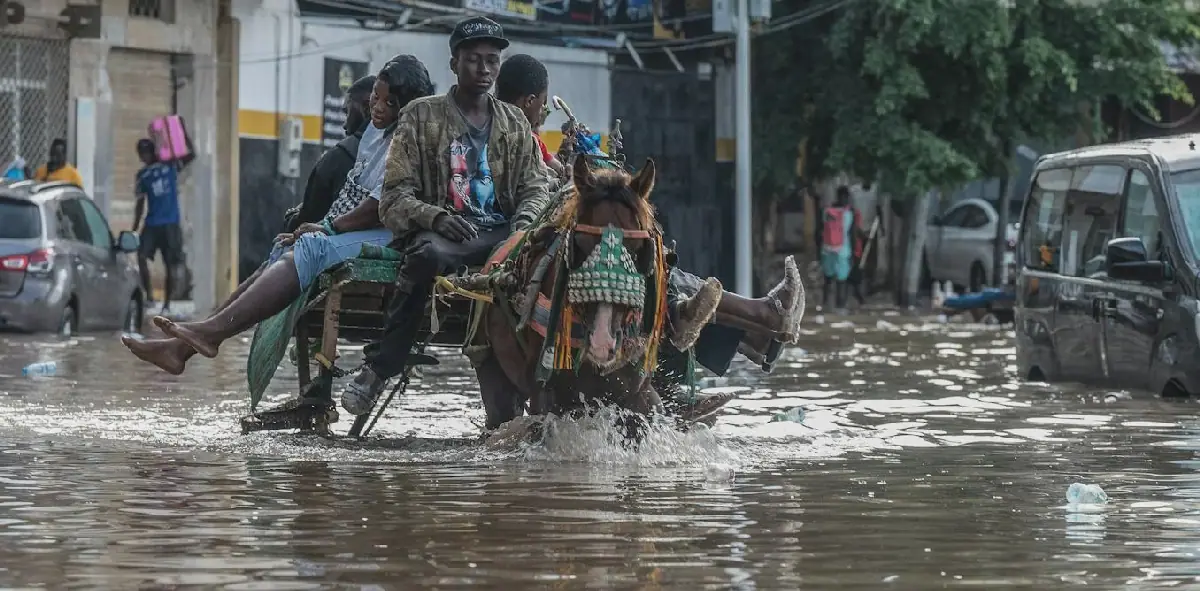
A review of climate and disaster policies in five West African countries, including Nigeria, has found that while they account for damage to infrastructure and crops, they largely neglect cultural and mental health losses. The research, conducted over a decade, examined policies, adaptation plans, laws, and disaster-management frameworks from Burkina Faso, Ghana, Nigeria, Senegal, and Sierra Leone. The study highlights a significant gap in addressing losses that are harder to quantify.
The policies reviewed focus primarily on measurable damage to infrastructure and livelihoods, such as roads, bridges, and crops. In contrast, losses that are more difficult to quantify, like cultural erosion, psychological harm, and broken community ties, receive far less attention. The researchers describe these unavoidable impacts as "loss and damage," a term used in climate policy for harm that cannot be prevented through adaptation or fully repaired afterwards.
The review identified two main gaps in the current approaches. Firstly, the five countries address climate-related losses and damages differently, making it unclear which agencies should assess the impact of disasters and coordinate support. Secondly, the policies often overlook losses to culture, mental health, and community ties. The researchers argue that official assessments not only record what happened but also shape government priorities, recovery budgets, and requests for international assistance.
The study highlights the example of a coastal community forced to relocate due to erosion. While new housing may provide immediate shelter, relocation can separate people from their livelihoods, family networks, and culturally significant sites. Similar gaps arise in education and health, where rebuilding damaged infrastructure does not recover lost learning or address the emotional consequences of displacement.
To capture a wider range of losses, the researchers propose combining cost assessments with input from affected communities on non-monetary losses. They suggest involving local authorities, women's organizations, traditional leaders, and civil society groups in identifying losses that official assessments often overlook. This work should begin before disaster strikes, with communities mapping culturally important places and documenting local livelihoods and support systems.
The researchers argue that existing climate, disaster management, social protection, and development agencies can include wider forms of loss in their assessments. A common way of recording and reporting losses would allow different agencies to work from the same information, strengthening the countries' access to international support. The Fund for Responding to Loss and Damage and the Santiago Network provide technical assistance for climate-related losses, but countries need to provide evidence of the impacts.
The research was carried out by Olasunkanmi Habeeb Okunola, an Associate Academic Officer at the United Nations University Institute for Environment and Human Security, and Susan S. Ekoh, a Senior Researcher at the German Institute of Development and Sustainability. Their study emphasizes the need for a more comprehensive approach to addressing climate-related losses and damages in West Africa, one that takes into account the complex and often overlooked impacts on culture, mental health, and community life.
Key points
- West Africa's climate plans focus on infrastructure damage, overlooking cultural and mental health losses.
Reporting sources
- West Africa climate plans count ruined roads, crops, overlook cultural, mental health losses · West Africa News Agency