S&P Global, a US-based ratings agency, has noted that Ghana's institutional arrangements are weak but improving. The agency highlighted that the cost of servicing government debt remains elevated, which constrains Ghana's ratings. According to S&P Global, Ghana's economy is heavily reliant on agriculture, which accounts for 20% of the country's Gross Domestic Product (GDP), and gold exports, which made up over 66% of goods exports in 2025.
The reliance on agriculture and gold exports exposes Ghana to erratic weather and external shocks. S&P Global warned that if gold prices fall faster than expected, the value of Ghana's exports would also decline. Additionally, the agriculture sector could struggle due to El Nino-induced droughts or flooding, or if the Middle East conflict prolongs, leading to further rises in fertilizer costs. Either scenario could disrupt the recent easing of inflationary pressures.
The administration's fiscal reforms are still at an early stage and have yet to be tested through an election cycle. Therefore, S&P Global sees potential for fiscal slippages to occur through 2029. The agency noted that measures to strengthen public finances are working but have yet to be tested through economic and electoral cycles. The government is continuing to advance its reform agenda, particularly its commitment to improving the management of public finances.
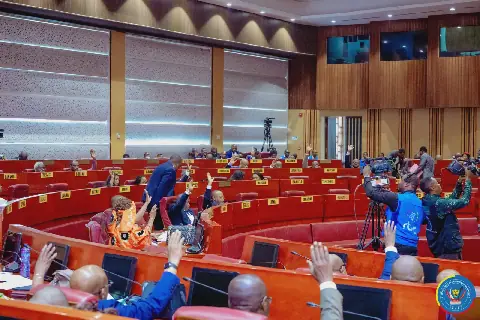
However, the effectiveness of Ghana's new institutional measures has yet to be fully tested. The administration has a strong mandate, with a 46-seat majority in the 276-member parliament, and is led by the National Democratic Congress (NDC) under President John Mahama. S&P Global expects interest payments to average a high 20% of government revenue over the next four years.
Ghana's public debt fell to 49% of GDP in 2025 from 70.3%, according to the World Bank. Despite this decline, the country's debt servicing costs remain high. The World Bank has warned that Ghana's recovery remains structurally incomplete. The country's growth rate is expected to exceed 6.5% in 2026, according to Databank Research.
The government's strategy of accumulating foreign reserves and gold carries high fiscal costs, according to S&P Global. The agency noted that the country's economy experienced high but unbalanced growth from the mid-2000s to 2022, which led to a debt crisis. To achieve sustainable growth, Ghana needs to address its weak institutional arrangements and high debt servicing costs.
The situation is further complicated by the potential impact of external shocks, including the Middle East conflict and erratic weather patterns. The government's efforts to strengthen public finances and improve the management of public finances are steps in the right direction. However, the effectiveness of these measures will need to be tested through economic and electoral cycles.
Key points
- Weak institutional arrangements and high debt servicing costs constrain Ghana's ratings.
- Ghana's economy is heavily reliant on agriculture and gold exports, making it vulnerable to external shocks.
- The government's fiscal reforms are still at an early stage and have yet to be tested through an election cycle.