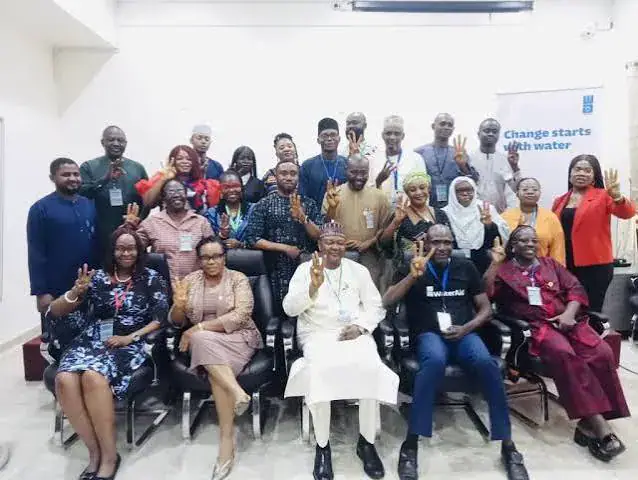
WaterAid Nigeria has called on the Federal Government to prioritize investment in water supply and handwashing facilities to prevent the spread of infectious diseases. According to Ms Evelyn Mere, Country Director of WaterAid Nigeria, handwashing with soap and running water is a critical defence against infections, but awareness campaigns alone are not enough to guarantee sustained hygiene practices. She made the call at a roundtable on handwashing for effective infection prevention and control of Ebola, diphtheria, and other communicable diseases in Abuja.
The 2019 WASH National Outcome Routine Mapping (WASHNORM) report revealed that despite 81 per cent of household heads knowing at least two critical times for handwashing, only 10 per cent demonstrated proper handwashing with soap under running water. Additionally, only 16 per cent of households had access to basic hygiene services, while 14 per cent of schools and seven per cent of healthcare facilities had basic water and sanitation services. These statistics highlight the need for improved investment in water and hygiene infrastructure.
Nigeria's experiences during the Ebola outbreak in 2014 and the COVID-19 pandemic in 2020 exposed gaps in water and hygiene infrastructure. Handwashing facilities were often abandoned after outbreaks subsided. The country has recently recorded over 10,000 confirmed diphtheria cases and over 65,000 suspected cholera cases across 35 states in 2026. A confirmed Ebola case in Abuja in October also heightened public health concerns. These outbreaks underscore the need for sustained investment in handwashing facilities.
The National Roadmap to Hand Hygiene for All (2021–2025), launched in 2022, was neither costed nor implemented before its target period elapsed. WaterAid Nigeria and partners, including the World Health Organisation (WHO) and the Federal Ministry of Water Resources and Sanitation, organized a roundtable to mobilize stakeholders towards sustainable investment in hand hygiene. The event aimed to promote handwashing as an integral part of Nigeria's pandemic preparedness and public health strategy.
Other stakeholders at the roundtable emphasized the need for reliable water supplies, functional facilities, adequate funding, and regular maintenance to sustain handwashing practices. Mr Habu Jamilu, Director, Water Quality Control and Sanitation, Federal Ministry of Water Resources and Sanitation, called for improved WASH infrastructure in schools, healthcare facilities, markets, and motor parks. He also stressed the need for stronger community participation and coordination among government tiers.
Dr Muzzammil Gadanya, Infection Prevention and Control (IPC) Pillar Lead for Ebola Virus Disease at the Nigeria Centre for Disease Control and Prevention (NCDC), reported that average hand hygiene compliance among healthcare workers stood at 26 per cent. He attributed the low compliance to inadequate WASH infrastructure and shortages of essential supplies. Gadanya urged government and development partners to prioritize infrastructure improvements alongside behavioural change.
Stakeholders also called for an end to Nigeria's reactive approach to disease outbreaks and for predictable funding, better coordination among government agencies, and adequate provisions for routine maintenance of WASH facilities. Mrs Kogbara Ayaba, Chief Scientific Officer and Deputy Director, Hygiene Promotion, Federal Ministry of Water Resources and Sanitation, advocated for climate-resilient infrastructure and greater community participation to ensure sustainable access to water and sanitation services.
Key points
- WaterAid Nigeria urges the Federal Government to sustain investment in water supply and handwashing facilities to strengthen preparedness against infectious disease outbreaks.
- The 2019 WASHNORM report revealed significant gaps in access to basic hygiene services and proper handwashing practices in Nigeria.
- Stakeholders emphasize the need for reliable water supplies, functional facilities, adequate funding, and regular maintenance to sustain handwashing practices.