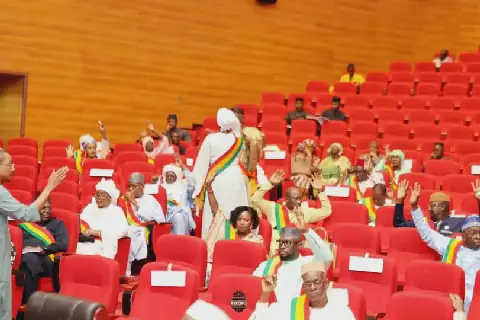
The Senegalese National Assembly has adopted a resolution opposing the government's plan to pass the 2026 supplementary budget by decree. This move is seen as a significant development in the country's fiscal policy. The Assembly's decision was made in accordance with the country's laws and regulations. The government's attempt to pass the budget by decree was met with resistance from lawmakers. The National Assembly's stance is aimed at ensuring transparency and accountability in the management of the country's finances.
In a related development, Guinea-Bissau is marking one year since the military takeover, with the country's return to democracy still uncertain. The military coup, which took place on November 24, 2025, has had a lasting impact on the country's political landscape. Despite promises of a transition to civilian rule, the country's future remains uncertain. The international community has expressed concern over the situation, calling for a swift return to democratic governance.
The Economic Community of West African States (ECOWAS) has signed financial support agreements with Gambian electoral management bodies and civil society groups ahead of the December 5 presidential election. The agreements aim to support the country's electoral process and ensure a smooth transition of power. The move is part of ECOWAS' efforts to promote democracy and stability in the region. The Gambian government has expressed appreciation for the support, which is expected to enhance the credibility of the electoral process.
Ghana has protested the assault of its nationals in Iraq and is considering halting new domestic worker recruitment. The Ghanaian government has expressed concern over the treatment of its citizens in Iraq, where several Ghanaians have been assaulted. The incident has sparked a diplomatic row between the two countries, with Ghana threatening to suspend recruitment of domestic workers to Iraq. The move is aimed at protecting Ghanaian citizens from exploitation and abuse.
The Ghanaian government's decision to halt recruitment is a response to concerns over the safety and welfare of its citizens in Iraq. The country's Ministry of Foreign Affairs has been working to ensure the safe return of Ghanaian workers who have been affected by the violence. The incident has highlighted the risks faced by migrant workers in the Middle East and the need for governments to take steps to protect their citizens.
ECOWAS' support for Gambia's electoral institutions is part of a broader effort to promote democracy and stability in the region. The organization has been working with member states to strengthen their electoral processes and ensure credible elections. The December 5 presidential election in Gambia is seen as a critical test of the country's democratic credentials. The international community is closely watching the situation, with many stakeholders expressing hope for a peaceful and transparent electoral process.
The rejection of the 2026 supplementary budget by decree in Senegal is a significant development in the country's fiscal policy. The National Assembly's stance is aimed at ensuring transparency and accountability in the management of the country's finances. The move is expected to have implications for the country's budgetary processes and may lead to a review of the government's fiscal policy.
Key points
- Senegal's National Assembly adopts resolution opposing passage of 2026 supplementary budget by decree.
- Guinea-Bissau marks one year since military takeover as return to democracy remains uncertain.
- ECOWAS signs financial support agreements with Gambian electoral management bodies and civil society groups ahead of December 5 presidential election.
Reporting sources
- NewsLink 2026- 11- 26 Second Edition. · West Africa Democracy Radio