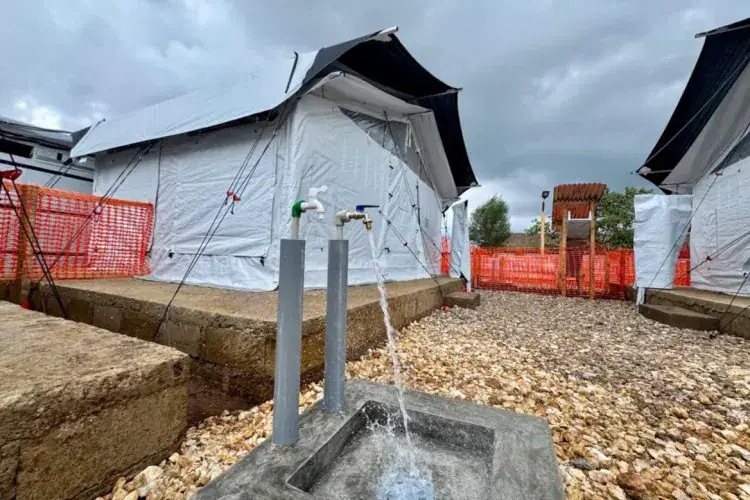
A severe water shortage has struck Butembo, a major commercial city in the eastern Democratic Republic of Congo, affecting various parts of the city for three consecutive days. This crisis is significantly hampering the implementation of hygiene measures aimed at preventing the spread of the Ebola outbreak. Residents and civil society groups are voicing their concerns and urging authorities to ensure a prompt water supply. The water scarcity has forced residents to rely on markets and dug wells for their water needs.
However, the water from these alternative sources is insufficient to meet the demand, and in some areas, a 20-liter jerrycan of water is being sold for 500 Congolese francs, making it difficult for many households to access. The Butembo-Lubero children's parliament has expressed worries about the situation in some schools, where the lack of water is hindering the regular handwashing of students, a crucial measure in preventing the spread of Ebola. The Ebola outbreak has already affected the eastern DRC, including Butembo.
A resident of Butembo told Radio Okapi that "It's been three days since water stopped coming out of the taps in many homes, both in densely populated areas and in the city center of Butembo. In this time of epidemic... this is a major concern." The water shortage is also affecting the care of Ebola patients, as water is essential for cleaning areas patients have passed through, washing them, and laundering their clothes. According to aid workers, this can require up to 400 liters of water per day per patient.
Despite these challenges, the Ebola treatment center in Butembo is receiving a steady water supply from aid partners. However, civil society groups point out that many households cannot afford to buy the disinfectant used for handwashing. They are calling on the authorities and aid partners to increase the supply of clean water to homes, schools, and public areas. The situation is particularly concerning in Butembo, which has a population of around two million people.
Butembo is one of the cities in North Kivu that has been heavily affected by the Ebola outbreak. The city's water shortage has exacerbated the challenges in controlling the spread of the disease. Local authorities and aid organizations are working to address the water shortage and prevent further spread of Ebola. Residents are advised to take precautions to prevent the spread of the disease.
The water crisis in Butembo highlights the complexities of responding to the Ebola outbreak in areas with existing infrastructure challenges. The situation underscores the need for a comprehensive approach to address the root causes of the water shortage and ensure a sustainable solution. Efforts to control the Ebola outbreak must be integrated with long-term strategies to improve access to basic services like clean water.
The international community is closely monitoring the situation in Butembo and providing support to the DRC government in its efforts to control the Ebola outbreak. The World Health Organization and other aid agencies are working to provide assistance, including water, sanitation, and hygiene services, to affected communities. The response efforts aim to mitigate the impact of the water shortage and prevent further spread of the disease.
Key points
- The water shortage in Butembo is hindering Ebola prevention efforts, sparking concerns among residents and civil society groups.
- The situation is particularly concerning in Butembo, which has a population of around two million people and is one of the cities in North Kivu heavily affected by the Ebola outbreak.
- Authorities and aid partners are working to address the water shortage and prevent further spread of Ebola.