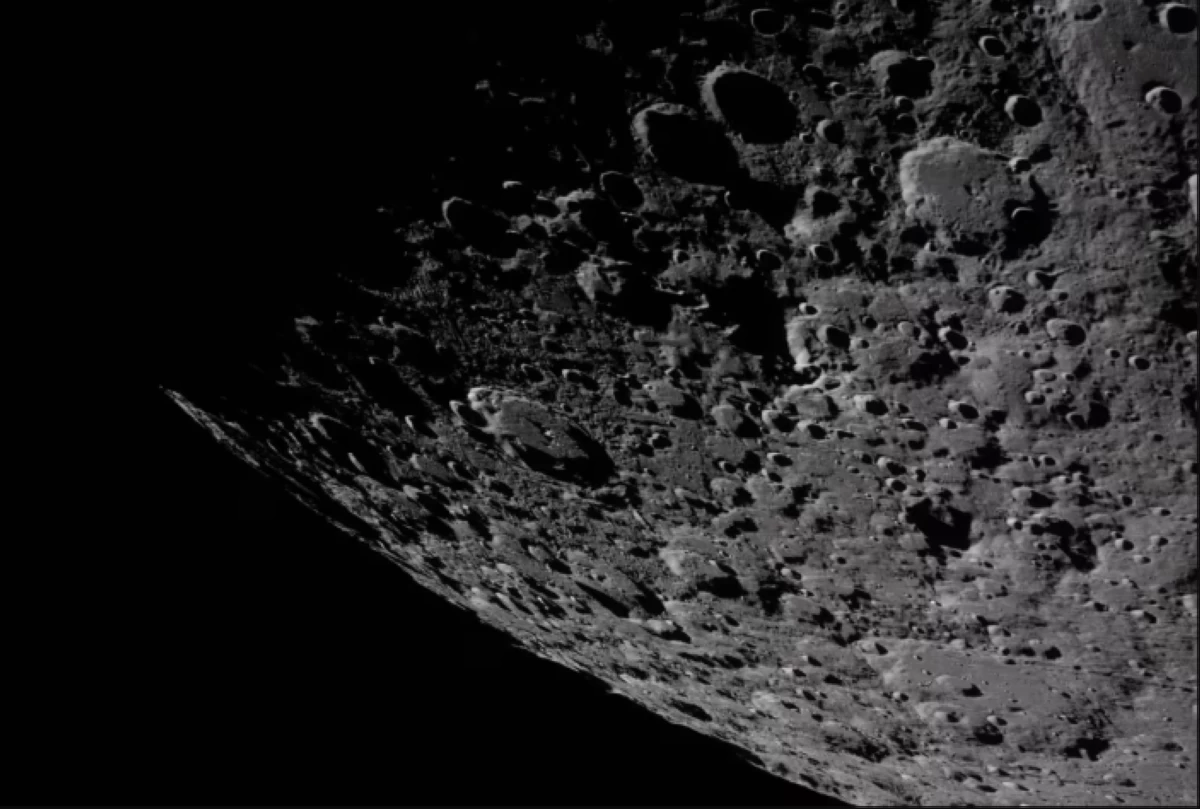
A recent study published in Frontiers in Space Technologies has highlighted the challenges of establishing a large human settlement on the Moon. Despite the presence of significant amounts of water on the lunar surface, it is mostly stored in tiny glass particles, which may not be sufficient to support a large city for an extended period. The study's findings have significant implications for plans to build lunar cities, with billionaire entrepreneur Elon Musk announcing in February that his company SpaceX was working on establishing a self-sustaining city on the Moon.
The study, conducted by astrophysicists Martin Elvis and Jonathan McDowell, estimated that a city of one million people could consume the available water resources in less than two and a half years if used for drinking, hygiene, food production, and rocket fuel. However, if the water could be recycled at a rate of 98%, similar to that used on the International Space Station, it could sustain a city of one million people for nearly a century. This would require a highly efficient water management system, which may not be sustainable in the long term.
The study suggests that a smaller city with a population of 100,000 could survive for up to 1,000 years, while a city with 10,000 inhabitants could last for around 10,000 years. This would provide sufficient time to explore alternative sources of water. The researchers also noted that importing water from other parts of the solar system could become a viable option in the future, but this would require significant technological advancements.
According to Ian Crawford, a professor of planetary science and astrobiology at the University of London, the study adds a dose of realism to the discussion of establishing large human settlements on the Moon. He believes that establishing a large settlement would require either importing water from external sources or using hydrogen and oxygen from lunar rocks to produce water.
The lunar poles are believed to have significant deposits of water ice, which could be used to support small research stations in the near future. However, scientists caution against exploiting this resource without understanding its chemical and physical properties, which could provide valuable insights into the Moon's history and evolution.
The study also highlights the importance of considering the water requirements for food production on the Moon. According to World Bank estimates, providing food for one person per day could require between 2,000 and 5,000 liters of water. Changing dietary habits could reduce this consumption, but the exact amount of water available on the Moon and the ease of extraction remain unknown.
The researchers estimate that the eight largest lunar craters contain around 34 million tons of water. However, the harsh lunar environment and the potential toxicity of the water ice pose significant challenges to its extraction and use. Further research is needed to understand the lunar water resources and their potential role in supporting human settlements on the Moon.
Key points
- Water scarcity could be a major obstacle to establishing large human settlements on the Moon.
- A city of one million people on the Moon could consume available water resources in less than two and a half years.
- Importing water from other parts of the solar system could become a viable option for lunar cities in the future.