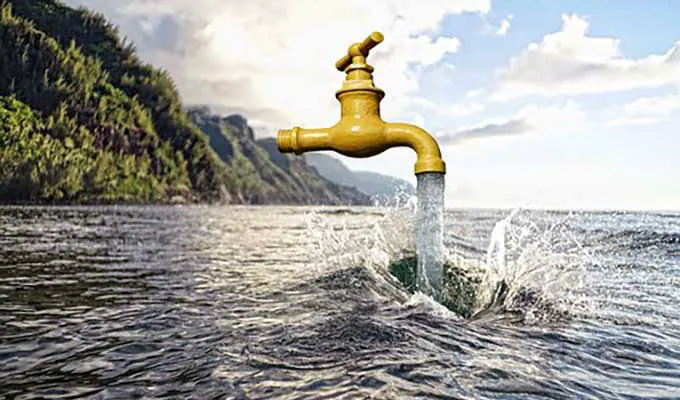
Tunisia is confronting a pressing issue of water scarcity, with an estimated 380m³ of renewable water available per inhabitant per year. This puts the country under significant pressure, as it struggles to ensure access to this vital resource. The World Bank has sounded the alarm, warning that without sufficient adaptation, the stress on water resources could reduce Tunisia's GDP by 6.4% by 2050 and lead to the loss of at least 30% of agricultural jobs.
The agricultural sector, which recently reported a 5.5% year-on-year growth in value added in the second quarter of 2026, may be severely impacted by water scarcity. This sector contributed 0.51 points to the overall 2.3% GDP growth during the same period. As water becomes increasingly scarce, it may become a determining factor for investment decisions, alongside land, electricity, and logistics. Companies with access to secure or reusable water resources may gain a competitive advantage.
The Tunisian government's Plan Eau 2050 aims to address the water scarcity issue through investments of approximately $900 million annually. The plan focuses on reducing water losses, improving governance, and increasing the use of treated wastewater. For industries, treated wastewater could become a productive resource rather than just a costly sanitation issue. This approach could transform the way water is viewed and utilized in the country.
As water scarcity becomes a more significant concern, it may influence the geography of industrial investment in Tunisia. The country's industrial landscape could be reshaped, with areas having secure access to water resources becoming more attractive to investors. While there is currently no concrete evidence of widespread investment shifts due to water scarcity, the possibility of such a trend emerging in the future cannot be ruled out.
The economic implications of water scarcity in Tunisia are far-reaching. The country's ability to manage its water resources effectively will be crucial in determining its future economic growth and competitiveness. As the situation stands, the next economic question related to water in Tunisia may shift from "how much water is left?" to "which activities can secure sufficient water resources to continue producing and growing?"
The Banque Maghrébine d'Investissement has recently marked its 10th anniversary, having provided $100 million in loans, with a goal of increasing this amount by 50% by 2030. This initiative and others like it may play a vital role in supporting Tunisia's economic development, particularly in sectors affected by water scarcity.
As Tunisia navigates the challenges posed by water scarcity, the country's future economic prospects will depend on its ability to adapt and innovate. With effective management of water resources and strategic investments, Tunisia may be able to mitigate the impacts of water scarcity and ensure sustainable economic growth.
Key points
- Water scarcity could reduce Tunisia's GDP by 6.4% by 2050.
- The country's agricultural sector may lose at least 30% of its jobs due to water scarcity.
- Tunisia's Plan Eau 2050 involves investments of approximately $900 million annually to address water scarcity.