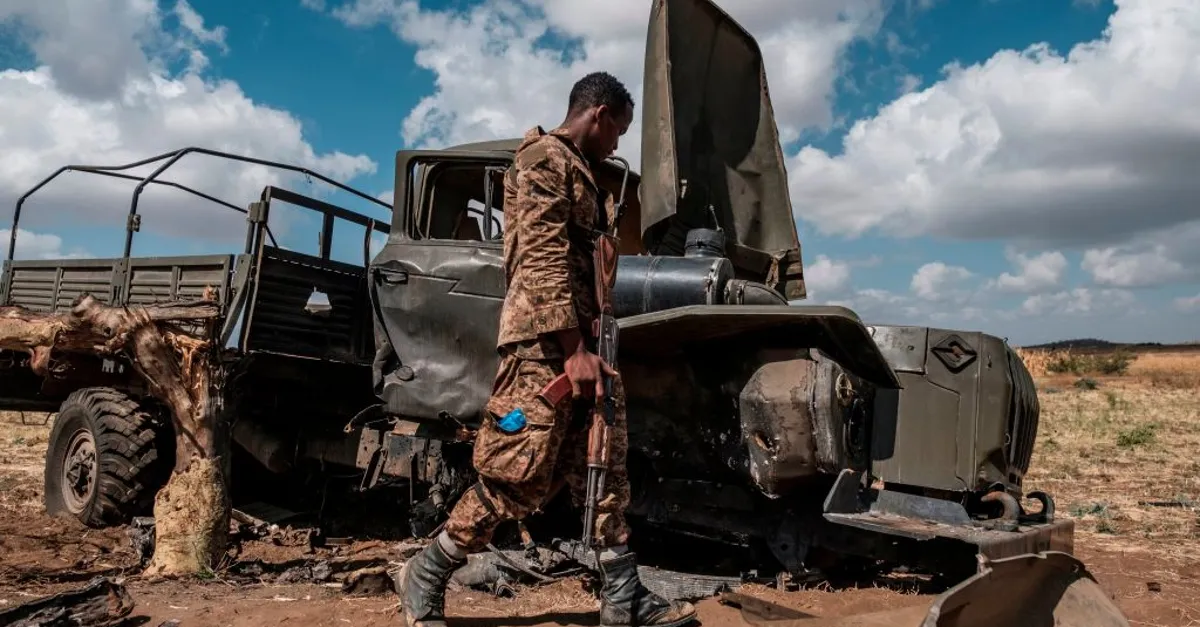
The conflict in Ethiopia has taken a dramatic turn as the Tigray People's Liberation Front (TPLF) announced its entry into a comprehensive war against the federal government on September 20, 2026. The move comes after months of escalating tensions between the two sides, with the TPLF accusing the government of failing to address the needs of the Tigray region. The conflict has already resulted in significant human suffering, with reports of civilian casualties and displacement.
The TPLF has formed an alliance with seven ethnic armed groups, including the Amhara Fano movement, the Oromo Liberation Army, and the Afar Revolutionary Democratic Front. The alliance, known as the Ethiopian People's Revolutionary Coalition, aims to overthrow Prime Minister Abiy Ahmed's government and establish a new federal system. The move has raised concerns about the potential for a wider conflict in the region.
The Ethiopian government has responded to the TPLF's announcement by launching a series of airstrikes against Tigray forces. The government has also imposed a communications blackout in the region, restricting access to the internet and telephone services. The move has made it difficult for humanitarian organizations to assess the situation on the ground.
The conflict has already had a significant impact on civilians in the region. Reports indicate that hundreds of people have been killed or injured in the fighting, and thousands have been displaced. The situation is further complicated by the fact that many civilians are caught in the middle of the conflict, with some areas experiencing intense fighting.
The international community has expressed concern about the escalating conflict in Ethiopia. The United Nations has called for an immediate ceasefire and urged the parties to engage in dialogue to resolve their differences peacefully. However, it remains to be seen whether the parties will be able to agree to a ceasefire.
The conflict in Ethiopia has significant implications for regional stability. The country is a key player in the Horn of Africa, and a prolonged conflict could have far-reaching consequences for the region. The situation is further complicated by the involvement of external actors, including Eritrea, which has been accused of supporting the TPLF.
The humanitarian situation in Ethiopia is dire, with thousands of people in need of assistance. The international community has called for increased humanitarian access to the region, but it remains to be seen whether the parties will allow aid to reach those in need. The situation is likely to continue to deteriorate unless a ceasefire is agreed upon and humanitarian access is granted.
Key points
- The conflict in Ethiopia has resulted in significant human suffering, with reports of civilian casualties and displacement.
- The international community has expressed concern about the escalating conflict in Ethiopia and called for an immediate ceasefire.
- The conflict has significant implications for regional stability, with a prolonged conflict potentially having far-reaching consequences for the Horn of Africa.