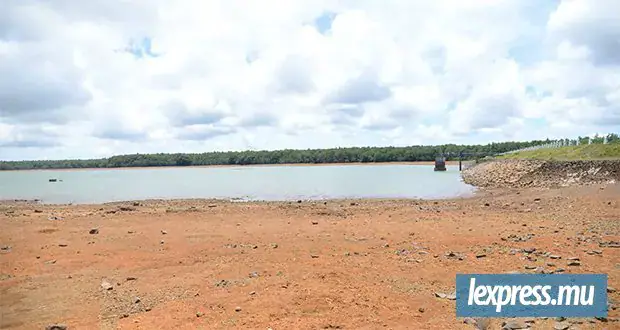
The water levels in Mauritius' seven main reservoirs have seen a drastic decline, with a current average filling rate of 51.4%, as reported by the Water Resources Commission on October 30. This marks a substantial decrease of 25.8 percentage points compared to the same period in 2025, when the levels were at 77.2%. The significant drop has raised concerns about the island nation's water supply.
The largest reservoir, Mare-aux-Vacoas, is particularly worrisome, with its water level at 33.8%, a stark contrast to 77.9% in the previous year, representing a decline of 44.1 points. Similarly, La Ferme reservoir has seen its level drop to 33.7% from 61.4%, and Bagatelle Dam's level has decreased to 55.8% from 86.1%. These declines indicate a severe reduction in water reserves across the island.
However, not all reservoirs have been affected equally. Mare-Longue reservoir still shows a relatively healthy level of 71.7%, although this is down from 87.4% in 2025. Midlands Dam and Piton-du-Milieu reservoirs are at 70.4% and 67.9%, respectively, while La Nicolière reservoir stands at 39%, slightly down from 41.3% in the previous year. These variations suggest that some areas may be more resilient to the current drought.
The immediate weather forecast does not indicate any significant rainfall in the near future, which could exacerbate the situation. In response to the declining water levels, Sunil Gopal, the communication officer at the Central Water Authority (CWA), has urged the population to be vigilant and adjust their water consumption habits. The CWA is launching a public awareness campaign to prioritize essential water usage.
The public is being advised to focus on essential uses of water, such as drinking, cooking, and personal hygiene, while postponing non-essential activities like washing cars, cleaning courtyards, and filling swimming pools. This call for prudence and solidarity is especially pertinent with the approaching Divali celebrations and year-end festivities, which typically involve extensive cleaning.
Looking ahead, there is hope that substantial rainfall expected in the second half of December may help replenish the water reserves. However, there is no guarantee that these rains will be sufficient to restore the levels to a satisfactory state. Until then, the authorities stress the importance of cautious water use and community cooperation.
The water scarcity issue highlights the need for sustainable water management practices in Mauritius. The authorities' proactive approach, including public awareness campaigns and monitoring of water levels, aims to mitigate the impact of the current drought. The effectiveness of these measures will be crucial in ensuring that the island nation's water resources are used efficiently.
Key points
- Mauritius' water reservoirs have seen a significant drop in levels, with an average filling rate of 51.4%, down from 77.2% in 2025.
- The largest reservoir, Mare-aux-Vacoas, is at 33.8%, a substantial decrease from 77.9% in the previous year.
- The authorities are urging the public to prioritize essential water usage and postpone non-essential activities to conserve water until the expected rains in December.