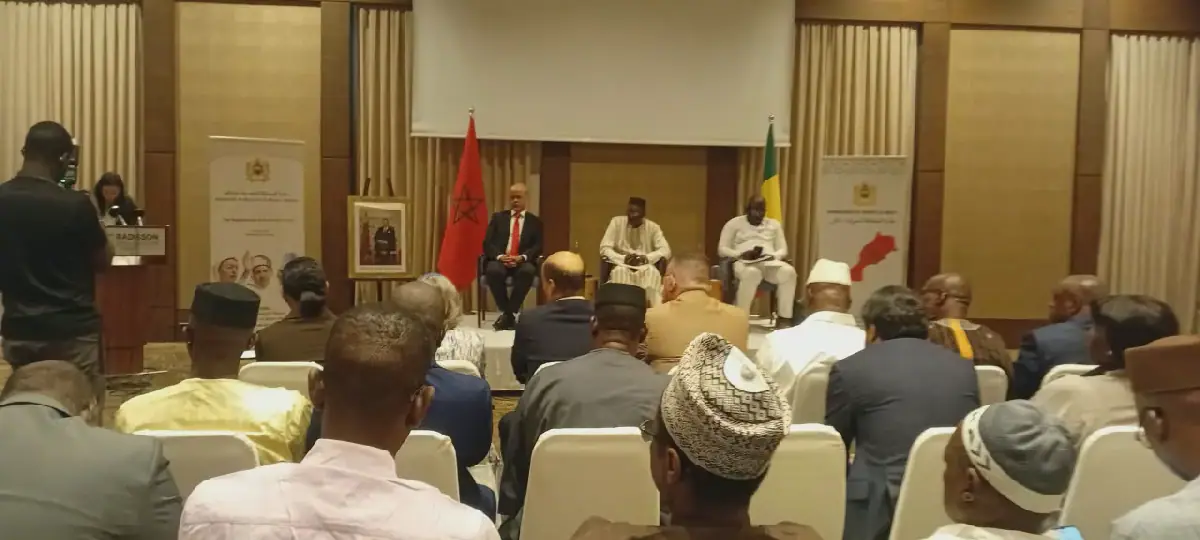
The Moroccan Embassy in Mali recently marked the first anniversary of Morocco's Unity Day with a roundtable discussion in Bamako. The event, held at the Radisson Collection hotel, brought together diplomats, government officials, and civil society members to discuss the significance of the day. The discussion, moderated by Ambassador Driss Isbayene, historian Daouda Tékété, and expert Souleymane Satigui Sidibé, focused on Morocco's national unity and its implications for stability and development in the Sahel region.
Morocco's Unity Day was established by King Mohammed VI in November 2025, following the adoption of UN Security Council Resolution 2797 on the Moroccan Sahara. The day commemorates the country's commitment to national unity and territorial integrity. For the first anniversary, Ambassador Isbayene chose to focus on the reflection and dialogue, highlighting the depth of relations between Mali and Morocco. The discussion also touched on the historical ties between the two nations, dating back to the 11th century.
Historian Daouda Tékété highlighted the long-standing relations between Mali and Morocco, citing the exchange of commercial activities and the friendship between former Malian President Modibo Keïta and Moroccan King Mohammed V. The two countries have maintained diplomatic relations despite periods of turbulence. Today, they cooperate in various sectors, including agriculture, livestock, health, communication, and education. Morocco also regularly awards scholarships to Malian students.
The event featured a testimony from Mohamed Mahmoud Ben Labat, former Malian Ambassador to Rabat, who shared his experiences and memories of working with Moroccan officials. He recalled his participation in a visit by former Malian President Moussa Traoré to King Hassan II in 1988. Ben Labat was recently decorated with the Wissam Alaoui award by King Mohammed VI.
Expert Souleymane Satigui Sidibé provided insights into the links between territorial integrity, stability, and security in the Sahel region. The discussion emphasized that the relationship between nations is built on history, dialogue, and cooperation. The celebration served as a reminder of the importance of sustained diplomatic efforts.
The event was attended by a diverse audience, including diplomats, institutional representatives, members of the Transitional National Council, civil society actors, and private sector stakeholders. The discussion demonstrated the strong foundation of cooperation between Mali and Morocco, with both countries committed to strengthening their bilateral ties.
The Moroccan Unity Day celebration in Mali concluded with a renewed emphasis on the importance of national unity and cooperation between the two nations. The event provided a platform for dialogue and reflection, highlighting the historical and cultural ties that bind Mali and Morocco together.
Key points
- The celebration of Morocco's Unity Day in Mali highlights the strong bilateral ties between the two countries.
- The event featured discussions on the significance of national unity and its implications for regional stability and development.
- The relationship between Mali and Morocco is built on a foundation of historical ties, cultural exchange, and diplomatic cooperation.