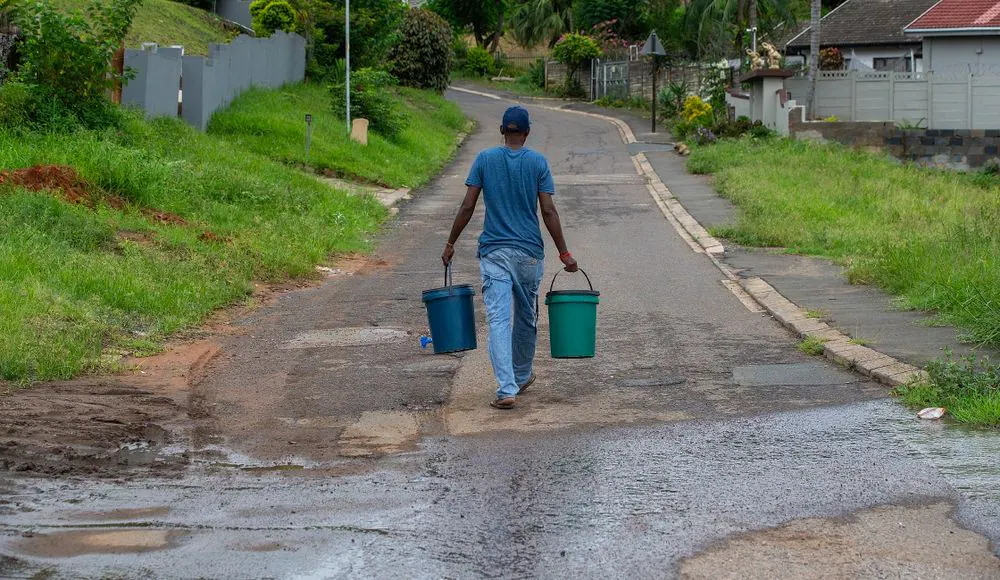
Public hearings on the Water Services Amendment Bill have sparked a heated debate over municipal accountability and the financial responsibility of municipal managers facing personal accountability for water and sanitation service delivery failures. The hearings, which took place between August 14 and 30, gathered input from communities in Mpumalanga, North West, and Limpopo. These communities have expressed frustration over persistent water interruptions, ageing infrastructure, poor water quality, and sanitation failures.
The Portfolio Committee on Water and Sanitation, led by chairperson Leon Basson, has noted that while there is strong public support for consequence management, the final position on legal fees for municipal managers facing enforcement action will depend on the legislation's wording and the applicable legal framework. Basson emphasized that public funds should not be used to shield individuals from the consequences of personal misconduct or liability. However, he cautioned that it would be premature to conclude that every municipal manager facing enforcement action would necessarily have to fund their own legal defence.
Communities across the three provinces have consistently raised concerns about unreliable water supplies, deteriorating infrastructure, leaking pipelines, malfunctioning pumps and boreholes, non-functional treatment works, and delays in repairs. They have also called for additional infrastructure, including boreholes, reservoirs, pipeline extensions, treatment facilities, and household connections. Basson stated that communities expect stronger accountability, enforceable consequences, and effective action against persistent non-performance.
The issue of legal costs has sharpened the political debate around accountability, with some arguing that officials facing personal accountability should not be able to rely on municipal funds to finance their defence. MK Party member Visvin Reddy argued that the municipality's failure to deliver services should not be funded by residents' rates and taxes. He suggested that officials accused of incompetence or corruption should pay for their own defence and seek reimbursement if they are ultimately cleared.
However, Labour lawyer and DA MP Michael Bagraim noted that court cases have already placed significant responsibility for water delivery failures on management, and holding managers accountable has begun making a difference. He emphasized that the Bill aims to strengthen compliance and enforcement, introduce additional offences and penalties, and provide for liability involving directors and municipal managers.
The public hearings form part of Parliament's consideration of the Water Services Amendment Bill, which seeks to address widespread complaints about service delivery failures, corruption, weak oversight, and poor contract management. Water and Sanitation Minister Pemmy Majodina recently reported that only 68.79% of South African households receive reliable daily water without interruptions exceeding 48 hours.
As the debate continues, communities are calling for more reliable water supplies, better-maintained infrastructure, improved water quality, and stronger accountability when institutions or officials fail to perform. The Portfolio Committee on Water and Sanitation will consider the input from the public hearings as it finalizes the Water Services Amendment Bill.
Key points
- Communities expect stronger accountability and consequences for municipal managers who fail to deliver water and sanitation services.
- The debate over who should foot the legal bill for municipal managers facing personal accountability has sparked controversy.
- The Water Services Amendment Bill aims to strengthen compliance and enforcement, introduce additional offences and penalties, and provide for liability involving directors and municipal managers.