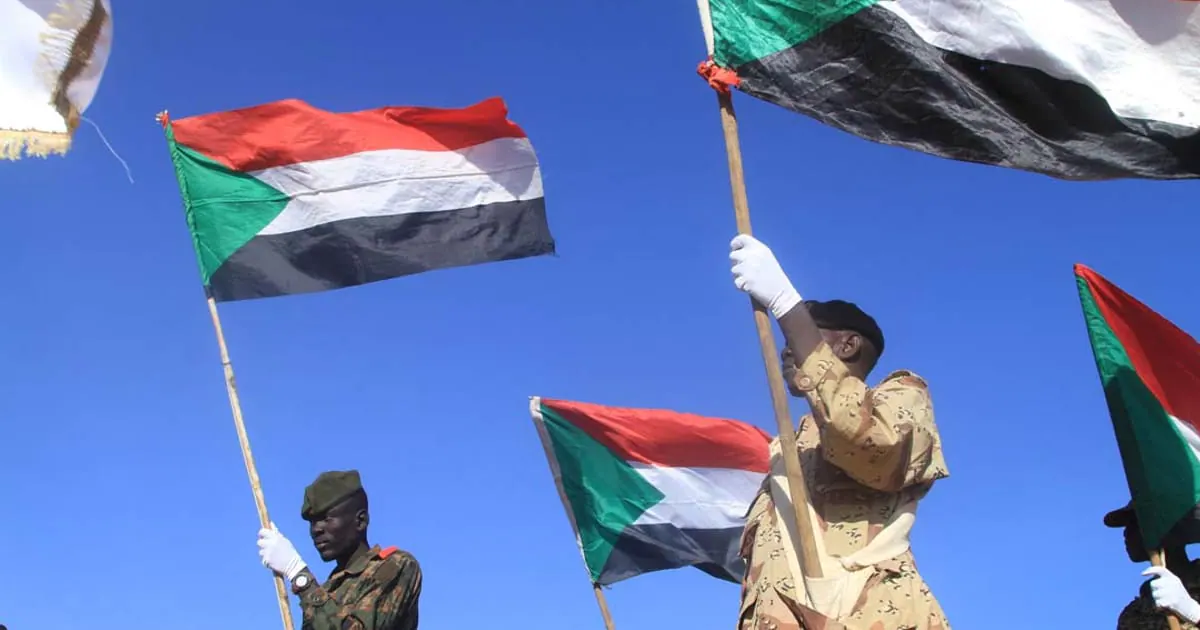
The humanitarian crisis in Sudan continues to worsen as the war between the army and the Rapid Support Forces enters its sixth month. The conflict, which began in mid-April 2023, has resulted in deteriorating living conditions for citizens, with exorbitant price increases and a severe fuel crisis. In the capital, Khartoum, hundreds of citizens are lining up to refuel, a process that requires a long time and potentially costs them their work and business.
The fuel crisis has sharply worsened in Khartoum and several Sudanese cities, with record price increases and a total shortage of petroleum products at many official distribution stations. Sudanese citizen Sami Al-Tayeb, who was waiting in line to refuel, described the seriousness of the deteriorating conditions and the surprise he encountered while waiting at the filling station. He explained that the price of fuel changed while he was waiting, from 29 pounds to 35 pounds.
Popular discontent in Sudan has intensified following demonstrations in the city of Gedaref in protest against deteriorating economic conditions and the rising cost of living. The "Angry Ones" movement, a youth organization active in the September movement, has called for an escalation of protests and their expansion across the states. The movement's official Facebook page wrote that the rest of the states will join Gedaref on Thursday, September 25, referring to a call for a central demonstration on that day.
Economic analyst Essam El-Din Khidr described the current fuel crisis as "unprecedented," noting that it is the result of the accumulation and complexity of the security and economic conditions facing the country. He explained that the fuel crisis is closely linked to the circumstances of the war and the atmosphere of instability, in addition to large areas of the country falling outside state control and the absence of the role of official institutions.
The economic analyst attributed the continued rise in prices and the collapse in the value of the national currency to the severe structural imbalance in the trade balance, as exports have witnessed a sharp decline, covering less than 20% of the country's needs. This is a result of the suspension of most productive, agricultural, and livestock activities in regions affected by the war. According to the United Nations, 14 million Sudanese have been displaced, while more than 30 million Sudanese are currently suffering.
Massad Boulos, the US President's Senior Advisor for Arab and African Affairs, has called on the warring parties in Sudan to accept a humanitarian truce in the country. Boulos wrote that the Sudanese people deserve a chance to engage in a political process leading to peace in a unified Sudan. The nature of the current conflict shows that army commander Abdel Fattah al-Burhan does not care about the suffering of the people or the state, which has become engulfed in chaos.
Sudan has now been transformed into an arena for regional and international competition, meaning that these calculations are now controlling the conflict. Against this backdrop, the moves by Egypt and Saudi Arabia raise many questions about a shift in their approaches to ending Sudan's bloody war. The two countries have engaged in international mediation efforts, but have politically sided with Burhan, while officials from both countries deny providing military support to the army.
Key points
- The warring parties in Sudan must accept a humanitarian truce as the first step toward lasting peace.
- The humanitarian crisis in Sudan continues to worsen, with 14 million Sudanese displaced and over 30 million suffering.
- The conflict has resulted in deteriorating living conditions, exorbitant price increases, and a severe fuel crisis.