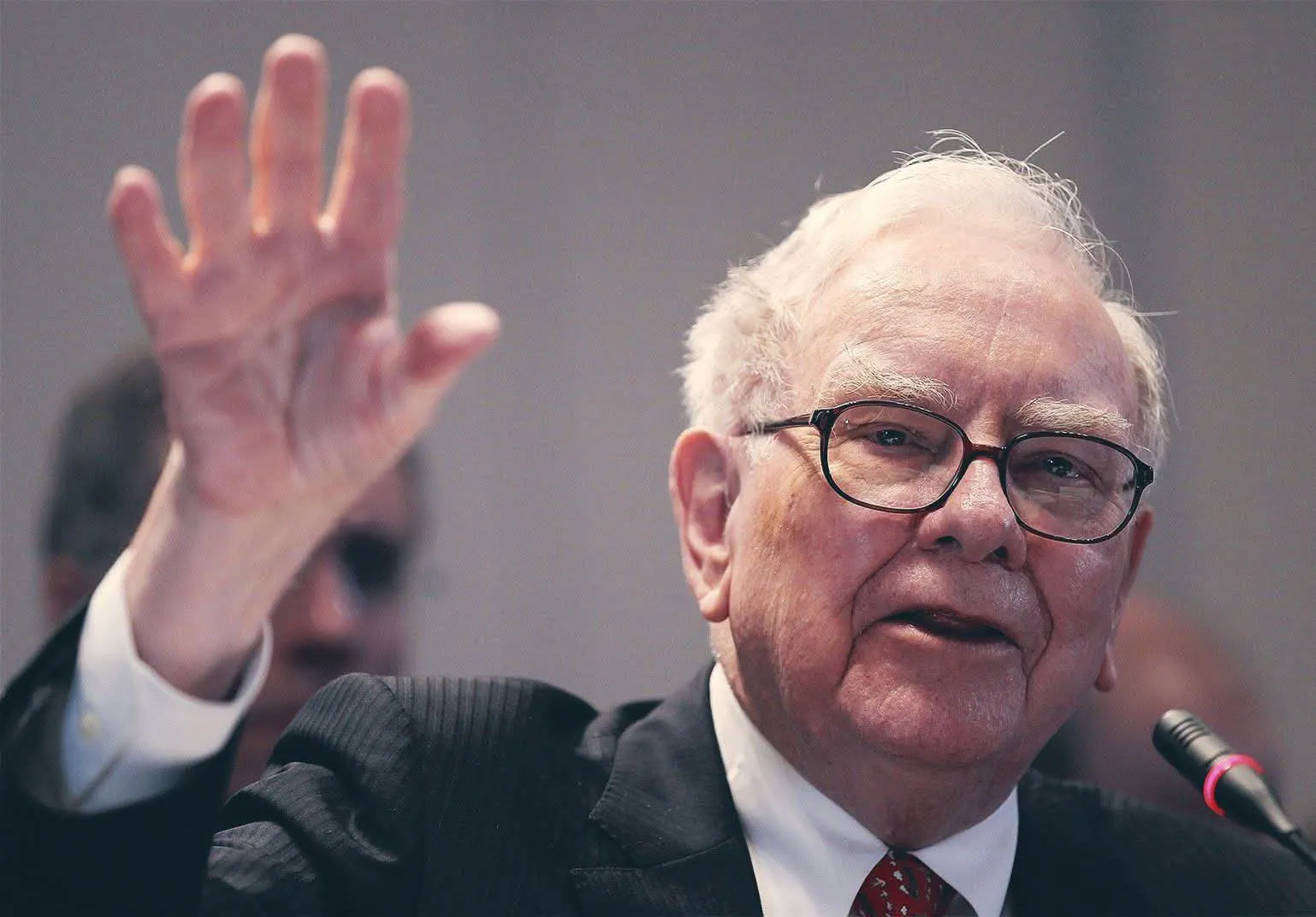
At 96 years old, Warren Buffett is marking a significant milestone in his career as he transitions out of his leadership role at Berkshire Hathaway, one of the world's largest and most successful conglomerates. With a net worth of over $1 trillion, Buffett has transformed the company from a struggling textile mill into a global powerhouse. As he steps down, Buffett is leaving behind a well-planned succession strategy that ensures the company's continued success.
The succession plan is built around a division of responsibilities, rather than a simple transfer of power to a single heir. Greg Abel will take over as the operational head of Berkshire Hathaway, while Howard Buffett, Warren's eldest son, will become the chairman of the board. This move marks a significant shift in leadership, as Howard Buffett has followed a very different path from his father. A farmer and philanthropist, Howard has focused on agriculture, food security, and humanitarian causes.
The contrast between Warren Buffett's investment-focused career and his son's work in agriculture and philanthropy highlights the importance of adapting to changing circumstances. Despite their different backgrounds, Howard Buffett is well-positioned to play a key role in guiding the company. This approach challenges the conventional wisdom that a successful succession requires a carbon copy of the founder. Instead, Berkshire Hathaway's model shows that a new generation can bring fresh perspectives while still honoring the company's core values.
The transition at Berkshire Hathaway has significant implications for the business world and beyond. As institutions and organizations look to the future, they must consider how to balance tradition with innovation. The distinction between ownership, governance, and operational management is crucial in ensuring a smooth transition. By separating these responsibilities, Berkshire Hathaway is demonstrating that a family name can remain associated with an institution without requiring a family member to fill every key role.
This approach offers a valuable lesson for family businesses, institutions, and organizations built around a strong personality. Rather than trying to replicate the founder's exact path, a successful succession involves transmitting core principles, vision, and culture. This allows future generations to adapt and evolve the organization in response to changing circumstances. By doing so, Warren Buffett is leaving behind a lasting legacy that extends far beyond his own accomplishments.
As Berkshire Hathaway begins a new chapter, the company must demonstrate its ability to thrive without relying on Warren Buffett's leadership. The true test of his legacy will be whether the organization can continue to grow and prosper under new leadership. If successful, Berkshire Hathaway will prove that a well-planned succession can ensure an institution's long-term success, even in the absence of its founder.
Ultimately, Warren Buffett's succession plan serves as a model for institutions seeking to balance tradition with innovation. By prioritizing principles, vision, and culture over individual personalities, organizations can build a strong foundation for future success. As Abdourahamane CONDE notes, this approach allows institutions to transcend their founders and continue to evolve and grow over time.
Key points
- Warren Buffett's succession plan at Berkshire Hathaway separates ownership, governance, and operational management.
- The plan involves a division of responsibilities between Greg Abel and Howard Buffett.
- The approach prioritizes transmitting core principles, vision, and culture over replicating the founder's exact path.