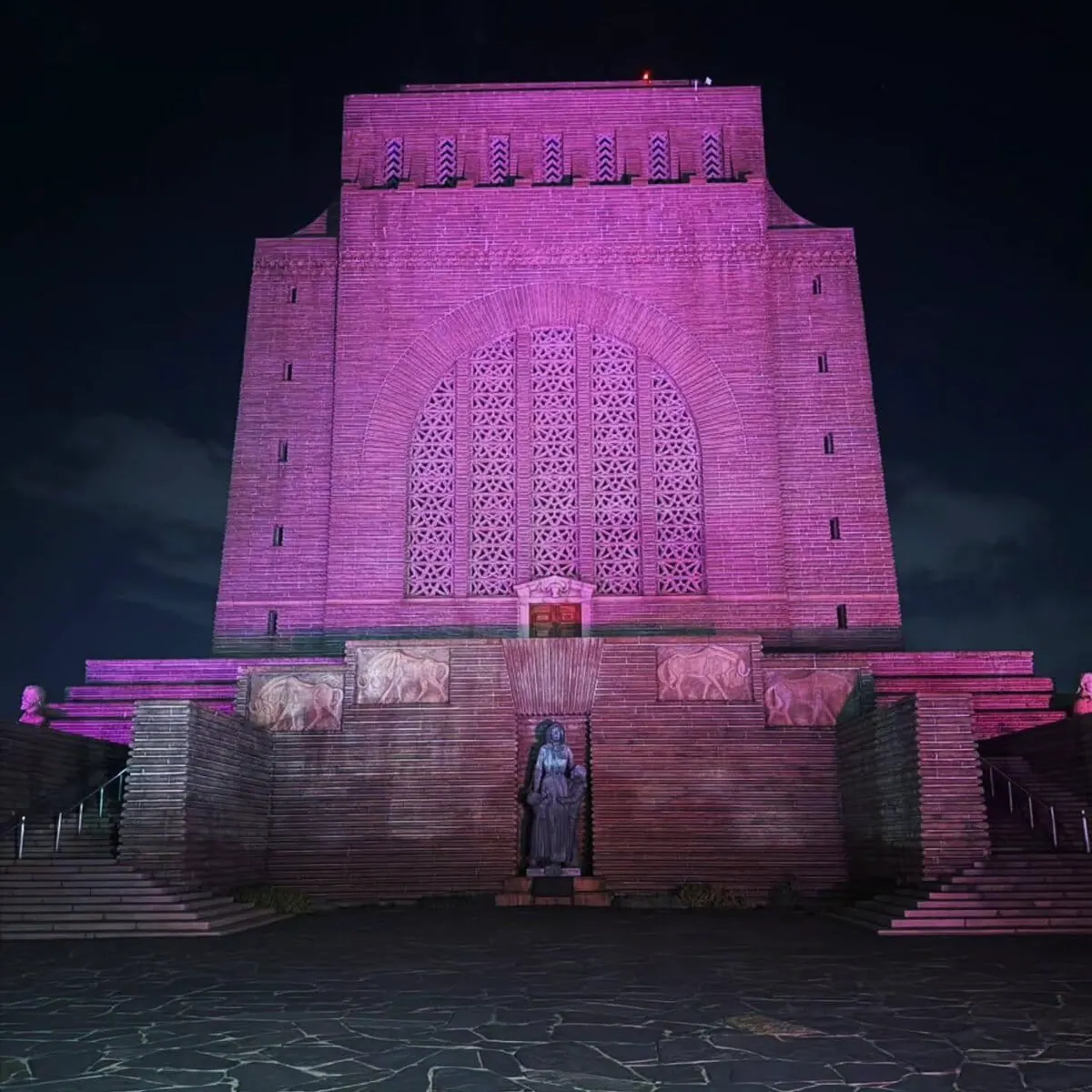
The Voortrekkermonument in Pretoria, South Africa, will be illuminated in purple for several nights to raise awareness for World Alzheimer's Month, which is observed in September. This temporary transformation is a collaboration with the South African Association for Dementia and Alzheimer's disease (Adasa). According to Lillian Krüger, communication and development manager at Adasa, the goal is to spark conversations about Alzheimer's and dementia.
Alzheimer's disease and dementia are often stigmatized in South Africa, and Krüger emphasizes the need for ongoing discussions to educate people and break down these stigmas. Dementia is an umbrella term that encompasses a range of symptoms, including memory loss, thinking and language problems, and daily functioning difficulties. Conditions that fall under dementia include vascular dementia, Alzheimer's disease, and dementia caused by Parkinson's disease.
Krüger notes that loved ones of people with dementia often experience significant emotional distress and must continually remind themselves that the disease is not the person. She encourages them to focus on the person's spirit and soul, which remain intact despite the physical and cognitive changes. Krüger also highlights that only 3% of dementia cases are caused by rare, direct genetic mutations, and that lifestyle factors play a significant role in determining a person's risk.
Adasa plans to start awareness programs about brain health in schools, as lifestyle factors can significantly impact a person's chances of developing dementia. Krüger explains that a combination of genetic, health, lifestyle, and environmental factors influences dementia risk. Research suggests that up to 45% of dementia cases may be delayed or prevented by addressing 14 modifiable risk factors, including lower education levels, hearing loss, high blood pressure, and physical inactivity.
The 14 risk factors identified by the 2024 Lancet Commission include smoking, obesity, depression, diabetes, excessive alcohol consumption, traumatic brain injury, social isolation, air pollution, high LDL cholesterol, and untreated vision loss. Krüger emphasizes that addressing these factors can help support brain health and reduce dementia risk. Simple actions, such as being physically active, not smoking, and managing blood pressure and cholesterol, can make a positive impact.
Krüger encourages people to make informed choices about their brain health, which can also benefit their heart, body, and overall well-being. She notes that while it is impossible to predict the future, making healthy choices today can have a positive impact. Adasa's awareness efforts aim to educate people about dementia and Alzheimer's disease, and to encourage them to take action to support brain health.
The purple illumination of the Voortrekkermonument is part of a broader effort to raise awareness about Alzheimer's and dementia in South Africa. By working together with organizations like Adasa, it is possible to make a positive impact on the lives of people affected by these conditions. As Krüger notes, "We can't predict the future, but we can make choices today that are good for our brains – and that often are good for our hearts, bodies, and overall well-being."
Key points
- The Voortrekkermonument in Pretoria will be illuminated in purple to raise awareness for World Alzheimer's Month.
- Dementia is an umbrella term that encompasses a range of symptoms, including memory loss and thinking problems.
- Up to 45% of dementia cases may be delayed or prevented by addressing 14 modifiable risk factors.