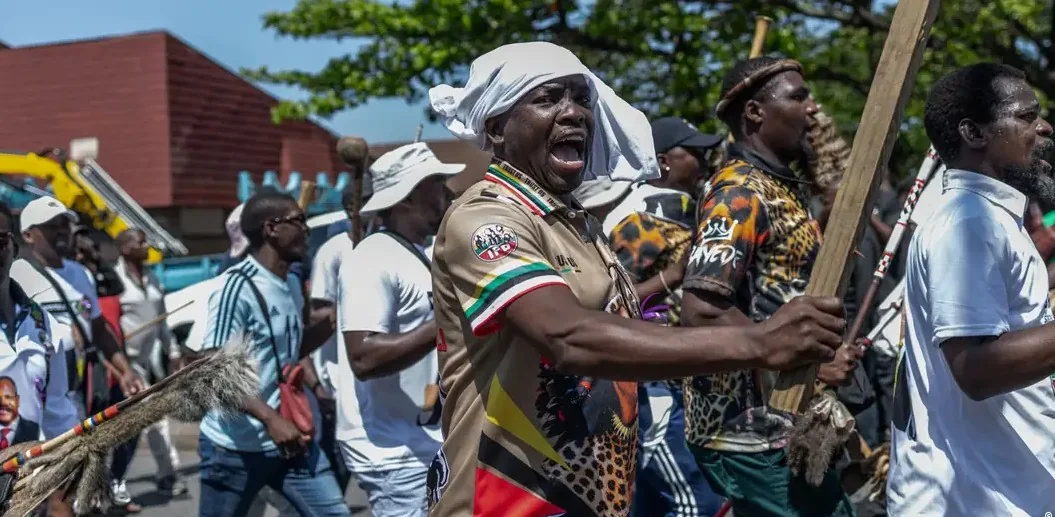
Violent protests erupted in Durban, Soweto, and Johannesburg on Thursday after a court ruling forced South Africa to restart asylum applications. The protests were marked by looting, vehicle fires, and gunshots. In Durban, demonstrators demanding that a refugee centre halt asylum processing overturned and burned about ten vehicles and looted foreign-owned shops. The protests were sparked by a court ruling that declared parts of the government's refugee policy unconstitutional.
The court ruling declared that certain people, including those who entered the country illegally, should not be barred from accessing asylum on procedural grounds. Since the judgment, hundreds have flocked to government refugee centres, including some individuals who do not meet the eligibility criteria for asylum. The government clarified on Wednesday that the ruling does not automatically grant refugee status or permanent residence to anyone who enters South Africa. The protests were a reaction to the perceived threat posed by migrants.
In Soweto, residents clashed with foreign shop owners, and gunshots were reported, according to broadcaster Newzroom Afrika. Johannesburg Metropolitan Police Superintendent Xolani Fihla told SABC television that at least nine vehicles were torched and that, at the time of reporting, no injuries had been confirmed. The police were deployed to maintain order and prevent further violence. The protests were widely reported in the media, with many expressing concern about the rising anti-immigrant sentiment.
Anti-immigrant sentiment has been rising for months, with populist groups urging undocumented foreigners to leave by June 30, prompting tens of thousands to flee or be repatriated. The groups have claimed that migrants are responsible for job loss, crime, and pressure on services, claims that social scientists say lack empirical support. Despite an unemployment rate affecting roughly one-third of its population, South Africa remains the continent's largest economy and continues to attract migrants.
The government has faced criticism for its handling of the migrant crisis, with many accusing it of not doing enough to address the root causes of the problem. The court ruling was seen as a major setback for the government's efforts to restrict asylum access. The government has since clarified that it will continue to process asylum applications in accordance with the court ruling. The protests highlighted the deep-seated tensions between South Africans and migrants.
The protests also highlighted the challenges faced by migrants in South Africa, who often face violence, xenophobia, and exploitation. Many migrants have fled their home countries in search of safety and economic opportunities, only to find themselves facing hostility and rejection in South Africa. The protests have sparked concerns about the impact on the economy and social stability. The government has urged calm and restraint.
The situation remains volatile, with many calling for calm and restraint. The government has promised to engage with the public and address concerns about migration. The court ruling has set a precedent for future asylum applications, and the government will have to navigate the complex issue of migration in the coming weeks and months. The protests have sparked a national conversation about migration and xenophobia.
Key points
- The protests were sparked by a court ruling that declared parts of the government's refugee policy unconstitutional.
- Anti-immigrant sentiment has been rising in South Africa, with populist groups urging undocumented foreigners to leave.
- The protests highlighted the deep-seated tensions between South Africans and migrants, as well as the challenges faced by migrants in South Africa.