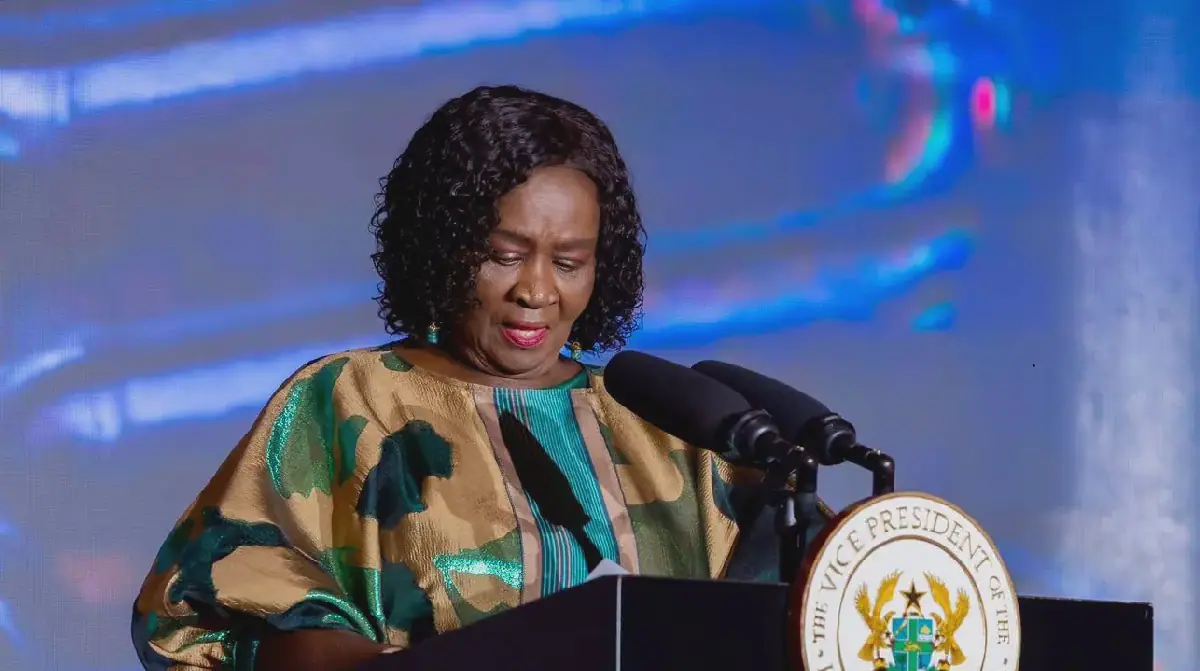
Vice President Professor Jane Naana Opoku-Agyemang has identified high electricity costs, limited access to long-term financing, and inadequate industrial infrastructure as major constraints undermining the growth and competitiveness of Ghanaian businesses. She emphasized that addressing these structural challenges is critical to strengthening the country's productive capacity and translating recent economic stability into sustainable growth.
The Vice President made these remarks at the 15th Association of Ghana Industries (AGI) Ghana Industry and Quality Awards. She outlined the government's policy direction towards addressing some of the challenges confronting the industrial sector. This includes proposing tax incentives in the 2027 Budget to encourage private-sector investment in machinery and production.
According to Professor Opoku-Agyemang, these incentives will help businesses expand their operations and increase output. She also highlighted planned investments in power generation and transmission, alongside reforms aimed at improving the efficiency of electricity distribution. Access to affordable and reliable electricity remains essential to industrial competitiveness, particularly as businesses seek to increase production and strengthen their presence in both local and international markets.
The Vice President further pointed to measures intended to improve the quality of solar panels and batteries, as part of broader efforts to support the use of alternative energy and address the cost of business operations. She commended the Association of Ghana Industries for recognising businesses that continue to contribute to the country's industrial development and wished the award recipients well.
The President of the Association of Ghana Industries, Dr Kofi Nsiah-Poku, said the awards were instituted to recognise companies that had demonstrated resilience, excellence, and competitiveness despite the difficult operating environment. He acknowledged the challenges businesses had faced, including high electricity costs and external economic pressures.
Dr Nsiah-Poku urged companies to position themselves to benefit from the government's proposed New Economy programme, which has an allocation of 2.5 billion dollars for 2027. He emphasized that effective collaboration between government and the private sector would be necessary to expand businesses, increase exports, and create employment opportunities, particularly for the country's growing youth population.
Dr Nsiah-Poku expressed hope that the effective implementation of the programme, with active private-sector participation, would enable companies to expand their operations and address youth unemployment, a major concern in the country. The Association of Ghana Industries is interested in engaging government to understand the implementation framework of the programme and identify how industry players can contribute to its success.
Key points
- The high cost of electricity and limited access to long-term financing are major constraints undermining the growth and competitiveness of Ghanaian businesses.
- The 2027 Budget proposes tax incentives to encourage private-sector investment in machinery and production.
- The government's proposed New Economy programme has an allocation of 2.5 billion dollars for 2027.