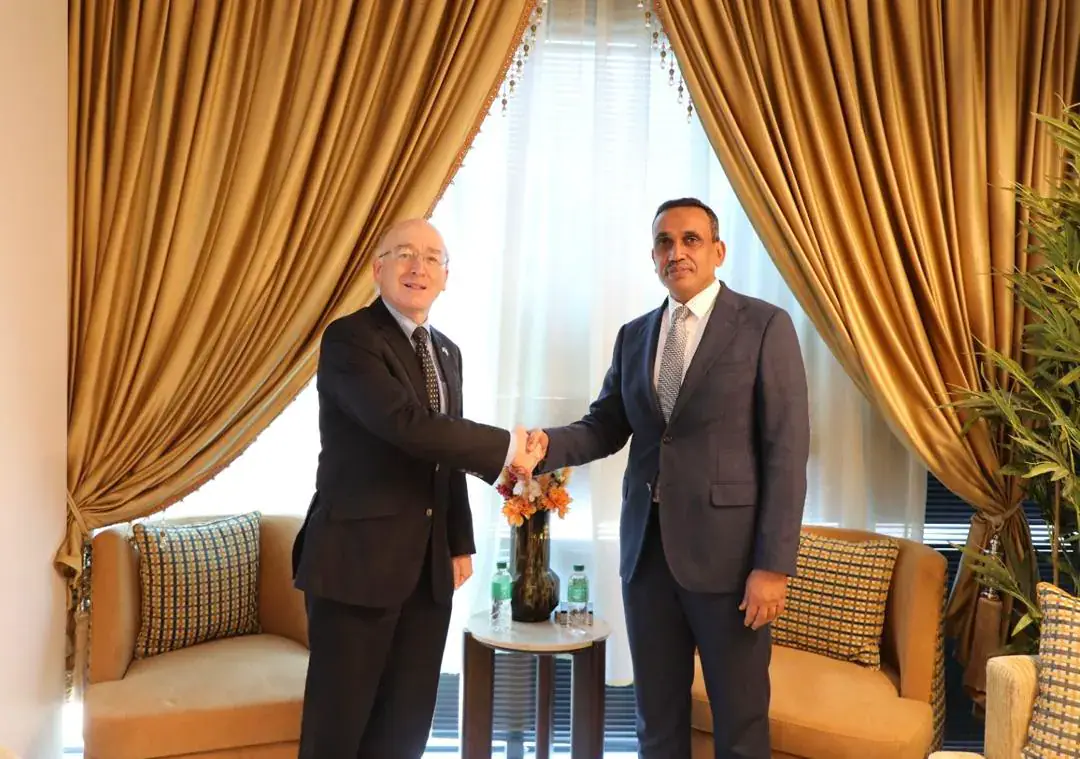
Djibouti's Minister of Energy, Dr. Djama Mohamed Hassan, recently met with the UK's new Ambassador to Djibouti, Dr. David Ian Hall, to discuss ways to strengthen cooperation between the two countries in the energy sector. The meeting was part of a broader effort to enhance bilateral relations and promote investment in key areas for national socio-economic development. The two officials discussed the potential for cooperation in renewable energy, including solar, wind, geothermal, and tidal power.
Dr. Hassan highlighted Djibouti's commitment to developing its energy sector, with a focus on renewable energy and reducing dependence on fossil fuels. He outlined the country's energy policy, which aims to increase the use of renewable energy sources and improve energy efficiency. The Minister also discussed several ongoing projects, including the development of a local photovoltaic panel manufacturing industry and the potential use of small modular nuclear reactors to meet the country's growing energy needs.
Ambassador Hall welcomed the opportunity to strengthen cooperation between the UK and Djibouti in the energy sector. He noted that the UK has significant expertise in geothermal and tidal energy, which could be shared with Djibouti to support the country's energy development. The Ambassador also proposed establishing partnerships between British and Djiboutian universities in engineering and nuclear technology to help build local capacity.
The two officials also discussed the potential for British investment in Djibouti's energy sector, particularly in the country's industrial parks. Dr. Hassan invited British companies to invest in the Damerjog industrial park, which offers a range of opportunities for businesses to contribute to the country's economic development. The Ambassador confirmed that the UK is committed to supporting Djibouti's energy development and is willing to provide technical assistance and promote private sector investment.
During the meeting, Ambassador Hall announced that the UK embassy in Djibouti will be relocating to new premises, which will provide an opportunity to strengthen bilateral relations. He emphasized the UK's commitment to supporting Djibouti's development and noted that the stability of the country is a major asset in the Horn of Africa region.
The two officials agreed to continue their discussions to turn the cooperation agenda into concrete projects that will support Djibouti's sustainable development. They also discussed the importance of knowledge transfer and technical assistance to support Djibouti's energy sector development. The UK has offered to provide support in these areas to help Djibouti achieve its energy goals.
The meeting between Dr. Hassan and Ambassador Hall reflects the strong commitment of both countries to strengthening their bilateral cooperation in the energy sector. The two countries are working together to develop Djibouti's energy sector, promote investment, and support the country's socio-economic development. Key areas of cooperation include renewable energy, nuclear power, and energy efficiency.
Key points
- Djibouti and the UK have agreed to enhance their energy cooperation, focusing on renewable energy and nuclear power.
- The two countries will explore opportunities for British investment in Djibouti's energy sector, particularly in the country's industrial parks.
- The UK has offered to provide technical assistance and promote private sector investment to support Djibouti's energy sector development.
Reporting sources
- Coopération énergétique : Djibouti et le Royaume-Uni ouvrent un nouveau chapitre de leur partenariat stratégique · agence djiboutienne d'information