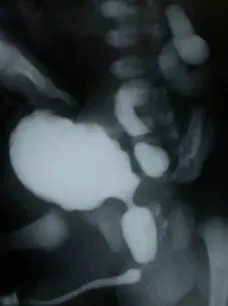
Posterior urethral valves are a leading cause of congenital lower urinary tract obstruction in boys, particularly in sub-Saharan Africa where delayed diagnosis often worsens renal outcomes. A recent study at Treichville University Hospital in Abidjan, Côte d'Ivoire, assessed the therapeutic value and morbidity of vesicostomy in children with this condition. The study, conducted over 10 years from 2014 to 2023, analyzed data from 49 patients who underwent Blocksom vesicostomy.
The patients, with a median age of 30 days, presented with urinary symptoms, abdominal distension, and urinary tract infections. Vesicostomy was performed during the neonatal period in 39% of cases. The procedure involved creating a temporary opening in the bladder to divert urine flow, aiming to preserve renal function before definitive treatment. The study collected clinical, imaging, and laboratory data, including serum creatinine levels before surgery and at 3 months post-surgery.
The results showed a significant decrease in mean serum creatinine levels from 25.9 to 11.25 mg/L at 3 months, indicating improved renal function. However, 17 complications were recorded, mainly urinary tract infections, occurring in 7 cases. Three deaths occurred during the study period, but there was no significant association between mortality and vesicostomy-related complications.
The study highlights vesicostomy as a reliable urinary diversion procedure before definitive treatment of posterior urethral valves, particularly in settings where neonatal endoscopic equipment is unavailable. The findings suggest that enhanced parental education on stoma care may help reduce infectious morbidity. The study's results are consistent with previous research, supporting the use of vesicostomy in managing posterior urethral valves in sub-Saharan Africa.
The study's authors emphasize the importance of early diagnosis and treatment of posterior urethral valves to prevent long-term renal damage. They recommend that vesicostomy be considered as a treatment option in resource-limited settings. The study's findings have implications for pediatric care in Côte d'Ivoire and other sub-Saharan African countries.
According to Dr. Konan KJM, lead author of the study, "Vesicostomy improves renal function and remains a reliable urinary diversion procedure before definitive PUV treatment." The study's results support the use of vesicostomy as a treatment option for posterior urethral valves in children. The research was published in the journal Health Sciences and Diseases.
Key points from the study include the effectiveness of vesicostomy in improving renal function, the importance of early diagnosis and treatment, and the need for enhanced parental education on stoma care. The study's findings contribute to the existing body of research on the management of posterior urethral valves in sub-Saharan Africa.
Key points
- Vesicostomy significantly improves renal function in children with posterior urethral valves.
- The procedure is a reliable urinary diversion option before definitive treatment, particularly in resource-limited settings.
- Enhanced parental education on stoma care may help reduce infectious morbidity.