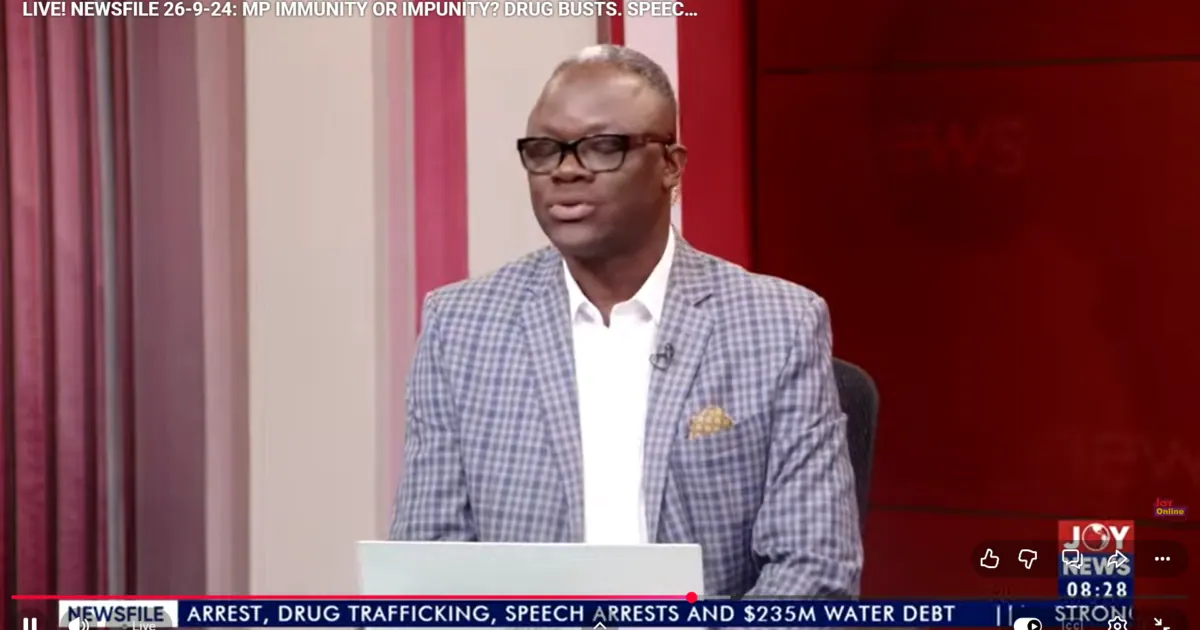
Ghanaian lawyer Samson Lardy Anyenini has spoken out against false allegations made against him, emphasizing the importance of verification in journalism and everyday life. On September 26, 2026, Anyenini addressed a recent trend of unsubstantiated claims and personal attacks, stressing that being law-abiding does not mean blindly surrendering to unidentified individuals claiming to be law enforcement officers. He encouraged citizens to ask for proper identification and verify the authenticity of such claims.
Anyenini's comments come in response to allegations made by Kelvin Taylor, whom he described as a purveyor of falsehoods and insults. For over a decade, Taylor has reportedly repeated unsubstantiated claims about Anyenini's personal life, including allegations of halitosis, and fabricated stories about his family and professional life. Anyenini expressed his gratitude for the support he has received from respected individuals, including former President John Dramani Mahama, who has publicly denounced the culture of insults and abuse in online discourse.
The lawyer emphasized that he has consistently refused to engage with Taylor's allegations, citing a desire to protect his family's dignity and maintain professional integrity. Anyenini has built a reputation as a responsible and evidence-based commentator, and he believes that his audience expects more from him. He also expressed concern about the broader implications of allowing misinformation and disinformation to spread, particularly in the media.
Anyenini highlighted several instances of false allegations made by Taylor, including claims about his involvement in the Egyapa transaction and supposed connections to President Akufo-Addo and Dr. Mahamudu Bawumia. He stated that there is no evidence to support these claims and that Taylor's followers have not demanded proof or retracted the stories despite being exposed. Anyenini argued that this lack of accountability undermines the principles of responsible journalism.
The lawyer also stressed the importance of verifying information, particularly in journalism. He noted that having a large following or a microphone does not convert gossip into fact or fabrication into journalism. Anyenini emphasized that repeating a falsehood for an extended period does not make it true and that serious journalism insists on verification and evidence-based reporting.
Anyenini's comments have sparked a renewed conversation about the importance of responsible journalism and the need for media practitioners to uphold the principles of accuracy and verification. He urged his colleagues in the Ghanaian media to condemn misinformation and disinformation, whether it originates from mainstream media or online platforms. By doing so, Anyenini hopes to promote a culture of responsible reporting and public discourse.
In conclusion, Anyenini reiterated his commitment to upholding the values of responsible journalism and promoting a culture of verification and evidence-based reporting. He encouraged citizens to be vigilant and verify information, particularly when it comes to claims made by individuals or media outlets. By working together, Anyenini believes that Ghanaians can promote a more informed and responsible public discourse.
Key points
- Verify identification during arrests and demand evidence for allegations.
- False allegations can have serious consequences and undermine trust in institutions.
- Responsible journalism requires a commitment to accuracy, verification, and evidence-based reporting.