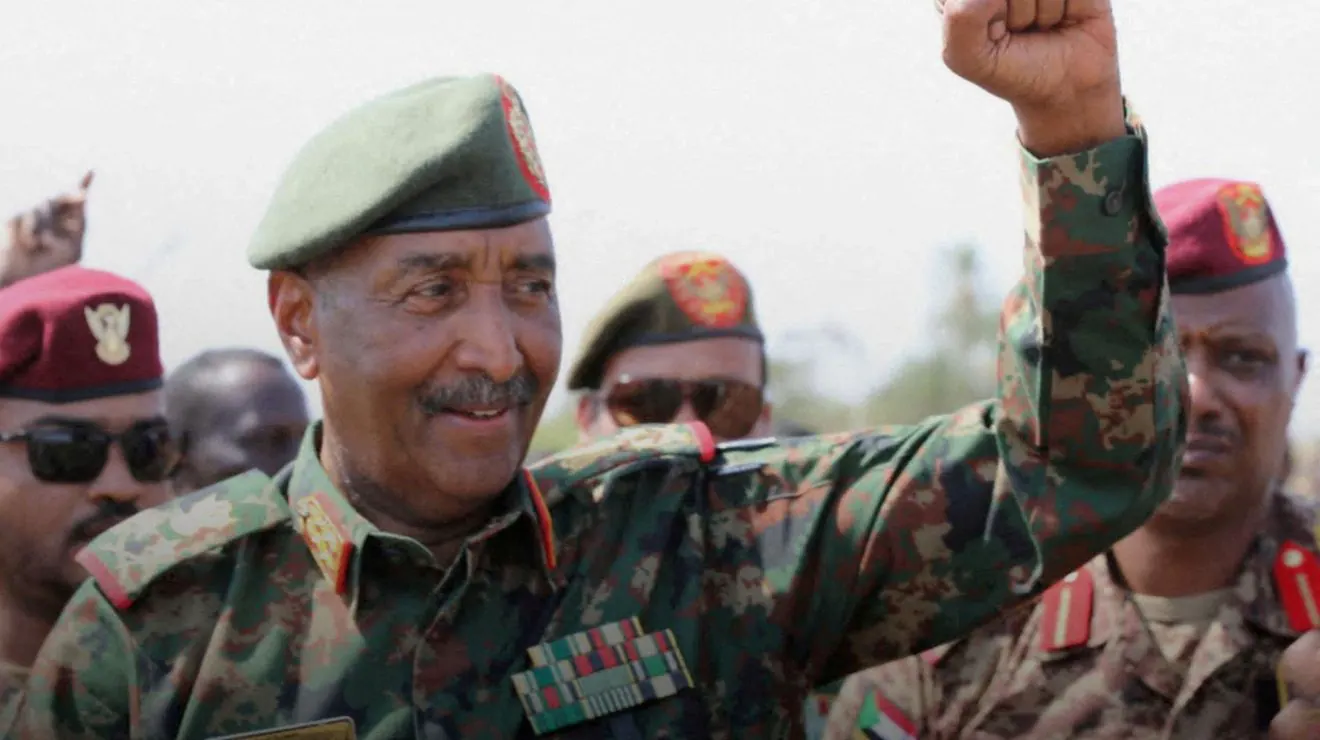
The United States has withheld a visa for Sudanese army chief Abdel Fattah al-Burhan, who was scheduled to appear at the United Nations General Assembly. According to Sudanese and other sources, the move is linked to a US-backed ceasefire proposal that Khartoum has resisted. The dispute threatens to deepen tensions between Washington and Sudan's army at a critical moment in the civil war. Sudan's government has expressed regret over the development, calling it a violation of the UN Convention and international law.
A senior Sudanese source said Burhan had postponed his trip to New York but had yet to receive official notice that the visa had been denied. Sudan's UN ambassador, Al-Harith Idriss Al-Harith, appealed to Secretary-General Antonio Guterres to intervene, arguing that preventing Burhan from attending the General Assembly would violate the UN's obligations toward member states. In a letter dated September 21, Al-Harith requested the United Nations' "immediate intervention" with US authorities to ensure the issuance of the visa.
US officials have made Burhan's attendance contingent on his agreeing to a 90-day ceasefire proposed by US Senior Advisor for Arab and African Affairs Massad Boulos. According to a Sudanese diplomatic source and a Western analyst close to American and Sudanese officials, Burhan is unlikely to engage with Boulos' efforts further if the visa is not granted. The analyst and diplomatic sources said Burhan rejects the take-it-or-leave-it approach, suggesting that any proposal is subject to suggestions and changes.
The impasse represents a nadir in US-Sudan relations since war broke out in Sudan between the army and the Rapid Support Forces (RSF) paramilitary in April 2023. The US State Department declined to comment on Burhan's visa, but spokesman Tommy Pigott said that neither the Sudanese Armed Forces nor the RSF paramilitary "represent legitimate, constitutional governance for Sudan." The US stands ready to work with anyone who is a serious partner for peace in Sudan.
Sudan's army voiced reservations about the Boulos-proposed ceasefire in July, and another Sudanese source told Reuters that foreign minister Mohieldin Salem would give the address instead of Burhan. The UN has expressed concern over the situation, with spokesperson Stéphane Dujarric saying that the secretary-general is "deeply concerned that a visa has reportedly not yet been issued to the President of the Transitional Sovereign Council of Sudan."
The dispute comes as the United Nations calls the civil war in Sudan the world's largest humanitarian crisis. The US has sought to raise the cost of continued conflict on all belligerents and the networks which fuel the conflict. The situation has raised concerns about the humanitarian situation in Sudan, where millions of people are in need of assistance.
The US decision to withhold Burhan's visa has sparked concerns about the impact on US-Sudan relations and the humanitarian situation in Sudan. The UN has called for calm and urged all parties to work towards a peaceful resolution to the conflict.
Key points
- The US has linked Burhan's visa to his agreement to a 90-day ceasefire proposed by US Senior Advisor Massad Boulos.
- The dispute threatens to deepen tensions between Washington and Sudan's army at a critical moment in the civil war.
- The UN has expressed concern over the situation, calling for calm and urging all parties to work towards a peaceful resolution to the conflict.