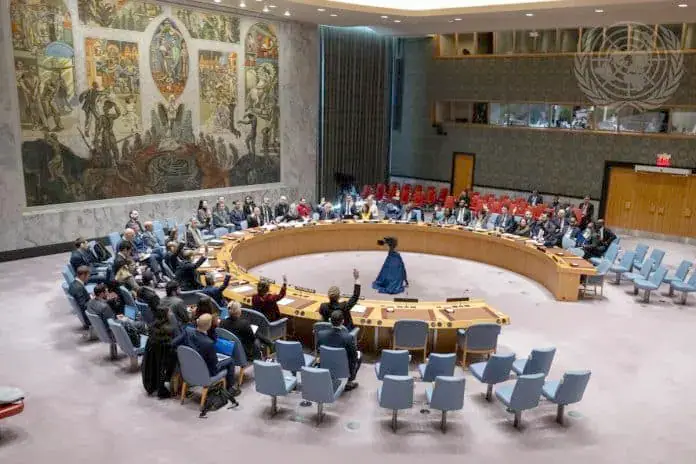
The United States has released a revised draft resolution on Western Sahara, toning down language from an earlier version. The new draft no longer describes autonomy under Moroccan sovereignty as the "only viable solution," instead calling it "the most viable solution." This change has been met with skepticism by some, who argue that the US and its allies are pressuring the international community to support Morocco's claims to the region.
Algerian diplomat Amar Belani has analyzed the new draft, stating that while it concedes on certain points, it still pushes for autonomy under Moroccan sovereignty. The revised draft maintains the principle of autonomy in both the preamble and paragraph 8 but drops the automatic transformation of the MINURSO mission into a special political mission by May 1, 2027. Instead, the decision on the mission's future will be made by the Security Council based on proposals from the UN Secretary-General and progress in the political process.
The revised draft also eliminates a specific goal of reducing uniformed personnel by at least 50% by January 31, 2027, and instead subjects personnel reduction and mission consolidation to the Secretary-General's proposals. However, it reaffirms the UN's leading role in the political process. The draft also removes language on pressuring conflict parties to accept a proposed solution but reaffirms the status of refugees in Tindouf, emphasizing respect for international refugee law and non-interference.
The Sahrawi people have taken to the streets to express their rejection of the US draft resolution. In Laâyoune, protesters demonstrated against the "zero draft" presented by the US, calling for a just solution that guarantees their right to freedom, self-determination, and independence. They rejected attempts to bypass international legitimacy and reaffirmed their commitment to UN resolutions that defend their right to self-determination and full independence.
The protests, which will take place in various wilayas, are a response to the US draft resolution, which has been rejected by the Polisario Front, the sole representative of the Sahrawi people. The large turnout from different segments of Sahrawi society demonstrates national unity and a constant commitment to international legitimacy and independence. The Polisario Front has warned that it will withdraw from the peace process if the draft resolution is adopted.
The representative of the Polisario Front to the UN, Dr. Sidi Mohamed Omar, has urged Security Council members to assume their responsibility to respect international legitimacy and relevant UN resolutions on Western Sahara. The Sahrawi people's mobilization, particularly in the occupied territories, demonstrates their attachment to their right to an independent homeland with recognized borders and the status of the Polisario Front as their sole representative.
The determination of the Sahrawi people to assert their right to self-determination cannot be diminished by Security Council proposals that disregard international legitimacy and seek to impose a cessation of their struggle in favor of the autonomy plan. The revised US resolution has sparked controversy, with some arguing that it does not go far enough to address Sahrawi concerns.
Key points
- The US revised resolution on Western Sahara softens language on autonomy under Moroccan sovereignty.
- The Sahrawi people have rejected the US draft resolution, calling for a just solution that guarantees their right to freedom, self-determination, and independence.
- The Polisario Front has warned that it will withdraw from the peace process if the draft resolution is adopted.