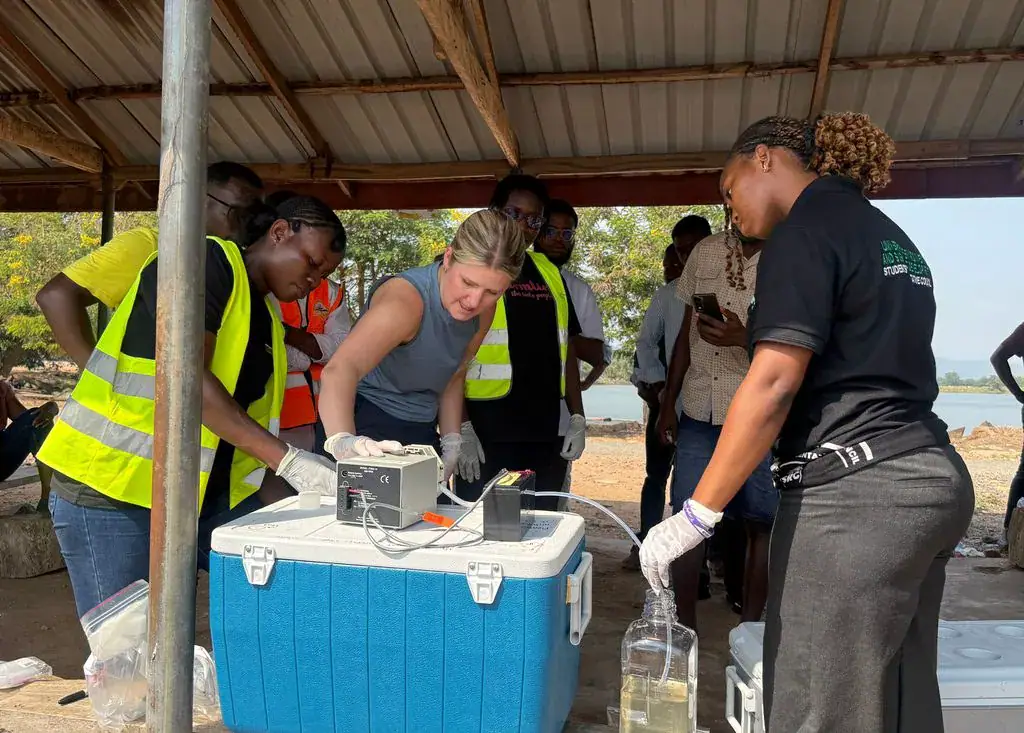
A delegation of American scientists visited Ghana from 7 to 21 November under the Ambassador's Water Experts Program, a joint initiative of the US Departments of State and the Interior. The team consisted of specialists from the US Department of the Interior, the United States Geological Survey (USGS), and the US Environmental Protection Agency (EPA). This visit aimed to confront mercury contamination from illegal small-scale gold mining, commonly known as galamsey.
The visit built on a 2024 baseline assessment carried out by USGS scientist Dr. Grace Armstrong, a former US Embassy Science Fellow. She found elevated mercury levels in the water and sediment of the Pra and Ankobra river systems, which serve as sources of water for communities and farmland in the Western, Central, and Ashanti regions. Dr. Armstrong was part of the delegation that returned this month to continue the work.
During their time in Ghana, the delegation held consultations with Ghana's Environmental Protection Agency (EPA) focused on water quality monitoring, mercury detection, laboratory capacity-building, and sustainable mining practices. Both sides discussed adopting standardized testing methods and deepening scientific collaboration between Ghanaian and American institutions.
A two-day symposium was held on 10 and 11 November, themed "Addressing Mercury Pollution: Collaborative Solutions for Sustainable Mining in Ghana." The symposium brought together the visiting scientists with Ghanaian academics, civil society organizations, and industry representatives to examine the environmental, health, and security effects of mercury use and explore mercury-free mining alternatives.
Then US Chargé d'Affaires Rolf Olson spoke at the symposium, emphasizing that protecting Ghana's freshwater resources is essential not only for environmental and public health but also for long-term economic and food security. The delegation also engaged students, researchers, civil society groups, and youth organizations on water protection, training, and field research.
Institutions involved in the exchanges included the University of Ghana, the Kwame Nkrumah University of Science and Technology (KNUST), the University of Environment and Sustainable Development, and Accra STEM Academy. The goal was to improve the reliability of laboratory analyses in Ghana and encourage the adoption of international best practices in monitoring water quality and detecting mercury contamination linked to galamsey.
Dr. Armstrong stated that the challenges posed by mercury pollution require coordinated scientific approaches and trusted partnerships. The work ensures that data collected in Ghana meets rigorous standards and supports effective decision-making for environmental protection. The delegation's efforts aim to support Ghana in addressing the mercury pollution issue and promoting sustainable mining practices.
Key points
- The US scientific team is working with Ghanaian institutions to adopt standardized testing methods for mercury detection and improve laboratory capacity.
- The collaboration aims to promote sustainable mining practices and reduce the environmental and health impacts of mercury pollution from galamsey.
- The efforts include engaging students, researchers, and youth organizations in water protection, training, and field research to ensure a comprehensive approach to addressing mercury pollution.