South African commentator Muzi Kuzwayo has expressed his views on the recent US midterm elections, criticizing what he describes as biased analysis focusing on Israel. In an opinion piece published in the Jewish Report, Kuzwayo argues that much of the commentary on the elections has been misguided, overlooking historical trends and economic factors that contributed to the Republican defeat. He cites the Russian fabulist Ivan Krylov, saying that political analysis can be "downright dangerous" when done by those who are not thinking clearly.
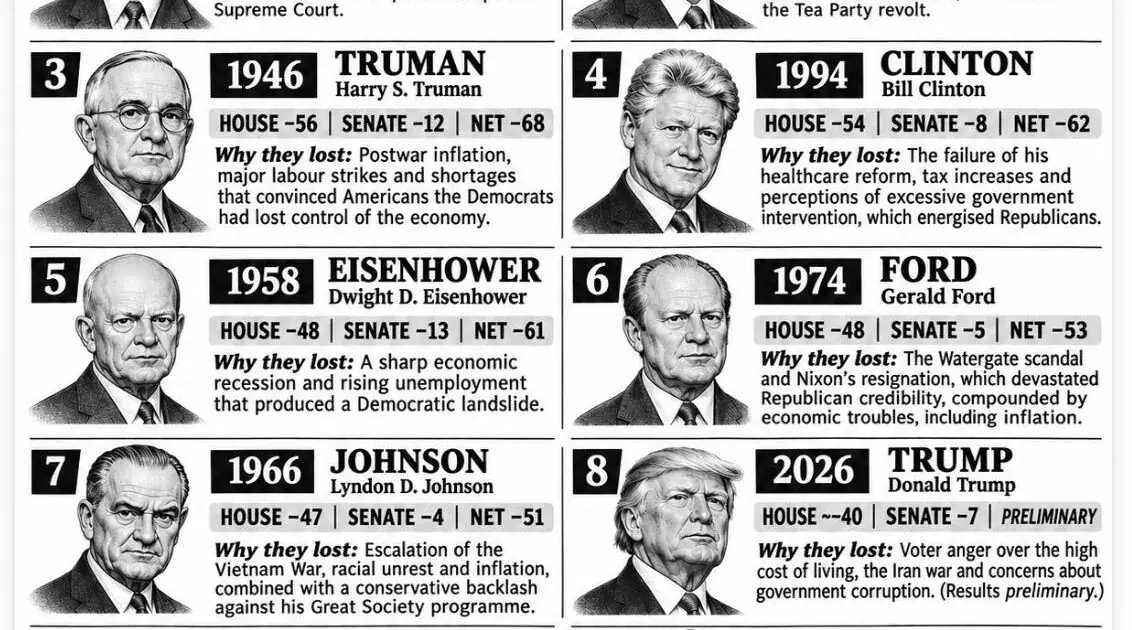
Kuzwayo points out that the president's party typically takes a beating in midterm elections, and that the economy is often a key factor in determining the outcome. He notes that since the Civil War midterm of 1862, only 12 of the 30 US presidents have seen their party retain control of both chambers of Congress at a midterm. Additionally, since 1934, only three presidents' parties have gained House seats at a midterm. Kuzwayo argues that these historical trends, rather than the war with Iran or America's relationship with Israel, are more relevant to understanding the midterm results.
The commentator also highlights the importance of economic factors, citing the 2026 exit polls, which showed that voters who said their finances had worsened backed Democrats for the House. He quotes James Carville, Clinton's chief strategist, who said in 1992, "The economy, stupid." Kuzwayo argues that if you want to understand why Republicans lost, you should start with what Americans were paying at the till. He also notes that the Middle East needs new ideas, and people across the region deserve the opportunity to change their governments, which is something that South Africa knows about and cherishes.
Kuzwayo also compares the democratic systems in Israel, Iran, and the Palestinian territories. He notes that while Americans and Israelis can vote their governments out, Iranians can vote for a president, but the Guardian Council vets who is allowed to stand. He questions whether an Iranian candidate could campaign on a platform of peace with America and Israel, or if they would be allowed to run on a slogan like "Make Iran Great Again." Kuzwayo also mentions that the Palestinian legislative election scheduled for this month has been postponed, possibly until September 2027.
The commentator also criticizes Palestinian President Mahmoud Abbas, who has been in office for more than 21 years. He notes that Abbas has served roughly two years longer than Israeli Prime Minister Benjamin Netanyahu has served as prime minister across his three terms. Kuzwayo asks what tree Abbas has planted in his 21 years, and whether anyone is asking him about his legacy. He cites the late United Nations secretary-general Kofi Annan, who wrote that many may have felt satisfaction in passing General Assembly resolutions condemning Israel's behavior, but what tangible relief or benefit had this brought the Palestinians?
Kuzwayo also highlights Annan's views on the effectiveness of UN resolutions in addressing the Israeli-Palestinian conflict. Annan wrote that these resolutions had not brought peace any closer, and had instead strengthened the belief in Israel that the UN is too one-sided to be allowed a significant role in the Middle East peace process. Kuzwayo argues that Annan's uncomfortable question still stands, and that it is time to consider new approaches to peacemaking in the region.
Finally, Kuzwayo emphasizes the need for new ideas and approaches in the Middle East. He notes that Israel is often held to an impossibly high standard, and that people across the region deserve the opportunity to change their governments. Kuzwayo argues that South Africa's experience with democracy and governance can provide valuable lessons for the region, and that it is time to consider new approaches to peacemaking and conflict resolution.
Key points
- Much of the analysis on the US midterm elections has been misguided, overlooking historical trends and economic factors that contributed to the Republican defeat.
- The commentator criticizes Palestinian President Mahmoud Abbas for his long tenure in office and questions his legacy.
- Kuzwayo emphasizes the need for new ideas and approaches in the Middle East, citing South Africa's experience with democracy and governance as a valuable lesson for the region.
Reporting sources
- Too much analysis just a hit job on Israel · Jewish Report