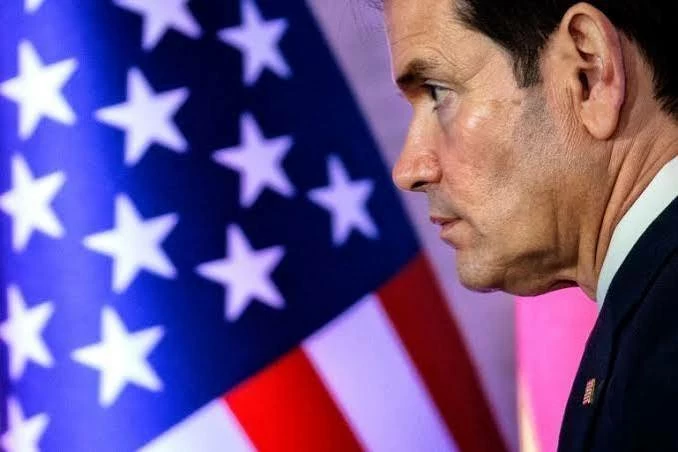
US Secretary of State Marco Rubio has warned that Iran's potential acquisition of nuclear weapons poses a significant threat to global security. In a recent interview with Fox News, Rubio stated that some Iranian leaders believe it is their religious duty to hasten the end of the world. This ideology, rooted in Shia Muslim eschatology, has raised concerns about the intentions of Iran's nuclear program.
The concept of the Mahdi, a messianic figure in Shia Islam, plays a central role in the eschatological beliefs of many Shia Muslims. The Mahdi is believed to appear at the end of time, bringing justice and peace to the world. In Shia Islam, the Mahdi is often associated with the end of the world and the transition from a period of injustice and chaos to one of peace and justice.
In Shia Islam, particularly among the Twelver Shia, the largest Shia sect in Iran, the Mahdi is believed to be Muhammad ibn al-Hasan al-Askari, the 12th and final Imam. According to Twelver Shia tradition, the 12th Imam was born in Samarra in 870 CE and disappeared in 874 CE, marking the beginning of the "lesser occultation." During this period, the Imam communicated with his followers through four deputies or agents.
The Twelver Shia tradition holds that the 12th Imam will reappear at the end of time, bringing justice and peace to the world. This eschatological narrative has significant implications for Iran's foreign policy and its relations with Israel. Many in Iran view the destruction of Israel as a necessary step towards the return of the Mahdi and the end of the world.
Iran's leaders have repeatedly emphasized their commitment to destroying Israel. In 2017, Iran unveiled a digital clock counting down to the predicted destruction of Israel in 2040. More recently, Iranian officials, including Supreme Leader Ali Khamenei and Revolutionary Guard Commander Hossein Salami, have reiterated their vow to eliminate Israel.
The connection between Iran's nuclear ambitions and its eschatological beliefs has raised concerns among Western policymakers. Rubio's comments highlight the potential risks of Iran acquiring nuclear capabilities, particularly given the country's leadership and their stated goals.
The situation remains complex, with multiple factors at play. Understanding the role of eschatology in Shia Islam and its implications for Iran's foreign policy is crucial for grasping the dynamics of the conflict. The international community remains vigilant, monitoring developments in Iran's nuclear program and its relations with Israel.
Key points
- US Secretary of State Marco Rubio warns that Iran's nuclear ambitions pose a global threat due to its leaders' end-of-world beliefs.
- The concept of the Mahdi plays a central role in Shia Islamic eschatology, with implications for Iran's foreign policy and its relations with Israel.
- Iran's leaders have repeatedly emphasized their commitment to destroying Israel, citing their eschatological beliefs.