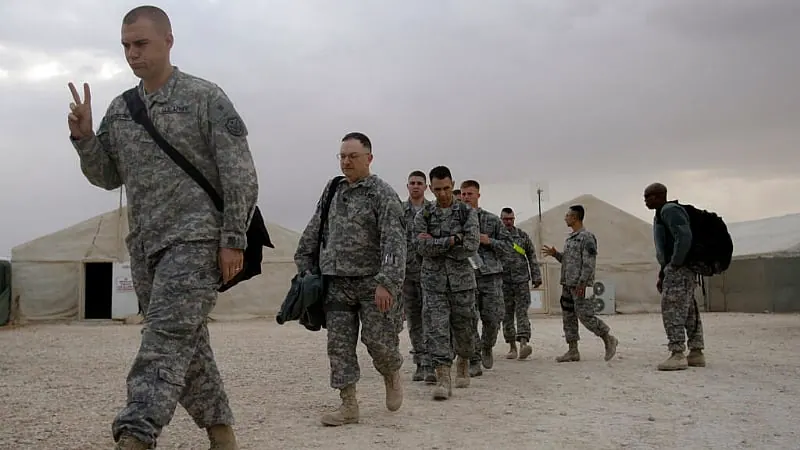
A US-led military coalition deployed to Iraq over a decade ago to fight the Islamic State group has formally ended its mission, marking a significant shift in the country's security arrangements. The coalition was created in 2014 after IS seized large parts of Iraq and neighbouring Syria. The group carried out massacres and forced thousands of women and children into slavery.
The wider US military presence in Iraq stretches back to the 2003 invasion that toppled Saddam Hussein. The war was strongly opposed by France under president Jacques Chirac, whose government argued that UN weapons inspections should continue rather than resorting to military action. US forces withdrew at the end of 2011 before returning three years later, at Baghdad's request, as IS swept across northern and western Iraq.
Iraqi and Kurdish forces, backed by coalition air power, training and intelligence, eventually drove IS from the territory it controlled. The group was declared territorially defeated in Iraq in 2017 and in Syria in 2019, although coalition forces remained to help combat its surviving cells. Washington and Baghdad agreed in 2024 on a phased end to the mission, with coalition troops gradually withdrawing from bases across the country.
The US Defense Department announced that Washington would continue to provide targeted training and intelligence support to Iraqi forces. Prime Minister Ali al-Zaidi hailed the end of the coalition mission as the start of a new phase, defined by Iraq's sovereignty, the strength of its institutions, and balanced partnerships with its friends. His government has declared 1 October Sovereignty Day.
The withdrawal brings a longstanding domestic issue into sharper focus – powerful armed factions operating outside the full control of the Iraqi state. The government hopes the coalition's departure will remove one of the main arguments used by Iran-backed factions to justify holding on to their weapons. Iraq's political and judicial leaders said this week that \"the presence of weapons outside state authority must be addressed\".
Zaidi's government initially set 30 September as a deadline for factions to disarm, but later dropped the date as negotiations continued over how to \"regulate\" weapons. Several powerful groups have refused to disarm, while senior politicians are seeking a compromise. Kataeb Hezbollah, one of Iraq's most powerful Iran-aligned factions, described the coalition's departure as \"a start towards achieving full sovereignty\".
Iran-backed factions have long demanded the departure of US troops and have repeatedly targeted bases hosting American and coalition forces with drones and missiles. Iraqi forces – including the Peshmerga in Kurdistan – will now take the lead in keeping IS remnants suppressed, while Washington maintains a narrower counterterrorism partnership with Baghdad.
Key points
- US-led coalition ends mission in Iraq after 12 years
- Iraqi forces to take primary responsibility for national defence
- Iran-backed factions demand US troop departure, warn against government inaction