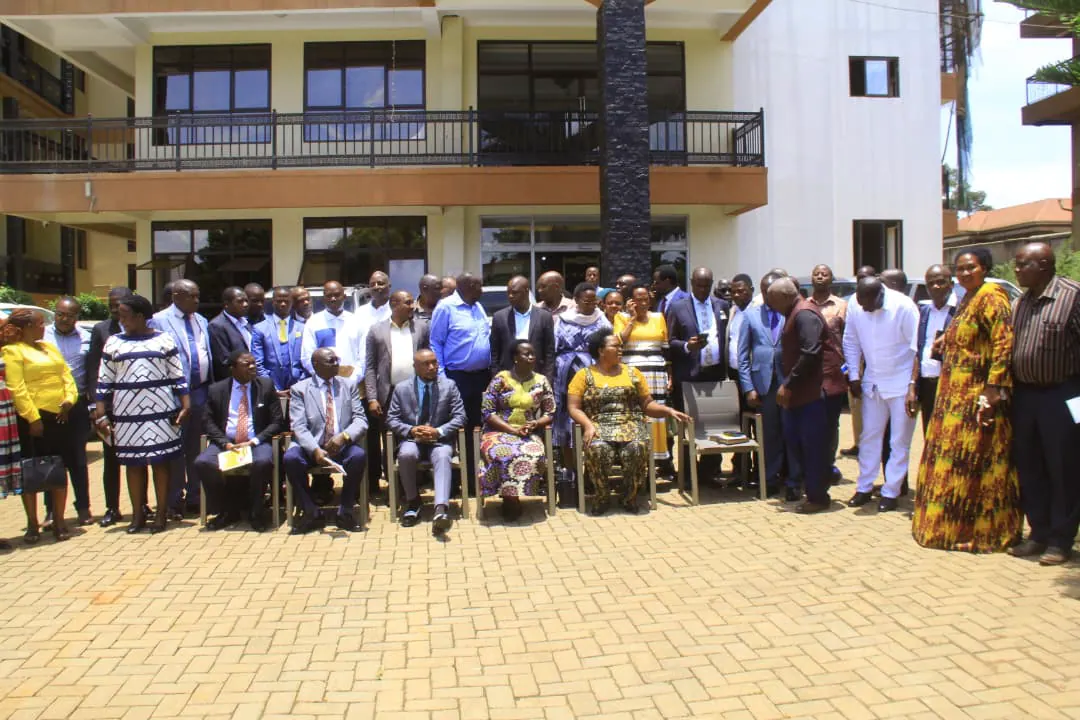
Uganda's Minister for the Presidency, Babirye Milly Babalanda, has called upon Resident District Commissioners (RDCs), Resident City Commissioners (RCCs), and security officials in the Greater Masaka sub-region to strengthen field monitoring, institutional coordination, and accountability. This call was made during a three-day capacity-building workshop for RDCs/RCCs, their deputies and assistants, Regional Internal Security Officers (RISOs), and District Internal Security Officers (DISOs) in the Greater Masaka sub-region, held from September 28 to 30, 2026, at Solo Hites Hotel in Masaka City.
The workshop aimed at enhancing the participants' capacity to monitor Government programmes, strengthen coordination, and improve service delivery. Minister Babalanda, through Minister of State for Economic Monitoring, Sandra Santa Alum, emphasized that the success of the workshop would be measured by the actions participants take after returning to their areas of responsibility. She urged RDCs and security officers to focus on early problem identification, mobilizing responsible institutions, and following up on interventions until tangible results are achieved.
According to Minister Babalanda, the government has established programmes, institutions, and systems to serve citizens, but district and city leadership are responsible for ensuring these systems function effectively. She challenged officials to investigate why Government programmes or projects may be underperforming, identify gaps where resources have been provided without visible results, and document successful interventions for replication elsewhere.
Minister Babalanda highlighted that Greater Masaka plays a crucial role in Uganda's social and economic development, citing its agricultural potential, commercial activity, growing urban centers, and entrepreneurial population. However, she noted that the sub-region faces challenges, including household poverty, youth unemployment and underemployment, land-related conflicts, urban pressures, environmental concerns, service-delivery gaps, and accountability concerns in public resource management.
The Minister emphasized the need for stronger collaboration among RDCs, local governments, security agencies, technical officers, community leaders, and other stakeholders to address these challenges. She stressed that citizens should experience the presence of Government through functioning services, responsive institutions, and timely intervention, rather than just through Government buildings and official vehicles.
Minister Babalanda also directed security officials to ensure that interventions remain professional, lawful, and evidence-based, with respect for citizens' rights and dignity. She urged RDC structures and security agencies to strengthen preventive mechanisms, listen to communities, assess information carefully, and ensure legitimate grievances are referred to institutions mandated to address them.
The Head of the RDC Secretariat, Maj. Martha Asiimwe, said the workshop provided participants with an opportunity to reflect on their mandate and strengthen their capacity to execute their responsibilities effectively. The Masaka City Resident City Commissioner (RCC), Hajji Ahamada Washaki, assured Minister Babalanda that Greater Masaka remains relatively calm and secure.
Key points
- Minister Babalanda tasks RDCs and security officials to strengthen field monitoring and accountability in Greater Masaka sub-region.
- The workshop aimed to enhance participants' capacity to monitor Government programmes and improve service delivery.
- Greater Masaka faces challenges including household poverty, youth unemployment, and land-related conflicts.