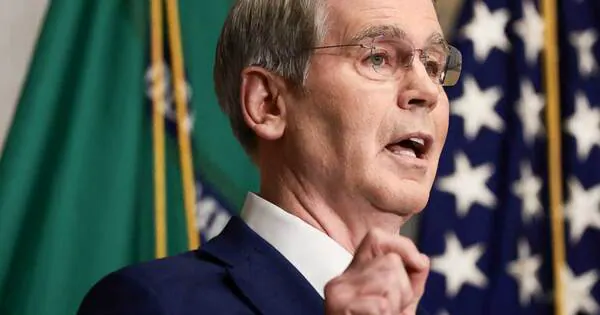
The United States Treasury Secretary, Scott Bessent, has warned that Iranian airlines could be effectively shut out of international travel from September 23. This comes as Washington threatens secondary sanctions against foreign companies that continue providing services to Iran's carriers. The warning extends beyond Iranian airlines to foreign airports, fuel suppliers, ticketing companies, and other businesses involved in supporting the carriers' international operations.
According to Bessent, if foreign companies provide services to Iranian airlines, they will be knocked out of the dollar system. This move is part of the Trump administration's broader sanctions campaign aimed at restricting Iran's access to international financial and commercial networks. Earlier this month, the US Treasury imposed sanctions on Iranian airlines that had not previously been targeted, along with companies outside Iran accused of supporting Iran's aviation sector.
Iran's aviation industry has already faced significant restrictions due to years of US sanctions, which have limited Iranian carriers' ability to purchase new aircraft and obtain spare parts and maintenance services. The latest measures form part of a wider US sanctions regime targeting Iran's economy, including its energy, shipping, technology, gold, and digital-asset sectors. Secondary sanctions can expose foreign businesses dealing with sanctioned Iranian entities to restrictions on their access to the US financial system.
Bessent's comments came a day after talks with Chinese Vice Premier He Lifeng, ahead of a planned meeting between US President Donald Trump and Chinese President Xi Jinping. China is among Iran's key economic partners and diplomatic supporters, making Beijing's cooperation significant to Washington's efforts to restrict Tehran's access to international finance. According to Bessent, Chinese officials had been "very engaged" in discussions surrounding the US pressure campaign.
The US Treasury Secretary also said Washington was holding positive discussions with Chinese financial authorities, including People's Bank of China Governor Pan Gongsheng, over compliance with US sanctions targeting Iran. This development highlights the complexities of international diplomacy, as the US seeks to restrict Iran's access to global finance while navigating relationships with key economic partners like China.
The threat of secondary sanctions against foreign airports, fuel suppliers, and other businesses supporting Iranian airlines has significant implications for the global aviation industry. Iranian airlines may struggle to maintain their international operations, potentially disrupting travel and trade between Iran and other countries. The US sanctions regime aims to exert pressure on Tehran, but it also poses challenges for foreign companies and governments navigating the complexities of international trade and diplomacy.
The US sanctions campaign against Iran has far-reaching consequences for the global economy, international relations, and the aviation industry. As the Trump administration continues to apply pressure on Tehran, foreign companies and governments must carefully consider their compliance with US sanctions and the potential risks to their operations and access to the US financial system.
Key points
- US Treasury Secretary Scott Bessent warns Iranian airlines may be shut down globally from September 23.
- The US threatens secondary sanctions against foreign companies providing services to Iranian airlines.
- The sanctions campaign aims to restrict Iran's access to international financial and commercial networks.